Visitors

free counters
Showing posts with label Creation. Show all posts

10.09.2018

Every Good Endeavor - Connecting Your Work to God's Work

Greetings All!

     This week's "thought" comes to you from Tim Keller's book "Every Good Endeavor - Connecting Your Work to God's Work."   I have not finished it yet (just over half way through), but what I have read is enlightening, inspiring, well-thought-through (as is typical for Keller) and so helpful for those seeking to find meaning and purpose in their jobs or work.  Better yet (as the title suggests), it is helpful for those who would like to connect their work to God's work in this world, and bring redemptive change into their workplace.  In my humble opinion, this book really is a must read.
     We all function according to some type of underlying worldview -- a worldview that guides our choices, priorities and pursuits. "Our worldview," says Keller, "places our work in the context of a history, a cause, a quest... and in so doing it frames the strategy of our work at a high level."  My challenge to you today is to see if your worldview is Christian, non-Christian, or a mixture of competing worldviews spliced together?  Read below and find out...  Enjoy.
The Gospel and Other Worldviews

     "Any worldview consists of posing and answering three questions:  1. How are things supposed to be?  2. What is the main problem with things as they are?  3. What is the solution and how can it be realized?  Leslie Steven's book (Seven Theories of Human Nature) includes Christianity among its "theories," but the author points out how different Christianity is from the alternatives. He observes that "if God has made man for fellowship with Himself, and if man has turned away and broken his relationship to God, then only God can forgive man and restore the relationship." In other words, the biblical worldview uniquely understands the nature, problem, and salvation of humankind as fundamentally relational.  We were made for a relationship with God, we lost our relationship with God through sin against him, and we can be brought back into that relationship through his salvation and grace.
     Plato, Marx, and Freud all identify some part of the created world as the main problem and some other part of the created world as the main solution. The protagonists and antagonists of their respective world-stories are played by finite things.  Thus, Marxism assumes that our problems come from greedy capitalists who won't share the means of economic production with the people. The solution is a totalitarian state.  Freud, on the other hand, believed that our problems come from repression of deep desires for pleasure. The villains are played by the repressive moral "gatekeepers" in society, like the church. The solution is the unrepressed freedom of the individual.  Many people have a worldview that to some degree is indebted to the Greeks or Plato. They think the problem with the world rests in undisciplined and selfish people who won't submit to traditional moral values and responsibilities. The solution is a "revival" of religion, morality, and a virtue in society.  Philosopher Al Wolters writes: "The great danger is to always single out some aspect of God's good creation and identify it, rather than the alien intrusion of sin, as the villain. Such an error conceives of the good-evil dichotomy as intrinsic to the creation itself...  Something in the good creation itself is identified as the source of evil.  In the course of history this "something" has been variously identified as the body and it's passions (Plato and much of Greek philosophy), as culture in distinction from nature (Rousseau and Romanticism), as authority figures in society and family (psycho-dynamic psychology), as economic forces (Marx), as technology and management (Heidegger and existentialists)...  As far as I can tell the Bible is unique in its rejection of all attempts to either demonize some part of creation as the root of our problems, or to idolize some part of creation as the solution. All other religions, philosophies, and worldviews in one way or another fall into the trap of idolatry -- of failing to keep creation and fall distinct.  And this trap is an ever-present danger for Christians [as well]."
     Look again at the uniqueness of Christianity. Only the Christian worldview locates the problem with the world NOT in any part of the world, or any particular group of people, but in sin itself (our loss of relationship with God). And it locates the solution in God's grace (our restoration of a relationship with God through the work of Christ).  Sin infects us all, and so we cannot simply divide the world into the heroes and the villains. (And if we did we would certainly have to include ourselves among the latter as well as the former.) Without an understanding of the Gospel, we will be either naively Utopian or cynically disillusioned We will be demonizing something that isn't bad enough to explain the mess we are in, and we will be idolizing something that isn't powerful enough to get us out of it. This is, in the end, what all other worldviews do... The Christian story line, or worldview, is: Creation (plan), Fall (problem), Redemption and Restoration (solution): 
     1.  The whole world is good.  God made the world and everything in it was good. There are no intrinsically evil parts of the world.  Nothing is evil in its origin... You can find this "creational good" in everything. 
     2. The whole world is fallen.   There is no aspect of the world affected by sin more or less than any other. For example, are emotion and passions untrustworthy and reason infallible?  Is the physical bad and the spiritual good?  Is the day-to-day world profane but religious observances good? None of these is true. But non-Christian story lines must adopt some variations of these in order to villainize and even demonize some created thing instead of sin.
     3. The whole world is going to be redeemed. Jesus is going to redeem spirit and body, reason and emotion, people and nature. There is no part of reality for which there is no hope.

     The Gospel is the true story that God made a good world that was marred by sin and evil, but through Jesus Christ he redeemed it at infinite cost to himself, so that someday he will return to renew all creation; end all suffering and death; and restore absolute peace, justice, and joy in the world forever. The vast implications of this gospel worldview -- about the character of God, the goodness of the material creation, the value of the human person, the fallenness of all people and all things, the primacy of love and grace, the importance of justice and truth, the hope of redemption -- affect everything, and especially our work." 
     That's obviously a bit to chew on!  But I hope it helps you see how the worldview one chooses to adopt will have great effect on how they view their work, carry out their work, and choose to live. My question is:  Do you have a Christian worldview?  Or, like many, have you adopted elements of a Marxist, Greek, Capitalist, or Freudian worldview?  Everyone has a worldview that under-girds their life choices and endeavors. Is your a Gospel worldview, or a syncritistic mix of many others with a small element of Christian lingo or references to Jesus added in?
     And I must stress that it is NOT irrelevant.  Since God commands us: "Love the Lord your God with all your heart and all you soul and all your mind and all your strength," it would seem to lay upon us as believers an unavoidable responsibility to think things like this through as best we possibly can.  For whatever worldview we have has a profound effect on influencing the choices we make, why we make them, and what we will pursue. It will impact how we treat people, why we love and value the things we do, live as we do, and view work the way we do. 
     So my prayer for everyone is this:  If you have come to Christ, yet retained a non-Christian worldview (or elements from various ones), you will seek (by the grace God gives) to root those elements out and replace them with distinctly Christian or Gospel elements -- something Keller's book distinctly aims at helping us with! 

In His Service, Pastor Jeff 

8.15.2018

The Unity of the Bible

Greetings All!

     This week's "thought" will take some thought!  It's not your typical, casual, quickly processed quote.  It will require you to think. Hopefully you are up for the challenge!  It is the response I often give to those who say ask: "What proof we have for the existence of God?   Where did God come from?  And, "Did God create because He needed someone to love, or because He was lonely?
     The following quote seeks to address these three questions and explains why it is that God did not create out of a sense of need within himself.  Part of the answer to question 3 is taken from Daniel Fuller's book, "The Unity of the Bible" -- a must read, in my opinion, for any earnest believer.  Enjoy!


The God Who Has No Needs
     1.) "What Proof Do We Have for the Existence of God?" The best proof for the existence of God goes something like this:  Being cannot come from non-being.  That is, something cannot come from nothing.  Yet, most all scientists agree that at some point in the long-distant past the space now occupied by the physical universe was empty and void and consisted of "nothing."  But its precisely because something cannot come from nothing that helps us see that the creation itself is the greatest proof of the existence of God.  Since being cannot come from non-being, our existence as beings proves His existence.
     2.) "Where Did God Come From?" To answer this, we can take the previous argument a step further.  Because being cannot come from non-being, our existence as beings proves His existence, and His existence proves He always existed.  If God is, He must always have been.  Most all theologians have tended to agree on this, and Malachi 3:6 confirms it where it says, "I am the Lord, I do not change."  Change is part of that which is limited, lacking, or finite. A God who changes would be finite and limited and could not by definition be God. To be infinite is by nature to be changeless, immutable and everlasting -- none of which would be true of God if He had a beginning.  If being is, it must always have been, since being cannot come from non-being.  Even the fact that God is all-knowing demands that He must have existed forever, for if He was not an eternal Being, or came into being at some point in time (which is an impossibility since being cannot come from non-being), then He could not be omniscient, for He would not know what transpired before He came into existence.
     3.) "Did God Create Because He Needed Something to Love, or Because He Was Lonely?  The Christian answer, based on the fact that God is a Trinity, is best given by Daniel Fuller in his book "The Unity of the Bible," in the section entitled, 'Why Did God Wait So Long to Create the World?'  In this section of his book he points out: "The declaration in Psalm 90:2 that, 'Before the mountains were born or you (God) brought forth the earth and the world, from everlasting to everlasting you are God,' indicates that vast eons of time elapsed before God acted to establish the earth so it would reflect His glory.  But Irenaeus, Augustine, and Calvin -- some of the church's greatest leaders -- have sternly warned people not to ask what God was doing before he created, or to wonder why he waited so long to create...  I believe, however, that it is both lawful and expedient to ask why the Triune God waited a long time to create the world.  For from the very fact that God waited, we know that he did not create out of the necessity involved in need-love. [That is, he did not create because he was lonely, or needed someone to love, as many often suggest].
     Since God the Father found infinite happiness in Jesus, the Son, then it becomes clear that from all eternity God has enjoyed his Son's love and companionship, showing the creation of the world was NOT a necessary act that God undertook to overcome loneliness, but an act that flowed from the freedom involved in benevolent love. It would be threatening to our future happiness to know that God created us to meet some need in himself... Yet the moment we understand that all of God's need-love was met in being a Trinity, then we see that he was free to act toward us, his creation, solely in terms of the freedom of a benevolent love.  A striking way to represent the difference is to say that if God were to have created us out of need-love, it would be like inviting us to a banquet, only to inform us that we were one of the courses for the meal!  But when God invites us to a banquet out of benevolent love, he wants us to join with him as guests at his table, to enjoy the feast along with him – as the psalmist put it, to drink from the river of his delights (36:8).  So, God's having delayed creation for a long while makes it unmistakably clear that he created us not out of need, but in the freedom of his benevolent love – out of mercy and grace.”
     What a different view of God we have when we consider his eternality in light of his Triune nature.  If God created out of a "need" that was unmet for all those many millions and trillions of eons before He spoke things into existence out of nothing (as the Bible does state), then the only picture one can draw is of a God who was sad, frustrated, or unhappy until He created, due to the long-standing unmet need in himself.  But when we consider God as Trinity, and the love and delight that existed between the Father and the Son from all eternity, we see that the fellowship and love between the Father and the Son resulted in a God who was eternally contented and happy!  A God who created, not out of need, but out of the overflow of delight, love and happiness that existed within Himself.  To put it in human terms, the best of all scenarios is not when a husband and wife seek to have a child to meet a need in either one of them, or out of an attempt to "save the marriage," but when they so love each other that they choose to bring a child into the overflow of love and delight that already exists between them. Not when they create out of need, but out of a desire to share their overflowing love with another.  And not only does it give us a different view of God, but a whole different ground for relationship!  For when we know we were not created to meet a need in God, we are freed to walk and share in the overflow of God's infinite Self-adequacy and Self-completeness!
     At any rate, just something to think about!

Living in the Grace of Jesus, Pastor Jeff

10.24.2017

Bible's Call to Worship God

Greetings All!

This week's "thought" comes to you from the book "Simply Christian - Why Christianity Makes  Sense" by N. T. Wright.  He is presently Bishop of Durham, England (Church of England) and taught at McGill, Cambridge, and Oxford universities. His book attempts to show the reasonableness of the Christian faith and does an admirable job. For those who are honest skeptics (who are earnestly seeking to understand) and not just bandwagon skeptics (who somehow think being skeptical makes them seem more intellectual), it's worth a read.  This selection seeks to answer the "why?" of the Bible's call to worship God.  I found it helpful, I pray you might as well.  Enjoy.


     "When we begin to glimpse the reality of God, the natural reaction is to worship him. Not to have that reaction is a fairly sure sign that we haven't yet really understood who he is or what he has done. So what is worship? The best way to discover is to... start in the fourth and fifth chapters of the last book of the Bible, the Revelation of St. John... [There we find] representatives of the animal kingdom and the world of humanity (the whole creation) worshipping God for all he's worth...

     Holy, holy, holy is the Lord God Almighty, who was and is and is to come... 


     You are worthy, our Lord and God, to receive glory and honor and power; for you created all things and by your will, they existed and were created...


     You are worthy to take the scroll and open it's seal, for you were slaughtered, and by your blood, you ransomed for God saints from every tribe and people and nation.
     You have made them to be a kingdom and priests to serve our God, and they will reign on earth...


     Worthy is the Lamb that was slaughtered to receive power and wealth and wisdom and might and honor and glory and blessing!  
     To the one seated on the throne and to the Lamb be blessing and honor and glory and might, forever and ever. Amen!
(Revelation 4:8, 11, 5:9-10, 12 and 13)
     This is what worship is all about.  It is the glad shout of praise that arises to God the Creator and God the Rescuer from the creation that recognizes its Maker, the creation that acknowledges the triumph of Jesus the Lamb. That is the worship that is going on in heaven, in God's dimension, all the time. The question we ought to be asking is how best we might join in. Because that is what we are supposed to do.
     And let's get one thing clear before we go any further. There is always a suspicion that creeps into discussions of this kind, a niggling worry that the call to worship God is rather like the order that goes out from a dictator whose subjects may not like him but have learned to fear him. He wants a hundred thousand people to line the route for his birthday parade? Very well, he shall have them. And they will all be cheering and waving as if their lives depended on it -- because, in fact, they do. Turn away in boredom, or don't turn up at all, and it will be the worse for you.  If it has crossed your mind that worshipping the true God is like that, let me offer you a very different model.
     I have been to many concerts of music ranging from major symphonic works to big-band jazz. I have heard world-class orchestras under world-famous conductors. I have been in the audience for some great performances that have moved me and fed me and satisfied me richly.  But only two or three times in my life have I been in an audience which, the moment the conductor's baton came down for the last time, leaped to its feet in electrified excitement, unable to contain its enthusiastic delight and wonder at what it had just experienced. (American readers might like to know that English audiences are very sparing with standing ovations.)
     That sort of response is pretty close to genuine worship. Something like that, but more so, is the mood of Revelation 4 and 5. That is what, when we come to worship the living God, we are being invited to join in. What happens when you're at a concert like that is that everyone feels that they have grown in stature. Something has happened to them. They are aware of things in a new way. The whole world looks different. It's a bit like falling in love.  In fact, it IS a kind of falling in love. And when you fall in love, when you're ready to throw yourself at the feet of your beloved, what you desire, above all, is union.
     This brings us to the first of two golden rules oat the heart of spirituality.  #1.) You become like what you worship. When you gaze in awe, admiration, and wonder at something or someone, you begin to take on something of the character of the object of your worship. Those who worship money eventually become human calculating machines. Those who worship sex become obsessed with their own attractiveness of prowess. Those who worship power become more and more ruthless. 
     So what happens when you worship the creator God whose plan to rescue the world and put it right has been accomplished by the Lamb that was slain?  The answer comes in the second golden rule: #2) Because you were made in God's image, worship makes you more truly human.  When you gaze in love and gratitude at the God in whose image you were made, you do indeed grow. You discover more of what it means to be fully alive. Conversely, when you give that same total worship to anything or anyone else, you shrink as a human being. It doesn't, of course, feel like that at the time. When you worship part of the creation as though it were the Creator himself (in other words, when you worship an idol) you may feel a brief "high." But like a hallucinatory drug, that worship achieves its effect at a cost.  When the effect is over, you are less of a human being than you were to begin with. That is the price of idolatry.
     The opportunity, the invitation, the summons is there before us: Come and worship the true God, the Creator, the Redeemer, and to become more truly human in doing so. Worship is at the very center of all Christian living. One of the main reasons that theology (that is, trying to think straight about who God is) matters is that we are called to love God with all our heart, mind, soul and strength. It matters that we learn more about who God is so that we can praise him more appropriately. Perhaps one of the reasons why so much worship, in some churches at least, appears unattractive to so many people, is that we have forgotten, or covered up, the truth about the one we are worshipping. 
     Yet whenever we glimpse the truth, we are drawn back. Like groupies sneaking off from work to see a rock star who's in town for just an hour or so, like fans waiting all night for a glimpse of a football team returning in triumph (only much more so!) those who come to recognize the God we see in Jesus, the Lion, and the Lamb, will long to come and worship him." 
     Wonder is at the heart of all true worship. And wonder is what arises in the heart when God's Spirit begins to reveal to us that He really does exist and what He is really like. It happens when we come to see and experience (in greater and more undeniable ways) God's holiness, power, love, grace, and life-altering presence.  We come to taste and see that He is good. We become gradually more and more aware of the reality of an invisible Being pursuing, revealing and breaking in upon our lives in tangible and sometimes overwhelming ways. A Being whom we can't help but sense is seeking to enter, possess, indwell, disarm, make Himself known to us, and make us His own.  A God who we discover (much to our surprise) has a plan for our lives, and is working out that plan -- at times with our approval, and at other times without our approval.  At times clearing obstacles out of our way, and at times placing them immovably in our path to redirect the trajectory of our lives.
     Those who have experienced this (myself being just one) testify it was at times overwhelming, and made them feel as if God had taken control of the wheel and was steering them to a destination that fit into a plan ordained for them prior to their existence, but worked out in their present when the time was just right.
     Of course, as those who are (for the most part) comfortable with and captive to the temporal, running into the reality of Him who is eternal can be a hair-raising and even fear-spawning experience. We see this in the lives of the prophets and apostles, Isaiah 6 and Revelation 1 being just two of many examples.  Discovering God is actually real, and not just a nice idea, can be both a frightening and life-altering experience.  Yet, when the initial fear subsides, and we discover He is not out to harm us, but save us; that He is for us, and not against us -- then what seemed so frightening becomes mesmerizingly beautiful, and it's His beauty that drives us to want to worship Him.
     That is my prayer. That like the beings in Revelation 4-5 we would find ourselves so overcome by the beauty and majesty and worth of God, and the wonder that is Jesus, that we would ceaselessly yearn to praise, adore and worship Him -- and in doing so, as Wright points out, become more like Him, and at the same time more truly and fully human. 

In the Bonds of Christian Affection, Pastor Jeff

9.27.2016

The Blessings of Marriage

Greetings All!

     Today I want to share a selection having to do with marriage -- though I must stress it's a helpful thought to consider whether one is married or not!  I do not know the title or publisher of the book I originally took it from years ago, though I did write down the author's name - Theodore Parker.
     I have used this quote numerous times at weddings and people have expressed their appreciation for it, and most all their complete agreement with it -- especially those who have been married for any length of time!  It is, in my humble opinion, worthy of your focused, thoughtful, and discerning consideration, since it contains much truth and wisdom. Enjoy.

“It takes years to marry two hearts completely, even of the most loving and tender type.  Every happy marriage is a long falling in love. Young people think love belongs only to the silken-haired and crimson-cheeked.  And it does in its beginnings.
But the golden marriage is a part of love about which the Bridal day knows nothing.  A mature and complete marriage, where wedlock is everything one could desire, where the ideal becomes actual, is not a common thing.  It is perhaps as rare as perfect personal beauty.
Men and women are married fractionally — a small fraction here, followed by a larger fraction there.  Very few are ever married totally, and those that are, only achieve it after some forty or fifty years of gradual growth, adjustment, perseverance and experimentation.

When a man and woman are successfully in love, their whole activity is energized and victorious.  They walk better, their metabolism improves, they think more clearly, their secret worries drop away, the world is fresh and interesting, and they can do more than they ever dreamed of doing.
In love of this kind, sexual intimacy in not the dead end of desire, as it is in purely romantic or promiscuous love. It is the periodic affirmation of inward delight in each other, and the crown of an active, intentional and well-lived life.  Knit together by the bonds of friendship and mutual affection, their love is as interesting as it is enduring — able to withstand the winds of adversity and change, bear hardships, build upon the mistakes of the past, and use them as opportunities for forgiveness and growth.”
     In a society which sees less and less reason for marriage (4 out of 10 thirty-and-under-people now see no need for it at all), this "thought" gives us a better insight into the blessings of marriage, how one should view it, and what it might take to improve it.
     The health of the family unit is key to the preservation of any civil society, and the health of marriages is key to the health of that family unit.  We must, therefore -- especially in a society like ours which is decidedly not "marriage-friendly" -- always be praying for those who have entered into this, "bond and covenant of marriage (which) was established by God in creation."  This relationship of committed love received Jesus' stamp of approval by, "His presence and first miracle at a wedding in Cana of Galilee."   After all, it's a way of life which, "signifies to us the mystery of the union between Christ and His Church, and Holy Scripture commends it to be honored among all people"  (from The Celebration of Marriage, Book of Common Prayer).
May you be encouraged to persevere in this God-ordained relationship, and partake of the blessings God intended through it, Pastor Jeff

9.06.2016

Practical Christianity

Greetings All!


After a couple weeks of vacation I returned to the office today. Part of what I had on my list to do was send out this insightful little "thought" regarding temptation and fighting sin.  It comes from a book entitled , "Practical Christianity," which contains helpful advice on the Christian life from over 80 well-respected Christian authors.

     This particular selection is from Adrian Rogers.  His advice is short and simple but wise.   Enjoy!


Filling Legitimate Desires Illegitimately

     "The devil is a pervert. He cannot create things himself. He can only take things God has created and twist them. We sin when we give in to the devil's temptations and try to fulfill legitimate God'-given desires in an illegitimate way. For example, food is a God-given necessity, but gluttony is a sin.
     Sex within a loving marriage is a God-given blessing, but adultery is sin. Having and enjoying material things is a God-given privilege, but pride, dishonesty, stealing, greed and selfishness are sins. When we are tempted, we need to figure out what legitimate desire the devil is trying to pervert. Then we need to find God's way to fulfill that desire legitimately. If we do that we will have no itch the devil can scratch.
     Rather than always trying not to sin, we ought to turn our focus in another direction -- on finding our satisfaction in the Lord Jesus Christ. I think parents, pastors, school teachers and youth workers make this mistake with young people. We try to keep our young people from doing wrong. If you've ever tried to take a bone away from a dog, you know that's a good way to get bit. The way to do it is to lay a piece of red meat in front of the dog. He will drop the bone in order to grab the meat. We need to show young people how they can get their needs legitimately fulfilled in the Lord Jesus Christ. Then they won't have to guard the bones."  
     It is helpful, as he points out, to remember that "sin" is often nothing more than seeking to meet legitimate needs in illegitimate ways.  It is to meet them prematurely, in excess, or outside the boundaries God has set for their enjoyment or exercise, The particular need is not evil, nor is the fulfillment of that need when met in a godly fashion.  The "sin" lies in the inappropriate way we go about seeking to meet holy, God-given and legitimate needs. For more often than not, the devil's temptation (or perversion) is to tempt us to partake before we should, consuming more than we should, in a way that violates how we should -- thereby dishonoring the wise and good purposes of God in creation.

In the Bonds of Gospel Fellowship, Pastor Jeff

3.30.2016

"Who are the Mormons, where did they come from, and what do they believe?"

Greetings All,


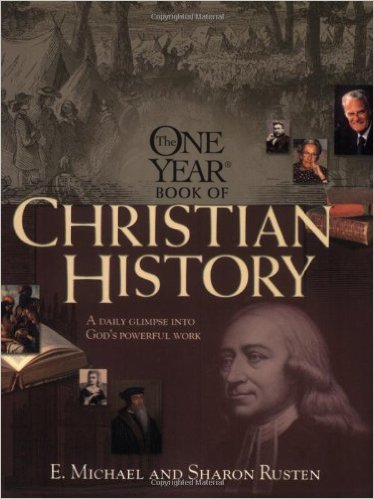
Today's "thought" is meant to be informative and instructive. It comes from a book I have quoted from before, "The One Year Book of Christian History," authored by E. Michael Rusten and Sharon Rusten.  I include this post because it is a short basic answer to a question I get asked often: "Who are the Mormons, where did they come from, and what do they believe?" If you have ever wondered about their origins and some of what they believe, this is a helpful little answer to those questions. Enjoy.

     "In 1820 a fourteen-year-old boy named Joseph Smith Jr. claimed to have received a vision in which God the Father and God the Son appeared to him and told him that they had chosen him to help restore true Christianity. Apparently not overly moved by this revelation, he went back to digging for Captain Kidd's treasure with his father and brother [on their farm in NY].
     When he was seventeen, he claimed to have been visited by an angel named Moroni, who told him that he would receive the "golden plates" of the Book of Mormon to translate.  In 1827 Smith alleged that he unearthed the plates in Cumorah, a hill near Palmyra, New York. Smith said he translated the "reformed Egyptian hieroglyphics" with the help of the miraculous glasses he supposedly received from Moroni.  Oliver Cowdery, a schoolteacher and a convert of Smith's, assisted in the translation, although no one but Smith ever saw the golden tablets.
     In 1829 during the translation, the "Prophet" as he liked to be called, alleged that John the Baptist was sent by Peter, James and John to bestow the "Aaronic priesthood" on himself and Oliver.  Early in 1830 they completed their translation, and "The Book of Mormon" was published and copyrighted. On April 6, 1830, Joseph Smith Jr., his two brothers Hyrum and Samuel, Oliver Cowdery, and David and Peter Whitmer Jr., met in Fayette, New York, to found a new religious society they called, "The Church of Christ." Eventually known as "The Church of Jesus Christ of Latter-Day Saints," the Mormon Church was begun.

     Soon after, the Mormons moved to Kirkland, Ohio, where they attracted many new followers. In six years they grew to more than 16,000 members. Because of Smith's reputation as a charlatan, and accusations that his religion was a hoax, the new church had to move several times. Next they moved to Jackson County, Missouri, and then to Nauvoo, Illinois, but their problems followed them to each new location. The trouble intensified in Nauvoo when their practice of polygamy became public. The exact number of Smith's wives is not known, but it has been estimated to be as high as fifty.
     When Smith called for the destruction of a newspaper that was outspokenly anti-Mormon, the state of Illinois stepped in to control the dispute and jailed Joseph Smith and his brother Hyrum.  On June 27, 1844, an angry mob stormed the jail and murdered both men.
     After the death of Joseph Smith, Brigham Young became the leader of the Mormons. Young led the group across the Great Plains and over the Rocky Mountains to the Salt Lake Valley (in present day Utah) in 1846.  Finally, the Mormons were granted recognition as a legitimate religion. Brigham Young had twenty-seven wives and fifty-six children. Today the Mormons claim more than 11 million members, more than half who live outside the United States.

     What do Mormons believe? Simply stated, Mormons teach that all gods were originally men [who were good enough to become gods] and that all men have the potential to become gods. Being a king and priest to God is a step toward becoming a god. They believe that all persons were pre-existent and, depending on their good works, go to one of three levels of heaven: telestial (for unbelievers), terrestial (for ignorant but good people), and celestial (for good Mormons).  Jesus, who is the Jehovah of the Old Testament, will reign over a millennial kingdom from Independence, Missouri."

Just a few more points of interest:
1.) Mormons believe in many gods.  
2.) Jesus is a God (one of many), but was not always a God -- he progressed to become a God. 
3.) He was pre-existent, but in Mormon theology so are the spirits of all people, waiting for people to provide them bodies to live in through procreation. 
4.) The Gods have begotten spirit children. 
    a.) These spirit children are restless until they have a body to reside in. 
    b.) Bodies for these spirit children are provided through human procreation.
    c.) Therefore man's chief end is to glorify the Gods by having babies. 
    d.) Procreation is man's primary duty, the more children one has the more virtuous they become. (This seems to be what gave birth to their view of polygamy, a practice disavowed in 1890 in "The Anti-polygamy Manifesto" in order for Utah to gain statehood -- though it is still practiced by small splinter groups.). 
5.) Mormons also believe that a person is saved by a mixture of grace, faith, repentance, baptism, good works, and obedience to Mormon doctrine. 
6.) They believe Christ's shed blood only cleanses us from original sin, or Adam's transgression, and opened the door to full salvation which one must work for once the door is opened. 
7.) Mormons also baptize on behalf of the dead (thus their extensive interest in genealogy). Since they believe one cannot be saved apart from baptism, they receive baptism proxy on behalf of dead ancestors in order to save them.  
8.) They also believe in the doctrine of eternal progression: "As man is, God once was: as God is, man may become."  (See "Mormonism," by John Gerstner, Baker Books, "The Church of Jesus Christ Latter Day Saints," by Steven Tsoulkalas.)

     I hope such information may be helpful to others who have sought to understand how Mormonism differs from historic Christianity, since many terms used in conversation are similar, but their meanings and definitions differ.
"The truth will set you free," Pastor Jeff

12.15.2015

What is the real meaning of Christmas?

Greetings All,

This week's thought comes to you from the well-known contemporary preacher/author -- John MacArthur. The title of his message speaks for itself.  Many others have tried to offer an answer to this same question, though in this excerpt -- selected for your Christmas consideration -- he offers his. Other things could be added, but one cannot leave out what he says and still be true to what the Bible wants us to know about Jesus birth.  Enjoy.
What is the real meaning of Christmas?

The answer may just surprise you. For many, Christmas is the time to think of Jesus Christ as a baby in a manger. While the birth of Christ is a special and miraculous event, it isn't the primary focus. The central truth of the Christmas story is this: the Child of Christmas is God. Christmas is not about the Savior's infancy; it is about His deity. The humble birth of Jesus Christ was never intended to conceal the reality that God was being born into the world...

I don't suppose anyone can ever fathom what it means for God to be born in a manger. How does one explain the Almighty stooping to become a tiny infant? Our minds cannot begin to understand what was involved in God's becoming man...Yet He did... One passage in particular, written by the apostle Paul, captures the essence of Jesus' divine nature and underscores the truths that make Christmas truly wonderful -- Colossians 1:15-20 -- where Paul writes:

"He is the image of the invisible God, the first born of all creation, for in Him all things were created... All things have been created by Him and for Him. And He is before all things, and in Him all things hold together. He is also head of the body, the church; and He is the beginning, the first born from the dead; so that He Himself might come to have first place in everything. For it was the Father's good pleasure for all the fullness to dwell in Him, and through Him to reconcile all things to Himself, having made peace through the blood of His cross." 
Ironically, some of the cults that deny Jesus' deity try to use Colossians 1:15-20 to support their view. They suggest, for example, that the phrase "the image of the invisible God" (v. 15) hints that Jesus was merely a created being who bore the image of God in the same sense as all humanity. But the truth is though we were created in God's likeness, we only resemble Him. Jesus, on the other hand, is God's exact image. The Greek word translated "image" means a perfect replica, a precise copy, a duplicate. Paul was saying that God Himself is fully manifest in the Person of His Son, who is none other than Jesus Christ. He is the exact image of God. Jesus Himself said, "He who has seen Me has seen the Father" (John 14:9)... Hebrews 1:3 makes an identical affirmation: "He is the radiance of His glory and the exact representation of His nature."
Christ is to God what the warm brilliance of light is to the sun. He brings God from a cosmic location to the very hearts of men and women. He gives light and life. He reveals God's very essence. They cannot be divided. Neither has ever existed without the other -- they are one (John 10:30). Scripture repeatedly says that God is invisible (John 1:18; 5:37; 1 Timothy 1:17; and Colossians 1:15). But through Christ the invisible God has been made visible. God's full likeness is revealed in Him.
Colossians 1:19 takes the truth a step further: "It was the Father's good pleasure for all the fullness to dwell in Him." He is not just an outline of God, He is fully God.  Colossians 2:9 is even more explicit: "In Him all the fullness of Deity dwells in bodily form." Nothing is lacking. No attribute is absent. He is God in the fullest possible sense, the perfect image...Colossians 1:16-17 explicitly name Him as Creator of everything.  "By Him all things were created..."
       Christ is not part of creation; He is the Creator, the very arm of God, active from the beginning in calling the universe and all creatures into existence. John 1:3 says, "All things came into being by Him, and apart from Him nothing came into being that has come into being." That could not be true if He were Himself a created being...  The size of the universe is incomprehensible... Who made all that? The babe in Bethlehem. He made everything."
With prayers for your Christmas observance to be a holy and joyful one, Pastor Jeff