Visitors

free counters
Showing posts with label Sharon Rusten. Show all posts

4.23.2019

Pioneer Missionary Adoniram Judson

Greetings All!

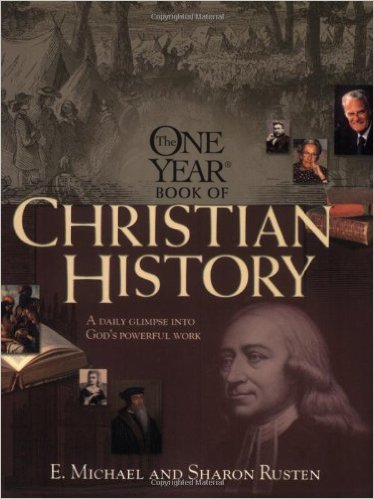
     After a week in Costa Rica I am back to sending out the weekly thought!  And being in that foreign context led me to choose sending out this encouraging account regarding a missionary who struggled for many years in a foreign context before seeing any fruit whatsoever. I trust that you (especially if you are active in sharing the faith) will be encouraged by it.  It comes to you from "The One Year Book of Christian History" by Michael and Sharon Rusten.  Enjoy.


     "Pioneer missionary Adoniram Judson graduated from Brown University as valedictorian at the age of nineteen, and in 1810 graduated in the first class of Andover Theological Seminary.  After much prayer, he and his wife (Ann Hasseltine) sailed from the docks in Salem, Massachusetts, to the predominantly Buddhist country of Burma (now Myanmar), arriving in 1813.  Shortly thereafter he was joined by two other missionaries. However, after six years of labor not one Burmese had trusted in Christ.
     Then on June 6, 1819, Judson received a letter from Moung Nau, a Burmese man who had shown great interest in the gospel but up to this point had not acted on it.  The letter read:  "I Moung Nau, the constant recipient of your excellent favor, approach your feet. Whereas my Lord's three (ie: Judon and the other two missionaries) come to the country of Burma -- not for the purposes of trade, but to preach the religion of Jesus Christ, the Son of the eternal God -- I, having heard and understood, am, with a joyful mind, filled with love. I believe that the divine Son, Jesus Christ, suffered death in the place of men, to atone for their sins. Like a heavy-laden man, I feel my sins are very many. The punishment of my sins I deserve to suffer. Since it is so, do you, sirs, consider that I, taking refuge in the merits of the Lord Jesus Christ, and receiving baptism, in order to become his disciple, shall dwell as one with yourselves, a band of brothers, in the happiness of heaven, and therefore grant me the ordinance of baptism. It is through the grace of Jesus Christ that you, sirs, have come by ship from one country and continent to another and that we have met together. I pray the Lord's three that a suitable day may be appointed, and that I may receive the ordinance of baptism. Moreover, as it is only since I have met with you, sirs, that I have known about the eternal God, I venture to pray that you will still unfold to me the religion of God, that my old disposition may be destroyed, and my new disposition improved."
     Three weeks later Moung Nau was baptized, and the barrier of unbelief was broken. What enabled Adoniram Judson to faithfully labor so many years before seeing any fruit from his labors? We can see evidence of his motivation in the following lines, which he penciled on the inner cover of a book he used in his translation of the Bible into Burmese:

     "In joy or in pain,
     Our course be onward still;
     We sow on Burma's barren plain;
     We reap on Zion's hill."
     After thirty-seven years as a missionary in Burma, Judson could look back not only on good times, but also on extremely difficult times. He was imprisoned for 20 months between 1824-1826. The sufferings and brutalities of those 20 long months in prison -- half-starved, iron-fettered, and sometimes trussed and suspended by his mangled feet with only head and shoulders touching the ground -- are described in detail by his wife, who passed away shortly afterward from illness in 1826.  From the time he landed Judson struggled against persecution, disease, and the sadness and discouragement caused by the death.  He not only lost his wife Ann to death, but two of the children he had with her -- 7 month old son Roger, and 2 year old daughter Maria, not to mention one that was still-born. After eight years alone, he married his second wife Sarah Hall Boardman and lost three of the children he had with her -- only to lose her to sickness as well.
     Yet at the end of Judson's labors, he could look with satisfaction on a complete Burmese translation of the Scriptures; a Burmese-English dictionary; sixty-three churches among the Burmese and Karens; and best of all, seven thousand Burmese Christians.  Today there are more than two million believers in Myanmar, and 40 percent of the Karen people to whom Judson directed his ministry are now Christians."

     Judson's belief was that nothing enduring comes without sacrifice. Ann was of the same mindset, and her story of faithfulness and perseverance is also well worth reading.  It is hard for many to imagine what makes a people give up and sacrifice so much. Jim Elliot (who lost his life reaching out to the Auca Indian Tribe in the jungles of Ecuador probably summed it up best when he wrote in his diary (addressing those who asked why one would give up so much to go reach a small group of people): "He is no fool who gives what he cannot keep to gain that which he cannot lose."
     What would you be willing to lose for the sake of Christ, His church, and those who have never heard?

     If you would like to read more about the amazing life of Adoniram Judson, the book "To the Golden Shore - The Life of Adoniram Judson" is superb, and there is a free ebook "Adoniram Judson Biography"   Download eBook as a PDF file.    Download eBook as an EPUB file formatted for readers like the Nook, Sony Reader, and Apple iBooks (iPad, iPhone, iPod)  Download eBook as a MOBI file formatted for Kindle applications (this option works well on some mobile devices, and not so well on others).
     Prayer note: Between 2001 and 2004 up to 200,000 Karen people were driven from their homes due to war, with 160,000 more refugees, mostly Karen, living in refugee camps over the border of Thailand. The largest camp was the one in Mae La, Tak province, Thailand, where about 50,000 Karen refugees are hosted.  As recently as February 2010, the Burmese army continued to burn Karen villages, displacing thousands of people.   A 2005 New York Times article on a report by Guy Horton into depredations by the Myanmar Army against the Karen and other groups in eastern Myanmar stated: "Using victims' statements, photographs, maps and film... he purports to have documented slave labor, systematic rape, the conscription of child soldiers, massacres and the deliberate destruction of villages, food sources and medical services."  Many of the refugees form that attempted genocide were brought to the United States and settled in Nebraska, central New York, Pennsylvania and California.  Pray for their adjustments, faith, and the painful memories of atrocities like those mentioned above.

In His Service, Pastor Jeff

3.13.2018

Ulster Revival

Greetings All,

     This week's "thought" has to do with an amazing move of God in Ireland between 1857 and 1860.  It's a true account of what led to the "Ulster Revival" in 1859.  I have taken the majority from a devotional book I use, entitled: "The One Year Book of Christian History," by E. Michael Rusten and Sharon Rusten, but I have also woven in facts from two other sources reformationsa.org and banneroftruth.org). I send it along to encourage you to speak the truth and persist in praying for the church. Enjoy!


     "In the spring of 1856 an English lady by the name of Mrs. Colville came to Ulster, Ireland from Gateshead, England.  She began a program of house to house visitation with a view to winning souls for Christ. In November she returned to England in low spirits thinking that God had not acknowledged her labors and feeling that her work had been unfruitful. She was wrong." 
     The following account tells us why....

     "In 1856 in Ulster, Ireland, a young man named James McQuilkin was invited to tea with three ladies (a Miss Brown and two others). They were there to hear a visiting woman named Mrs. Colville who skirted the civilities of discussing the weather and spoke openly on a subject McQuilkin found uncomfortable: the condition of the soul (ie: did each have a personal interest in the Lord Jesus and had they received the new birth).  After one guest at the tea party described the nature of her Christian experience, Mrs. Colville said: "My dear, I don't believe you have ever known the Lord Jesus."  Though not addressed directly to McQuilkin, he would later write: "I knew that she spoke what was true of me.  I felt as if the ground were about to open beneath me and let me sink into hell. As soon as I could, I left their company. For two weeks I had no peace day or night. At the end of that time I found peace by trusting the Lord Jesus." 
     The following year McQuilkin felt burdened to pray for his neighbors. He asked three friends to join him. Once a week the four men gathered at the village schoolhouse to pray for each person in their community by name. The town was Ahogill, County Antrim, Ulster, Ireland. The date: September 1857.  They studied the Word and prayed for three months before there were any visible results. Two more men joined their group, and then on New Year's Day, 1858, the first conversion took place as a result of the prayer meeting. By the end of 1858, about 50 young men were taking part in the weekly prayer meeting.  Many people ridiculed these young men praying for Revival. Others criticized their determination not to allow women in their prayer meeting. The young men responded that they did not believe it advisable to allow women in their prayer meeting, as the world would have said that the meetings were being held only for the purposes of flirtation. As it happened, young women started their own prayers meeting, which were also greatly blessed.
     Meanwhile, unbeknownst to them, God was laying the same burden on many hearts, and similar prayer groups started throughout northern Ireland. Pastors began to preach about revival. In December of 1857 McQuilkin's group rejoiced to see the first conversion in Ahogill. But widespread revival did not come. Still, God's people prayed -- for nineteen more months they prayed. Then in March of 1859,  in the city of Ballymena, just six miles from Ahogill, a thirty-year-old man fell prostrate one morning in the crowded marketplace and called out, "Unclean! Unclean! God be merciful to me a sinner!"  There was an overpowering conviction that a great Revival had come at last. The night of March 14, 1859, the McQuilkin group responded by inviting Christians to a prayer meeting at Ahogill Presbyterian Church. The church was so crowded that they moved the meeting out into the street. There hundreds of people knelt in the mud and rain, confessing their sins and praising God. They were the first of 100,000 people God called to himself in 1859 in what became known as the Ulster Revival. Men who had been previously unaffected bowed in earnestness and sobbed like children. Churches were crowded. Family worship became almost universal. There was joy unutterable.
     In Coleraine, in Antrim County, at the local school, a school teacher seeing one young boy clearly under the conviction of sin, advised him to go home and call upon the Lord in private. He sent with him an older boy who had found peace the day before. After these two boys had travailed in prayer for some time, the young boy was blessed with sacred peace and rejoicing he returned to the school, and with beaming face, reported to his teacher; "Oh Sir, I am so happy, I have the Lord Jesus in my heart!"  The attention of the whole class was arrested.  One boy after another silently slipped out of the classroom and after a while the schoolteacher looked out to see boys on their knees throughout the playground, each one in earnest prayer. He turned to the two boys and asked them; "Do you think you can go and pray with these boys?" They did so and kneeling down with one after another, they began to implore the Lord to forgive their sins for the sake of Him who had borne them all upon the Cross.  There was a great spiritual movement among young people. It was not uncommon for teenage boys to hold street meetings to reach their peers for Christ. At one such meeting an Irish clergyman counted forty children and eighty adults listening to the preaching of twelve-year-old boys.
     The results were remarkable. In 1860 in County Antrim the police had an empty jail and no crimes to investigate. Judges often had no cases to hear. With their owners converted, pubs closed and alcohol consumption fell so drastically that whiskey distilleries were sold. Gambling at horse races fell of by 95%. A visitor to Ulster reported: Thronged church services, abundant prayer meetings, increased family prayers, unmatched Scripture reading, increased giving, converts remaining steadfast."  The Ulster movement touched off similar revivals in England, Scotland and Wales. Edwin Orr wrote of the 1859 Revival: "This Revival which originated in a prayer meeting of four young men in the village school house of Kells made a greater impact spiritually on Ireland, than anything else known since the days of St. Patrick."  Or to take it back a step further, God drew hundreds of thousands of people to himself through a movement which all began with a woman unafraid to speak spiritual truth over tea." 
     Don't ever give up praying or speaking Gospel truth.
     God's richest blessings on you and your churches, Pastor Jeff

3.30.2016

"Who are the Mormons, where did they come from, and what do they believe?"

Greetings All,


Today's "thought" is meant to be informative and instructive. It comes from a book I have quoted from before, "The One Year Book of Christian History," authored by E. Michael Rusten and Sharon Rusten.  I include this post because it is a short basic answer to a question I get asked often: "Who are the Mormons, where did they come from, and what do they believe?" If you have ever wondered about their origins and some of what they believe, this is a helpful little answer to those questions. Enjoy.

     "In 1820 a fourteen-year-old boy named Joseph Smith Jr. claimed to have received a vision in which God the Father and God the Son appeared to him and told him that they had chosen him to help restore true Christianity. Apparently not overly moved by this revelation, he went back to digging for Captain Kidd's treasure with his father and brother [on their farm in NY].
     When he was seventeen, he claimed to have been visited by an angel named Moroni, who told him that he would receive the "golden plates" of the Book of Mormon to translate.  In 1827 Smith alleged that he unearthed the plates in Cumorah, a hill near Palmyra, New York. Smith said he translated the "reformed Egyptian hieroglyphics" with the help of the miraculous glasses he supposedly received from Moroni.  Oliver Cowdery, a schoolteacher and a convert of Smith's, assisted in the translation, although no one but Smith ever saw the golden tablets.
     In 1829 during the translation, the "Prophet" as he liked to be called, alleged that John the Baptist was sent by Peter, James and John to bestow the "Aaronic priesthood" on himself and Oliver.  Early in 1830 they completed their translation, and "The Book of Mormon" was published and copyrighted. On April 6, 1830, Joseph Smith Jr., his two brothers Hyrum and Samuel, Oliver Cowdery, and David and Peter Whitmer Jr., met in Fayette, New York, to found a new religious society they called, "The Church of Christ." Eventually known as "The Church of Jesus Christ of Latter-Day Saints," the Mormon Church was begun.

     Soon after, the Mormons moved to Kirkland, Ohio, where they attracted many new followers. In six years they grew to more than 16,000 members. Because of Smith's reputation as a charlatan, and accusations that his religion was a hoax, the new church had to move several times. Next they moved to Jackson County, Missouri, and then to Nauvoo, Illinois, but their problems followed them to each new location. The trouble intensified in Nauvoo when their practice of polygamy became public. The exact number of Smith's wives is not known, but it has been estimated to be as high as fifty.
     When Smith called for the destruction of a newspaper that was outspokenly anti-Mormon, the state of Illinois stepped in to control the dispute and jailed Joseph Smith and his brother Hyrum.  On June 27, 1844, an angry mob stormed the jail and murdered both men.
     After the death of Joseph Smith, Brigham Young became the leader of the Mormons. Young led the group across the Great Plains and over the Rocky Mountains to the Salt Lake Valley (in present day Utah) in 1846.  Finally, the Mormons were granted recognition as a legitimate religion. Brigham Young had twenty-seven wives and fifty-six children. Today the Mormons claim more than 11 million members, more than half who live outside the United States.

     What do Mormons believe? Simply stated, Mormons teach that all gods were originally men [who were good enough to become gods] and that all men have the potential to become gods. Being a king and priest to God is a step toward becoming a god. They believe that all persons were pre-existent and, depending on their good works, go to one of three levels of heaven: telestial (for unbelievers), terrestial (for ignorant but good people), and celestial (for good Mormons).  Jesus, who is the Jehovah of the Old Testament, will reign over a millennial kingdom from Independence, Missouri."

Just a few more points of interest:
1.) Mormons believe in many gods.  
2.) Jesus is a God (one of many), but was not always a God -- he progressed to become a God. 
3.) He was pre-existent, but in Mormon theology so are the spirits of all people, waiting for people to provide them bodies to live in through procreation. 
4.) The Gods have begotten spirit children. 
    a.) These spirit children are restless until they have a body to reside in. 
    b.) Bodies for these spirit children are provided through human procreation.
    c.) Therefore man's chief end is to glorify the Gods by having babies. 
    d.) Procreation is man's primary duty, the more children one has the more virtuous they become. (This seems to be what gave birth to their view of polygamy, a practice disavowed in 1890 in "The Anti-polygamy Manifesto" in order for Utah to gain statehood -- though it is still practiced by small splinter groups.). 
5.) Mormons also believe that a person is saved by a mixture of grace, faith, repentance, baptism, good works, and obedience to Mormon doctrine. 
6.) They believe Christ's shed blood only cleanses us from original sin, or Adam's transgression, and opened the door to full salvation which one must work for once the door is opened. 
7.) Mormons also baptize on behalf of the dead (thus their extensive interest in genealogy). Since they believe one cannot be saved apart from baptism, they receive baptism proxy on behalf of dead ancestors in order to save them.  
8.) They also believe in the doctrine of eternal progression: "As man is, God once was: as God is, man may become."  (See "Mormonism," by John Gerstner, Baker Books, "The Church of Jesus Christ Latter Day Saints," by Steven Tsoulkalas.)

     I hope such information may be helpful to others who have sought to understand how Mormonism differs from historic Christianity, since many terms used in conversation are similar, but their meanings and definitions differ.
"The truth will set you free," Pastor Jeff

10.01.2014

William Carey - "The Father of Modern Day Missions"

Greetings All,

     Today's 'thought' comes from a book entitled "The One Year Book of Christian History." The authors are E. Michael and Sharon Rusten. It is set up in a daily devotional style and each entry is tied to some event in history that happened on that particular day of the year. For those who enjoy learning about church history, I highly recommend it.
     Today's selection is about William Carey.  He is known to us today as, "The Father of Modern Day Missions," though he was not the first to push the foreign missionary endeavor, and many ministers in his day called him, "the hare-brained enthusiast."  Yet for an uneducated shoemaker his accomplishments in the furtherance of missions are stunning. I trust you will find his story inspiring and challenging. Enjoy.

     "William Carey was born in 1761 to a poor Anglican family in rural England. He wanted to become a professional gardener, but a skin disease prevented him from working out in the sun. He therefore began training as a shoemaker's apprentice at the age of fourteen. This was a providential career shift because a fellow apprentice, John Warr, was a Christian.
     Being from a staunch Anglican family that despised Dissenters (non-Anglicans), Carey was uneasy with the evangelical arguments presented to him. However, over time Carey began to feel a "growing uneasiness and stings of conscience gradually increasing" with regard to Warr's beliefs. After a traumatic incident when Carey was caught trying to pass off a counterfeit coin as real money to his employer, he was so ashamed that for the first time he began to see himself as morally bankrupt and in need of salvation. Over the next two years he came to "depend on a crucified Savior for pardon and salvation." He was baptized in 1783.
     Although he did not attend high school or college, Carey possessed a keen intellect. He taught himself five languages (Latin by the age of 12, and hew went on to master Greek, Hebrew, French and Dutch). By the end of his life knew dozens of languages and dialects.

     Carey became a Calvinist Baptist preacher and followed a strict system of study. He studied the classics on Mondays, science and history on Tuesdays, and the Hebrew and Greek Scriptures the rest of the week. During this time he became increasingly burdened for overseas missions. He published a pamphlet called, "An Inquiry into the Obligation of Christians to use Means for the Conversion of the Heathens." (He also made a map of the world out of a scrap piece of leather, hung it on the wall in his cobblers shop, and prayed over the countries of the world.)
     For years he tried to convince fellow Baptist ministers of the need to form a missionary society in order to spread the Gospel across the world. Although the leaders of the denomination kept putting him off, he persisted. 
     On the evening of May 30, 1792, Carey preached at the annual Baptist association meeting. His text was Isaiah 54:2-3, and his theme was, "Expect Great Things From God; Attempt Great Things For God."  He urged his fellow pastors to commit to venturing forth among the nations with the Gospel, having confidence that God would bless the message and extend His kingdom.
     Carey's address made a profound impression on the ministers in attendance...The next day, May 31, 1792, they agreed to form the "Baptist Society for Propagating the Gospel Among the Heathen." A snuff box was passed around to collect contributions for the new undertaking, later renamed The Baptist Missionary Society.
     In 1793 Carey and two other men sailed for India as missionaries. Carey worked there until his death in 1834 without ever taking a furlough.
     His comprehensive approach to missions included evangelization, church planting, and Bible translation, but also included working for social reform. He established schools, hospitals, and a savings bank. He founded the Agricultural and Horticultural Society of India, started a Bengali newspaper, supervised the start of India's first printing press, paper mill, and steam engine.  He also taught languages at a local college, wrote a Bengali-English dictionary, and founded the first Christian college in Asia. He was instrumental in legislation outlawing Suttee (the burning alive of Hindu wives on the funeral pyres of their deceased husbands).
     In all, Carey translated the complete Bible into six languages and portions into twenty-nine others (and that was after the warehouse containing the Sanskrit and Bengali dictionaries he had written, two grammar books, and ten translations of the Bible went up in flames, in 1812. In surveying the scene Carey said, "In one short evening years of labor were consumed. How unsearchable are the ways of God...The Lord has laid me low, that I may look more simply to Him.")         
     He expected great things from God, and attempted great things for God, and God brought them to pass."

   As former colleague used to say, "It goes to show what God can do with a heart touched and made willing by God."  Carey was among the greats in the modern missions movement -- self-trained, self-educated, and God-motivated. Oh for a few more of his kind!
Blessings on your day, Pastor Jeff

1.26.2011

Did God Answer?


Greetings All,

Today's "thought" comes from a book entitled "The One Year Book of Christian History." It contains 365 separate devotionals or what the authors E. Michael Rusten and Sharon Rusten call "daily glimpse's into God's powerful work."

As one who loves history, I have gone through it and returned to it time and again. Each devotion or historical glimpse references something that happened on that particular day in history. Today's thought is from January 18 and references the death of Amy Carmichael, the well known missionary to India who ministered there without ever once returning home to her native Ireland or teenage home, England, from 1895 until the day she died -- Jan. 18, 1951.

If you would like to read more about this amazing woman, Elisabeth Elliot's biography of her life, entitled "A Chance to Die -- The Life and Legacy of Amy Carmichael," is superb reading. The title of this entry is "You Never Know How God Will Answer (Prayer)." Hopefully it will give you food for thought! Enjoy.

"Amy Carmichael was born in 1867 in Millisle, County Down, Northern Ireland. At the tender age of twelve, she was sent to a Wesleyan Methodist boarding school in Yorkshire, England. There at age fifteen, during a children's service, she heard the song "Jesus loves me this I know, for the Bible tells me so." In the quiet moments following the song, Amy realized that in spite of her mother's teaching that Jesus loved her, she had never invited him into her life. 'In His great mercy the Good Shepherd answered the prayers of my mother and my father and many other loving ones, and drew me, even me, into his fold'...

Amy became interested in missions, and in 1893 she sailed for Japan as the first Keswick missionary with the Church Missionary Society. After spending less than two years in Japan and Ceylon, she was forced to return to England because of poor health.

In November 1895 Amy again left England to work with the Church of England Zenana Missionary Society in South India. Traveling on evangelistic trips throughout India, she became aware that many young Indian girls were offered by their parents or guardians as temple prostitutes -- a practice later outlawed. Touched by their plight, Amy began rescuing young girls from this fate.

By 1901 she, along with the Indian colleagues and converts from her many trips, settled in Dohnavur. In 1926 she founded the Dohnavur Fellowship, a home and school for rescued children. Here the Indian children were educated and trained to serve God as Christian nurses, teachers, and evangelists... So committed was Amy Carmichael to India that from the time she arrived in November 1895, she never returned to England.

On October 24, 1931, Amy visited a Dohnavur dispensary and was concerned about the Fellowship's financial support. Seeking guidance* regarding money, she fell silent for a long time and then prayed: 'Do anything, Lord, that will fit me to serve Thee and to help my beloveds.'

Later that same day she was driven to a house she had rented for another dispensary. There in the darkness she fell into a newly dug pit, breaking her leg, dislocating her ankle, and twisting her spine. As a result of her fall, she was bedridden the last twenty years of her life. Yet from her bed she remained in charge of Dohnavur and also wrote prose and poetry through which the work of Dohnavur became known around the world.

In 1938 Carmichael believed God gave her a promise that she would die in her sleep. This she did on January 18, 1951."

The implictions drawn from this story are too stark to overlook: The same day she prayed, she was injured, and the books she now had the time to write helped make the work "known around the world" and brought in the financial support she had gone before God praying for.

Dare we ask, then, the question that can't help but arise: "If the injury led to the answer of her prayer, could it be that her fall was the way God answered?" Do you think Mr. Rusten is right when he implies in the title of this entry that it was God's answer? ("You Never Know How God Will Answer.")


Your own answers will likely vary from God's sovereignty, to fate, to chance, to coincidence. Some might throw in bad luck. What about you? What do you say? The answer you choose will likely depend on your view of God, how he works in providence, his love and wisdom, and your understanding of biblical truth in general. Yet it is worth contemplating. Are things random, or is there a sovereign God who oversees them? And if he does oversee them, then to what extent does he do so, and in what ways?

In the Bonds of Christian Fellowship, Pastor Jeff
---------------------------------------------------------------------
* One last insight to be gained from Amy Carmichael is her well known steps for discerning God's will or guidance in her life. They are as follows:
1.) The Word of the Lord in the Bible.
2.) The Word of the Spirit in our heart.
3.) The circumsatnces of our lives, which have been arranged by God.

All three must point one way. It is never enough for any two of them to agree, in order for it to be
taken as showing God's will. If the voice is God's, all three will agree."