Visitors

free counters
Showing posts with label Birth. Show all posts

11.19.2019

God’s Providence

Greetings All,

     This morning at the men’s group I attend (where we were discussing the life of Fanny Crosby from last week’s thought) the conversation strayed into a discussion of the providence of God, or the sovereignty of God over all the affairs of our lives. Even the smallest details. Even the hurtful details. Things we can now (though not at the time we were going through it) thank God for, and even the things we may have wished had been different. God's providence is His divine oversight of the all that happens in this universe.
     In light of that conversation I wanted to send out a “thought” on that topic. A topic which I do not hear spoken of as much as I used to. Yet,  I would ask you to read, consider what is said, and see if what follows fits with what you believe and have been taught. I myself find the topic fascinating and very comforting. I trust you might also. This selection is by Ray Pritchard. Enjoy.
     “Providence is God’s gracious oversight of the universe.  Every one of those words is important. God’s providence is one aspect of his grace. Oversight means that he directs the course of affairs. The word universe tells us that God not only knows the big picture, he also concerns himself with the tiniest details. Here are five statements that unfold the meaning of God’s providence in more detail.

He upholds all things.
He governs all events.
He directs everything to its appointed end.
He does this all the time and in every circumstance.
He does it always for his own glory.
     The doctrine of God’s providence teaches us several important truths:  FIRST, God cares about the tiniest details of life. Nothing escapes His notice for He is concerned about the small as well as the big. In fact, with God there is no big or small. He knows when a sparrow falls and he numbers the hairs on your head (Luke 12:6-7). He keeps track of the stars in the skies and the rivers that flow to the oceans (Job 38-41). He sets the day of your birth, the day of your death, and he ordains everything that comes to pass in between (Psalm 139). SECOND, he uses everything and wastes nothing There are no accidents with God, only incidents. This includes events that seem to us to be senseless tragedies (Romans 8:28). THIRD, God’s ultimate purpose is to shape His children into the image of Jesus Christ (Romans 8:29). He often uses difficult moments and human tragedies to accomplish that purpose.
     Many verses in the Bible teach these truths, including Acts 17:28, Colossians 1:17, Hebrews 1:3, Proverbs 16:9 (“in his heart a man plans his course, but the Lord determines his steps”), and especially Psalm 115:3 (“Our God is in heaven; he does whatever pleases him”). The doctrine of God’s providence is really a combination of four other attributes:

Sovereignty—He is in control.
Predestination—He is in charge of how everything turns out.
Wisdom—He makes no mistakes.
Goodness—He has our best interests at heart.
     In the words of R. C. Sproul, “God doesn’t roll dice.” Nothing happens by chance. Ever."
-------------------------------------------------
     Here is a story that is said to be behind the incredibly insightful and beautiful words of William Cowper's hymn that follows.  A story that exemplifies God's providence. Reportedly this is the last hymn William Cowper (1731-1800) ever wrote, and here is the story said to be behind it. Cowper often struggled with deep depression and doubt. One night he decided to commit suicide by drowning himself. He called a driver (horse and carriage, obviously) to take him to the Thames River. However, thick fog came down and prevented them from finding the river (another version of the story says the driver got lost deliberately). After driving around lost for a while, the gentleman finally stopped and let Cowper out. To Cowper’s surprise, he found himself on his own doorstep. God had sent the fog to keep him from killing himself. He realized that even in our blackest moments, God watches over us.
     He wrote the following hymn in light of that and other incidents (difficult and pleasant in nature) which evidenced the hand of God guiding the circumstances of his life -- can we say in a "Proverbs 16:9" manner?   “In his heart a man plans his course, but the Lord determines his steps.”

GOD MOVES  IN A MYSTERIOUS WAY
God moves in a mysterious way
His wonders to perform;
He plants His footsteps in the sea,
And rides upon the storm.
Deep in unfathomable mines
Of never failing skill
He treasures up His bright designs
And works His sovereign will

Ye fearful saints, fresh courage take;
The clouds ye so much dread
Are big with mercy and shall break
In blessings on your head.

Judge not the Lord by feeble sense,
But trust Him for His grace;
Behind a frowning providence
He hides a smiling face.

His purposes will ripen fast,
Unfolding every hour;
The bud may have a bitter taste,
But sweet will be the flower.

Blind unbelief is sure to err
And scan His work in vain;
God is His own interpreter,
And He will make it plain."
     Can you trace the hand of God's providence in your life?  Do the circumstances of your life suggest an invisible hand of power and grace was guiding you to a destination you did not intend to go to?  Was your story written by you, or do the details of your life-story suggest another author scripted it?  Just some thoughts to ponder….
     Grateful for a God who cares enough to guide, direct and sometimes over-rule our choices, Pastor Jeff

6.05.2018

Personal Testimony of Dr. A. C. Dixon (1854-1925)

Greetings All!

     I chose this week's "thought" for the sheer honesty and transparency evidenced in the heart of the pastor who penned it.  It is a personal testimony that comes from, Dr. A. C. Dixon (1854-1925), pastor of the Baptist Church in Chapel Hill North Carolina, and then later pastor at the Ruggles Street Baptist Church in Boston. His testimony speaks for itself. Enjoy.


"The hand of the Lord was upon him." 
Ezekiel 1:3

     "While I was pastor at the Baptist Church in Chapel Hill, the university town of North Carolina, I was made to realize that, as a preacher, I was a dismal failure. 
     Parents all over the state wrote to me and requested that I look after the spiritual welfare of their sons in the university. I prepared sermons with the students in mind and was glad to see that they showed their appreciation by attending our Sunday services in large numbers.  At one point we appointed a week of prayer and preaching with the single purpose of winning them to Christ, and they attended the evening meetings.
     About the middle of the week their interest seemed to turn into opposition. The spirit of mischief possessed them. One night they tried to put out the lights. As I walked through the grove around the university buildings, I sometimes heard my voice coming from behind a tree. A bright student had caught a part of my sermon the night before, and he was mimicking me in thought and tone for the benefit of his fellow students who showed their appreciation by applause and laughter.  As I walked by an open window I heard my voice being mimicked in prayer and floating out.  I felt defeated and seriously considered resigning from the pastorate.  No one had been saved.

     After a restless night I took my Bible and went into the grove and remained there until three o'clock in the afternoon. As I read I asked God to show me what was the matter, and the Word of God searched me through and through giving me a deep sense of sin and helplessness, such as I had never had before...  That evening the students listened reverently, and at the close two pews were filled with those who had responded to the invitation. The revival continued day after day until more than seventy of the students had confessed Christ.
     Now the practical question is: "What did it?"   Certainly not I; I fear it was the "I" that kept God from doing it for a long time. There came to me out of the day's experience a clear-cut distinction between [human] influence and [divine] power.  Influence is made up of many things -- intellect, education, money, social position, personality, organization -- all of which ought to be used for Christ.   But power is God Himself at work unhindered by our unbelief and other sins.
     The word "influence" occurs but once in the Bible, and that in Job, where Jehovah speaks to the old patriarch of the "sweet influences of the Pleiades" (one of the nearest star clusters to the earth) -- a good text for a young minister to preach on in the springtime, but not sufficient in dealing with a group of mocking university students.  The New Testament word "power" holds the secret, and the power from on high was no other than God the Holy Spirit touching the soul through the living Word and giving it birth from above. I had been trusting and testing many other good things, only to fail.  The touch of God did in a minute what all my best efforts could not do." 
     His testimony speaks for itself. People may mock and laugh at and easily resist all our efforts.  But when the power of the Spirit attends what we say, even our feeblest human efforts can be used of God to melt the most hardened heart. We may (by our innate natural gifts) be able to influence people in some small and temporary way (and many pastors have been content with that), but only God (by the working of His mighty power) can change a hard heart permanently for all eternally.  Therefore, it should be our earnest desire to seek the assistance of this power, and not be content until our spirit is bathed in it and our efforts are attended by it.

In The Service of the Gospel, Pastor Jeff


3.13.2018

Ulster Revival

Greetings All,

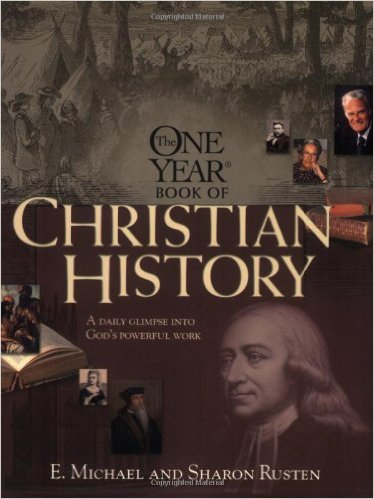
     This week's "thought" has to do with an amazing move of God in Ireland between 1857 and 1860.  It's a true account of what led to the "Ulster Revival" in 1859.  I have taken the majority from a devotional book I use, entitled: "The One Year Book of Christian History," by E. Michael Rusten and Sharon Rusten, but I have also woven in facts from two other sources reformationsa.org and banneroftruth.org). I send it along to encourage you to speak the truth and persist in praying for the church. Enjoy!


     "In the spring of 1856 an English lady by the name of Mrs. Colville came to Ulster, Ireland from Gateshead, England.  She began a program of house to house visitation with a view to winning souls for Christ. In November she returned to England in low spirits thinking that God had not acknowledged her labors and feeling that her work had been unfruitful. She was wrong." 
     The following account tells us why....

     "In 1856 in Ulster, Ireland, a young man named James McQuilkin was invited to tea with three ladies (a Miss Brown and two others). They were there to hear a visiting woman named Mrs. Colville who skirted the civilities of discussing the weather and spoke openly on a subject McQuilkin found uncomfortable: the condition of the soul (ie: did each have a personal interest in the Lord Jesus and had they received the new birth).  After one guest at the tea party described the nature of her Christian experience, Mrs. Colville said: "My dear, I don't believe you have ever known the Lord Jesus."  Though not addressed directly to McQuilkin, he would later write: "I knew that she spoke what was true of me.  I felt as if the ground were about to open beneath me and let me sink into hell. As soon as I could, I left their company. For two weeks I had no peace day or night. At the end of that time I found peace by trusting the Lord Jesus." 
     The following year McQuilkin felt burdened to pray for his neighbors. He asked three friends to join him. Once a week the four men gathered at the village schoolhouse to pray for each person in their community by name. The town was Ahogill, County Antrim, Ulster, Ireland. The date: September 1857.  They studied the Word and prayed for three months before there were any visible results. Two more men joined their group, and then on New Year's Day, 1858, the first conversion took place as a result of the prayer meeting. By the end of 1858, about 50 young men were taking part in the weekly prayer meeting.  Many people ridiculed these young men praying for Revival. Others criticized their determination not to allow women in their prayer meeting. The young men responded that they did not believe it advisable to allow women in their prayer meeting, as the world would have said that the meetings were being held only for the purposes of flirtation. As it happened, young women started their own prayers meeting, which were also greatly blessed.
     Meanwhile, unbeknownst to them, God was laying the same burden on many hearts, and similar prayer groups started throughout northern Ireland. Pastors began to preach about revival. In December of 1857 McQuilkin's group rejoiced to see the first conversion in Ahogill. But widespread revival did not come. Still, God's people prayed -- for nineteen more months they prayed. Then in March of 1859,  in the city of Ballymena, just six miles from Ahogill, a thirty-year-old man fell prostrate one morning in the crowded marketplace and called out, "Unclean! Unclean! God be merciful to me a sinner!"  There was an overpowering conviction that a great Revival had come at last. The night of March 14, 1859, the McQuilkin group responded by inviting Christians to a prayer meeting at Ahogill Presbyterian Church. The church was so crowded that they moved the meeting out into the street. There hundreds of people knelt in the mud and rain, confessing their sins and praising God. They were the first of 100,000 people God called to himself in 1859 in what became known as the Ulster Revival. Men who had been previously unaffected bowed in earnestness and sobbed like children. Churches were crowded. Family worship became almost universal. There was joy unutterable.
     In Coleraine, in Antrim County, at the local school, a school teacher seeing one young boy clearly under the conviction of sin, advised him to go home and call upon the Lord in private. He sent with him an older boy who had found peace the day before. After these two boys had travailed in prayer for some time, the young boy was blessed with sacred peace and rejoicing he returned to the school, and with beaming face, reported to his teacher; "Oh Sir, I am so happy, I have the Lord Jesus in my heart!"  The attention of the whole class was arrested.  One boy after another silently slipped out of the classroom and after a while the schoolteacher looked out to see boys on their knees throughout the playground, each one in earnest prayer. He turned to the two boys and asked them; "Do you think you can go and pray with these boys?" They did so and kneeling down with one after another, they began to implore the Lord to forgive their sins for the sake of Him who had borne them all upon the Cross.  There was a great spiritual movement among young people. It was not uncommon for teenage boys to hold street meetings to reach their peers for Christ. At one such meeting an Irish clergyman counted forty children and eighty adults listening to the preaching of twelve-year-old boys.
     The results were remarkable. In 1860 in County Antrim the police had an empty jail and no crimes to investigate. Judges often had no cases to hear. With their owners converted, pubs closed and alcohol consumption fell so drastically that whiskey distilleries were sold. Gambling at horse races fell of by 95%. A visitor to Ulster reported: Thronged church services, abundant prayer meetings, increased family prayers, unmatched Scripture reading, increased giving, converts remaining steadfast."  The Ulster movement touched off similar revivals in England, Scotland and Wales. Edwin Orr wrote of the 1859 Revival: "This Revival which originated in a prayer meeting of four young men in the village school house of Kells made a greater impact spiritually on Ireland, than anything else known since the days of St. Patrick."  Or to take it back a step further, God drew hundreds of thousands of people to himself through a movement which all began with a woman unafraid to speak spiritual truth over tea." 
     Don't ever give up praying or speaking Gospel truth.
     God's richest blessings on you and your churches, Pastor Jeff

3.30.2016

"Who are the Mormons, where did they come from, and what do they believe?"

Greetings All,


Today's "thought" is meant to be informative and instructive. It comes from a book I have quoted from before, "The One Year Book of Christian History," authored by E. Michael Rusten and Sharon Rusten.  I include this post because it is a short basic answer to a question I get asked often: "Who are the Mormons, where did they come from, and what do they believe?" If you have ever wondered about their origins and some of what they believe, this is a helpful little answer to those questions. Enjoy.

     "In 1820 a fourteen-year-old boy named Joseph Smith Jr. claimed to have received a vision in which God the Father and God the Son appeared to him and told him that they had chosen him to help restore true Christianity. Apparently not overly moved by this revelation, he went back to digging for Captain Kidd's treasure with his father and brother [on their farm in NY].
     When he was seventeen, he claimed to have been visited by an angel named Moroni, who told him that he would receive the "golden plates" of the Book of Mormon to translate.  In 1827 Smith alleged that he unearthed the plates in Cumorah, a hill near Palmyra, New York. Smith said he translated the "reformed Egyptian hieroglyphics" with the help of the miraculous glasses he supposedly received from Moroni.  Oliver Cowdery, a schoolteacher and a convert of Smith's, assisted in the translation, although no one but Smith ever saw the golden tablets.
     In 1829 during the translation, the "Prophet" as he liked to be called, alleged that John the Baptist was sent by Peter, James and John to bestow the "Aaronic priesthood" on himself and Oliver.  Early in 1830 they completed their translation, and "The Book of Mormon" was published and copyrighted. On April 6, 1830, Joseph Smith Jr., his two brothers Hyrum and Samuel, Oliver Cowdery, and David and Peter Whitmer Jr., met in Fayette, New York, to found a new religious society they called, "The Church of Christ." Eventually known as "The Church of Jesus Christ of Latter-Day Saints," the Mormon Church was begun.

     Soon after, the Mormons moved to Kirkland, Ohio, where they attracted many new followers. In six years they grew to more than 16,000 members. Because of Smith's reputation as a charlatan, and accusations that his religion was a hoax, the new church had to move several times. Next they moved to Jackson County, Missouri, and then to Nauvoo, Illinois, but their problems followed them to each new location. The trouble intensified in Nauvoo when their practice of polygamy became public. The exact number of Smith's wives is not known, but it has been estimated to be as high as fifty.
     When Smith called for the destruction of a newspaper that was outspokenly anti-Mormon, the state of Illinois stepped in to control the dispute and jailed Joseph Smith and his brother Hyrum.  On June 27, 1844, an angry mob stormed the jail and murdered both men.
     After the death of Joseph Smith, Brigham Young became the leader of the Mormons. Young led the group across the Great Plains and over the Rocky Mountains to the Salt Lake Valley (in present day Utah) in 1846.  Finally, the Mormons were granted recognition as a legitimate religion. Brigham Young had twenty-seven wives and fifty-six children. Today the Mormons claim more than 11 million members, more than half who live outside the United States.

     What do Mormons believe? Simply stated, Mormons teach that all gods were originally men [who were good enough to become gods] and that all men have the potential to become gods. Being a king and priest to God is a step toward becoming a god. They believe that all persons were pre-existent and, depending on their good works, go to one of three levels of heaven: telestial (for unbelievers), terrestial (for ignorant but good people), and celestial (for good Mormons).  Jesus, who is the Jehovah of the Old Testament, will reign over a millennial kingdom from Independence, Missouri."

Just a few more points of interest:
1.) Mormons believe in many gods.  
2.) Jesus is a God (one of many), but was not always a God -- he progressed to become a God. 
3.) He was pre-existent, but in Mormon theology so are the spirits of all people, waiting for people to provide them bodies to live in through procreation. 
4.) The Gods have begotten spirit children. 
    a.) These spirit children are restless until they have a body to reside in. 
    b.) Bodies for these spirit children are provided through human procreation.
    c.) Therefore man's chief end is to glorify the Gods by having babies. 
    d.) Procreation is man's primary duty, the more children one has the more virtuous they become. (This seems to be what gave birth to their view of polygamy, a practice disavowed in 1890 in "The Anti-polygamy Manifesto" in order for Utah to gain statehood -- though it is still practiced by small splinter groups.). 
5.) Mormons also believe that a person is saved by a mixture of grace, faith, repentance, baptism, good works, and obedience to Mormon doctrine. 
6.) They believe Christ's shed blood only cleanses us from original sin, or Adam's transgression, and opened the door to full salvation which one must work for once the door is opened. 
7.) Mormons also baptize on behalf of the dead (thus their extensive interest in genealogy). Since they believe one cannot be saved apart from baptism, they receive baptism proxy on behalf of dead ancestors in order to save them.  
8.) They also believe in the doctrine of eternal progression: "As man is, God once was: as God is, man may become."  (See "Mormonism," by John Gerstner, Baker Books, "The Church of Jesus Christ Latter Day Saints," by Steven Tsoulkalas.)

     I hope such information may be helpful to others who have sought to understand how Mormonism differs from historic Christianity, since many terms used in conversation are similar, but their meanings and definitions differ.
"The truth will set you free," Pastor Jeff

12.15.2015

What is the real meaning of Christmas?

Greetings All,

This week's thought comes to you from the well-known contemporary preacher/author -- John MacArthur. The title of his message speaks for itself.  Many others have tried to offer an answer to this same question, though in this excerpt -- selected for your Christmas consideration -- he offers his. Other things could be added, but one cannot leave out what he says and still be true to what the Bible wants us to know about Jesus birth.  Enjoy.
What is the real meaning of Christmas?

The answer may just surprise you. For many, Christmas is the time to think of Jesus Christ as a baby in a manger. While the birth of Christ is a special and miraculous event, it isn't the primary focus. The central truth of the Christmas story is this: the Child of Christmas is God. Christmas is not about the Savior's infancy; it is about His deity. The humble birth of Jesus Christ was never intended to conceal the reality that God was being born into the world...

I don't suppose anyone can ever fathom what it means for God to be born in a manger. How does one explain the Almighty stooping to become a tiny infant? Our minds cannot begin to understand what was involved in God's becoming man...Yet He did... One passage in particular, written by the apostle Paul, captures the essence of Jesus' divine nature and underscores the truths that make Christmas truly wonderful -- Colossians 1:15-20 -- where Paul writes:

"He is the image of the invisible God, the first born of all creation, for in Him all things were created... All things have been created by Him and for Him. And He is before all things, and in Him all things hold together. He is also head of the body, the church; and He is the beginning, the first born from the dead; so that He Himself might come to have first place in everything. For it was the Father's good pleasure for all the fullness to dwell in Him, and through Him to reconcile all things to Himself, having made peace through the blood of His cross." 
Ironically, some of the cults that deny Jesus' deity try to use Colossians 1:15-20 to support their view. They suggest, for example, that the phrase "the image of the invisible God" (v. 15) hints that Jesus was merely a created being who bore the image of God in the same sense as all humanity. But the truth is though we were created in God's likeness, we only resemble Him. Jesus, on the other hand, is God's exact image. The Greek word translated "image" means a perfect replica, a precise copy, a duplicate. Paul was saying that God Himself is fully manifest in the Person of His Son, who is none other than Jesus Christ. He is the exact image of God. Jesus Himself said, "He who has seen Me has seen the Father" (John 14:9)... Hebrews 1:3 makes an identical affirmation: "He is the radiance of His glory and the exact representation of His nature."
Christ is to God what the warm brilliance of light is to the sun. He brings God from a cosmic location to the very hearts of men and women. He gives light and life. He reveals God's very essence. They cannot be divided. Neither has ever existed without the other -- they are one (John 10:30). Scripture repeatedly says that God is invisible (John 1:18; 5:37; 1 Timothy 1:17; and Colossians 1:15). But through Christ the invisible God has been made visible. God's full likeness is revealed in Him.
Colossians 1:19 takes the truth a step further: "It was the Father's good pleasure for all the fullness to dwell in Him." He is not just an outline of God, He is fully God.  Colossians 2:9 is even more explicit: "In Him all the fullness of Deity dwells in bodily form." Nothing is lacking. No attribute is absent. He is God in the fullest possible sense, the perfect image...Colossians 1:16-17 explicitly name Him as Creator of everything.  "By Him all things were created..."
       Christ is not part of creation; He is the Creator, the very arm of God, active from the beginning in calling the universe and all creatures into existence. John 1:3 says, "All things came into being by Him, and apart from Him nothing came into being that has come into being." That could not be true if He were Himself a created being...  The size of the universe is incomprehensible... Who made all that? The babe in Bethlehem. He made everything."
With prayers for your Christmas observance to be a holy and joyful one, Pastor Jeff