Visitors

free counters
Showing posts with label bitterness. Show all posts

7.04.2018

Serving Productive Time

Greetings Friends!

     Today I picked up a book someone who was involved in prison ministry had given me.  It's filled with stories, testimonies, and lessons learned and shared by inmates. Some are profoundly uplifting and others a bit  sad -- like the story of one man who killed his father, and has chosen not seek forgiveness for doing so, and even cling to the heavy burden of guilt as a "self-imposed penance" and personal attempt to "ensure that the seriousness of this act is never lessened."   I pray his heart may eventually change, though as a pastor I know that emotional self-punishment is not an uncommon response when someone has done something they deeply regret. Yet, it's a sad choice in light of all that Jesus came and did for us.


     The selection I've chosen to include, however, is more uplifting.  It comes from an inmate named Ken Fox and is titled, "Little Did I Know."  This story (like the other) are both found in a book entitled, "Serving Productive Time," by Tom and Laura Lagana.  Enjoy.

Little Did I Know.

     "For no apparent reason I hated people.  I used to be the most angry, bitter and judgmental person on the planet. I even mistreated the few people who still loved me despite my atrocious behavior, including the woman who I now realize is a gift from God. She has to be an angel. How else could she have loved me and stood by me through fifteen years of this stuff?
     About two and a half years ago I transferred to a facility nearly four hours away from home. Being cut off from friends and family not only fueled my anger, it also gave me a reason to distrust the supposedly merciful and loving God my fiancee loved so dearly. Once I arrived at the new prison I lashed out at this wonderful woman: "What do you think of your God now? I bellowed.  A cheap shot I know, but I didn't care.
     Not long after that I received a letter from my cousin. I hadn't heard from her in five years. It was at her request, and the encouragement of my fiancee, that I looked into a program named "Keryx" (The name of a ministry taken from the Greek word meaning "Herald.")  I asked two Christian guys in my housing unit if they knew anything about the program. They were happy to talk with me and without my knowledge approached the chaplain about getting me into the upcoming Keryx weekend.
     Still carrying a large chip on my shoulder and anger in my heart, I reluctantly agreed to attend. But not before delivering a firm warning. My fists waving in the air, I shrieked, "If anyone tries to hug me, I swear I'll swing first and ask questions later!"  I convinced myself the weekend would have no effect on me, and for the first day I did manage to keep my distance. I was certain that I'd won and that God had nothing to offer me and I aimed to prove it.  But on the third day something happened. All the walls I'd built up around myself -- my false securities and all that I'd come to count on to keep myself safe and distant -- began to collapse.
     Earlier that day one of the volunteers told me that the Holy Spirit had something in store for me.  I smiled and shrugged it off for as long as I could. After that, we were asked to close our eyes and bow our heads. I complied and waited for further instructions. Then, as I sat there, the room suddenly filled with unfamiliar voices. Songs of praise ushered in an overwhelming presence of God. My heart began to swell with emotion. I'd never felt such intense love. 
     At that moment the destructive and negative feelings that I'd built up inside poured forth in non-stop tears. I had no control over my thoughts, my feelings, or my body. The Holy Spirit had arrived, and without a doubt, He had kicked my butt!  For the remainder of the weekend I didn't allow anyone to pass without giving them a hug! My heart of stone had crumbled. My walls had tumbled down. The light of the Lord illuminated my heart where darkness once ruled. Yes, God came for me that day, and since getting a hold of me, He refuses to let go.
     I still have my rough days. The trials and temptations are still there, but the love of God sees me through and I know brighter days are ahead. Now, to answer the question I asked my fiancee two and a half years ago, "What do I think of her God now?" I think OUR God is an awesome God, and I thank Him for saving a wretch like me."
     I picked this story because I saw many similarities between his life story and my own.  The keeping people at a distance. The anger and hardness. And the crumbling that occurred with regard to all those things when the presence of the Holy Spirit started moving upon me and ultimately conquered my heart.
     Ken Fox says that God, "kicked my butt."  I've always told people (I prefer wrestling terms) "He pinned me to the mat and made me cry uncle."   Because fight as we may (and we often fight hard) -- if God has determined to have us as His own, He will have us. And He will conquer us with a love so overwhelmingly powerful and pleasant that we no longer desire to resist it.  I pray the other man mentioned above will one day come to experience that same love and be freed from his own "self-imposed penance" to experience the joy of the Lord, and the peace that passes all understanding.

Living (now) in the Grace of Jesus, Pastor Jeff


10.14.2014

Failure, The Back Door To Success

Greetings All,

     Today's 'thought' comes to you from Erwin Lutzer. It is found in his book, "Failure, The Back Door To Success."
     He is pastor of the Moody Church, Chicago, Illinois.  His book deals with many issues regarding "failure," yet this particular excerpt has to do with how to go about living with yourself, or regaining self-acceptance (through the knowledge of God's acceptance), after failure.
     And since its something most people deal with at one time or another, to one degree or another, I thought it may minister to some of you at this time. After all, who has not had to deal with regrets and how to get beyond them?  Enjoy.
     "Mary looked as if she'd never had a problem in her life. She was friendly, attractive, and cheerful. But beneath that facade, were feelings too deep for words -- feelings of resentment, bitterness and intolerable depression. In fact, she had even contemplated suicide. And that she was a dedicated Christian only made her problem more puzzling...
     Mary's background provided the clue to her problem. Her father died when she was a child, and, as a result, she was entrusted into the care of a harsh step-father who vented his bitterness on this unwanted child. When Mary (then three or four years old) would come to her stepfather for affection, she was brushed aside. One remark he made will always ring in her ears: "I'd like to throw you out! You should be pushed into a ditch."
     Understandably Mary grew up feeling guilty for simply being alive. She felt responsible for her stepfather's misery and developed feelings of inferiority. She knew that she would always be a failure. Furthermore, she believed she deserved to be one. In later years, when friends showed concern for her, she resented it. How could anyone ever love me? she thought...
     Her self-image could not be changed merely by telling her that her opinion of herself was mistaken. Those who reject themselves cannot be convinced to accept themselves by pointing out their personal worth or accentuating their positive qualities. The point is they feel inferior, they feel worthless, they feel rejected. No amount of persuasion can convince them otherwise....
     But God has not left us without hope... Even if we are rejected by our parents, friends, or marriage partner, we CAN accept ourselves -- failure and all. But we can only do this by facing our limitations and considering our lot in life from God's perspective... People reject themselves for many reasons: physical appearance, lack of ability and intelligence, or because of failures of the past (relational and otherwise). Others, like Mary, have warped views of themselves because of their family background. Thank God this can be changed!" 

   Lutzer then gives us steps to follow that enable us to move in the direction of self-acceptance.

     "We must accept our limitations... God fashioned us in our mother's womb (Ps. 139:13-16). Therefore, our appearance was determined by Him. In fact, God even takes responsibility for physical handicaps. To Moses He said, "Who has made man's mouth? Or who makes him dumb, or seeing, or blind? Is it not I, the LORD?" (Ex. 4:11). God made us the way we are for a special reason. We must accept the fact that he knew what He was doing when we were assembled. We will never accept our physical features [nor "lack" of skills and abilities] unless we thank God that He made us as He did...
     Our outward imperfections are a reminder of God's priorities. He is concerned with character, not the deception of outward beauty (I Peter 3:4)... If we are dissatisfied with our appearance, God is trying to teach us to find our security in Him. He knows that if we were attractive we might find our satisfaction in the fleeting pleasure of popularity rather than the solid rock of inward godliness.
     We must think realistically.  Some resent God because of their lack of intelligence or ability. They spend their lives wishing they were like someone else. Their conversation is filled with self-pity and self-derogatory comments. Perhaps they believe that such an attitude displays humility... It does not. It is sin. And there will be no victory over such an ungrateful attitude until it is confessed and forsaken... If we are gifted we cannot take credit for it; if we lack abilities, that is no reason for complaining (I Cor. 4:7)...  Some overestimate the importance of their abilities, and others underestimate their gifts.
     The solution? Take Paul's advice: "I say to every man among you not to think more highly of himself than he ought to think, but to have a sound (sober) estimation, as God has allotted to each a measure of faith' (Rom. 12:3). We must evaluate our abilities realistically, accept our limitations, and thank God for whatever He has given us...
     Self-acceptance is basically a spiritual issue. What it boils down to is this: are we able to thank the Creator for the way He made us? If not, are we casting doubt on His wisdom? If we thank Him we display our belief that He knows what is best for us. And that will help us accept ourselves -- limitations, failures and all. But even more than this, we must come to appreciate our value from God's perspective. Understanding His acceptance of us (in Christ) gives us the key to understanding ourselves... Christ died so that we would have a basis of acceptance before God that has NOTHING to do with our fluctuating experiences. Our acceptance depends on the sacrifice of Christ on the cross... Christians do differ: some are carnal, others are godly, and the majority are in between. But there is no difference so far as acceptance is concerned...
     Believers are not merely forgiven; they are not merely sinners minus their sins, they are accepted before God as Christ is accepted (Eph. 1:6)! Our acceptance before God is based squarely on Christ's acceptance before the Father -- and He is totally acceptable in every way.
     There can be no such thing as degrees of acceptance with God. He accepts perfection only, and for this reason, Christ alone is acceptable to the Father.  But the good news of the Gospel is that when we receive Christ as Savior, we are accepted "in Him."  Our acceptance before God is as certain as Christ's acceptance... if He has completely forgiven and accepted us, why can we not believe His verdict in the matter and accept ourselves as God accepts us?... If your faith is in Christ, God HAS accepted you just as you are, and to reject yourself is to reject God's grace."
     May God's truth, through the Gospel, free you from the conclusions you may have drawn about yourself by living in a fallen world, with faulty measures of value and success, and thus false solutions to a very important issue. And may the knowledge of God's full acceptance in Christ free your heart, mind and soul from being a slave to the world's unfortunate standards of what gives a person worth or makes them "acceptable."

In His Service, Pastor Jeff

9.09.2014

Pouring out the Heart

Greetings All,

     This week's 'thought' comes to you from Mike Mason's superb book, "The Gospel According to Job."
     One need not study the book of Job in depth to benefit from Mason's insights into the spiritual life which are gleaned from Job's lengthy time of suffering and the attendant soul-struggle it spawns in him. A struggle which becomes quite heated at times.
     In fact, those who read Job chapters 1-2 and then skip (as too many do) to the happy ending in chapter 42, often miss the meaty lessons on true, gritty, mud-slinging, down-to-earth spirituality!  Mason skips over none of them. He tackles each one with such keen insight there isn't a believer I know who would not benefit from his 200 or so short, devotional style entries.  This one is entitled: Pouring out the Heart. Enjoy.
"Remember, O God, that my life is but a breath." (Job 7:7)


     "This may well be the most significant verse in the entire book. Why? Because this is where we first hear Job break into prayer... And from this point on we frequently hear him slip into and out of this intensely personal form of language, as spontaneously as if a visible, incarnate God were sitting right there beside him, just one more participant in the discussion.
     Granted, Job's prayers are more concerned with God's apparent absence than with His nearness. But the radiant proof of Job's genuineness of faith is that he prays at all -- especially in view of the fact that prayer is so conspicuously missing from all the talk of his friends. Nowhere in the book does one word of prayer pass any of their lips.
     Surely this is the crucial, telling difference between the speeches of Job and those of everyone else. Job regularly talks to God; his friends talk only about God. Like Christ on the cross, even in his agony Job continues to speak -- now to himself, now to others, and now to God...
     It is worth reflecting on how unusual it is for anyone to speak openly to God while other non-praying people are present. [Add to that the sad fact that his friends sit with him for days on end, throughout his intense times of struggle and pain, and never once offer a prayer on his behalf]... The point should be clear: Job is the only person in the book (with the possible exception of Elihu) who has any direct communication with God. Quite obviously Job knew the secret of Psalm 62:8: 'Pour out your hearts to Him, for God is our refuge.'
     Human hearts are full of many things: joy, anger, peace, weariness, anxiety, strength, bitterness, trust. To pour out the heart means to pour out not just some, but all of these contents before the Lord, the bad along with the good. Would we try to conceal our bitterness from God? Or conversely, would we cling greedily to our joy? In either case we could not really pray. In one sense joy is no better a thing than bitterness, because either can pass away in a moment. Yesterday's joy will not do for today. A flower is beautiful, but in drought it withers like a weed.
     Therefore in prayer everything in the heart must be poured out to the Lord like a drink offering, so that the heart is kept empty for Him. God only fills hearts that have been prepared for His residence like a clean, swept house with all the windows thrown open to the sun. This is what Job is doing when he prays. He is sweeping out all that is in his heart, even to the point of groaning, 'I despise my life; I would not live forever. Let me alone; my days have no meaning' (7:16).
     Are these good Christian sentiments? It does not matter. What matters is that Job is not afraid of true prayer. He knows it consists not in flowery language, nor in false humility, nor in pretending to possess any greater faith than we really have, but rather, in simply trusting God enough to spill our guts to Him. Because Job does this, because he speaks his heart to the Lord as frankly, as familiarly, as crudely as any hapless drunk to his bartender on a lonely Saturday night, the Lord in His time speaks back." 

     One of my dad's favorite sayings was, "Honesty is the best policy."  I believe he was right.  And not just me.  From what Job says in consequent chapters he seems to have held firmly to that same truth as well (see Job 10:8-22, 16:6-14, etc.) -- a truth he applied to his prayer life.
     After all, why would anyone pretend they are feeling one way (at the time they are praying) when they really feel another?  Do we really believe God doesn't know the true state of our soul? Do we not insult His limitless knowledge when we try to cover our anger, bitterness, disappointment or frustration with Him by using words that suggest "it is well, it is well, with my soul!" ?  And if it's not well, why not tell Him things are not well? 
     Would we want our children to lie to us (or throw up a smokescreen) about the struggles they are going through, or tell us the truth? Would we not be disappointed if they didn't trust us enough to bear their souls to us that we may help them in their struggles -- even if the "truth" included hearing their frustrations or anger with some of the things we were doing?
     That's one of the things we learn from Job. It's ok for God's children to be real with their heavenly Father.  He encourages us to pour out all the ACTUAL content of our hearts to Him, not just fake and flowery words of reverence. Prayer isn't a game of pretend, its a dialogue between two people who have covenanted to love each other, share with each other, remain committed to each other, and be completely truthful and transparent with each other -- even when the truth is embarrassing or stings.
Forever in the Grip of His Grace, Pastor Jeff

5.07.2014

Total Forgiveness

Greetings All,

     This week's 'thought' has to do with forgiveness - total forgiveness. In fact, that's the title of the book it is taken from: "Total Forgiveness" by R. T. Kendall. He is the pastor who took over at London's Westminster Chapel after Dr. Martyn Lloyd-Jones passed.
     There are few things more important to our ongoing spiritual health and growth than obedience to Jesus command to forgive (Matt. 6:14-15 / 18:21-35). That's why He places such a heavy stress on it. There is little that will poison the soul more than the root of bitterness that finds its source in our refusal to forgive -- and all the more when we fertilize it by convincing ourselves it's ok if we don't.
     The root of bitterness we often permit to grow (because it gives us a sense of power over the perpetrator) will choke out our ability to love, experience joy, have inner peace and rest of soul, pray with a clear conscience before God, or come to God with confidence, and so forth.
     In this sense Kendall's book is a good read for most and a must read for some. This section is on forgiveness as an "Inner Condition of the Heart."  Enjoy.

     "Total forgiveness must take place in the heart or it is worthless, for 'out of the overflow of the heart the mouth speaks' (Matt. 12:34). If we have not truly forgiven those who hurt us in our hearts, it will come out -- sooner or later.  But if it has indeed taken place in the heart, our words will show it. When there is bitterness, it will eventually manifest itself; when there is love, 'there is nothing in (that person) to make him stumble' (I John 2:10).
     This is why reconciliation is not essential for total forgiveness. If forgiveness truly takes place in the heart, one does not need to know whether one's enemy will reconcile. If I have forgiven him in my heart of hearts, but he still doesn't speak to me, I can still have inner victory. It may be far easier to forgive when we know that those who maligned or betrayed us are sorry for what they did, but if I must have this knowledge before I can forgive, I may never have the victory over bitterness. Those who believe that they are not required to forgive unless their offender has first repented are not following Jesus example on the cross.

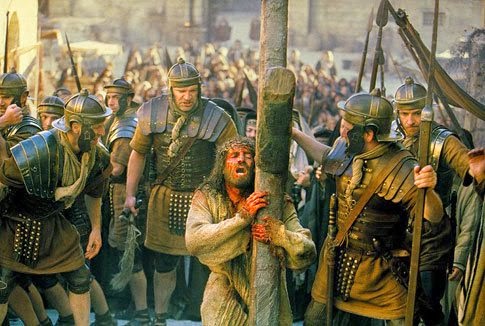
Jesus said, 'Father forgive them, for they
            do not know what they are doing.' And
            they divided up his clothes by casting lots.'
                                                      Luke 23:34

     If Jesus had waited until His enemies felt some guilt or shame for their words and actions, He would never have forgiven them.
     It is my experience that most people we must forgive do not believe they have done anything wrong at all, or if they know that they did something wrong, they believe it was justified. I would even go as far as to say that at least 90 percent of all the people I've ever had to forgive would be indignant at the thought that they had done something wrong. If you gave them a lie-detector test, they would honestly say that they had done nothing wrong -- and they would pass with flying colors.
     Total forgiveness, therefore, must take place in the heart. If I have a genuine heart experience, I will not be devastated if there is no reconciliation. If those who hurt me don't want to continue a relationship with me, it isn't my problem, because I have forgiven them. This is also why a person can achieve inner peace even when forgiving someone who has died. The apostle John wrote, 'Dear friends, if our hearts do not condemn us, we have confidence before God' (I John 3:21).
     Confidence toward God is ultimately what total forgiveness is all about; He is the One I want to please at the end of the day. He cares and knows whether I have truly and totally forgiven, and when I know I have His love and approval, I am one very happy and contented servant of Christ... Relinquishing bitterness (an excessive desire for vengeance that comes from deep resentment, and heads up the list of things that grieve the Spirit of God - Eph. 4:30ff) is an open invitation for the Holy Spirit to give you His peace, His joy, and the knowledge of His will... How can we be sure there is no bitterness in our hearts? Bitterness is gone when there is no desire to get even with or punish the offender, when I do or say nothing that would hurt his reputation or future, and when I truly wish him well in all he seeks to do."

     Hard?  Yes. It goes without saying -- especially when it has to do with such things as rape, incest, abuse, betrayal, or having been used and then tossed aside like a worthless toy -- and even more so for a parent when it happens to one of our children. In such cases there is probably no more difficult thing in this world to do than to forgive -- truly and totally forgive. 
     Yet it must be done. Not so much for the perpetrator (who may never repent or admit wrongdoing) but for us, our conscience, and the sake of our relational intimacy with God. For at its root, all bitterness involves some degree of bitterness toward the all-knowing, all-powerful, sovereign God who could have prevented our pain but chose not (another section he deals with is the need to forgive God, odd as that may sound).
     As one person once put it, "Refusing to forgive is like drinking poison and expecting the other person to die." It only hurts us.  Therefore, as hard as some cases of forgiveness are (and some will drive the victim to the brink) -- since it is commanded by God, He will give us the grace to do it. As with all things in the Christian life, God doesn't ask us to do it alone in our own strength and power. He offers His grace to empower and enable us -- the only thing that makes true and total heart-forgiveness possible in many cases.
In His Service, Pastor Jeff