Visitors

free counters
Showing posts with label Convicting. Show all posts

10.08.2019

How an Atheist Journalist became a Christian Believer

Greetings All,

     This weeks "thought" is the story of one many's journey from atheism to faith in Jesus. It is the story of Peter Hitchen's - a British journalist whose well-known brother Christopher was sometimes called the "arch-atheist."  I found it well-written, helpful, and intriguing, and thought I would pass it on to you as well.  So, without any further introduction I offer it to you. Enjoy.


How an Atheist Journalist became a Christian Believer

     "The story of Peter Hitchens' adult conversion to Christianity traced a very different path to that of his arch-atheist brother Christopher.  Christopher Hitchens, along with Sam Harris, Daniel Dennett, and Richard Dawkins was one of the so-called “four horsemen of the New Atheism” that led the charge against religion around the turn of the century. As a professional journalist, Christopher Hitchens was possibly the most eloquent of the four, and his wit and humor accomplished more for the cause than the bluster of the other three combined.
     Christopher Hitchens' popularity was so great that atheists and Christian apologists alike mourned his passing in 2011, as did his brother, Peter. Peter, also a journalist, was an outspoken atheist like his brother. Despite their similar professions, views, and upbringing, the two brothers were always at odds, practically since childhood Though both were raised in a nominal faith, they began their slide into atheism in early adulthood.
     Peter’s journey toward atheism began when he was still in boarding school at the age of 15. He chose to make his rebellion against religion and all of the conventions of his upbringing official by the ceremonial burning of his Bible – a gift from his parents - in the school yard.  After burning the book, he intentionally began to do the things he had always been instructed were wrong: using foul language, mocking the weak, lying, stealing, using drugs and betraying friends and family members. Peter describes the cultural mindset that he believes led him and his brother away from organized religion:

     “I have passed through the same atheist revelation that most self-confident British members of my generation - I was born in 1951 – have experienced. We were sure that we, and our civilization, had grown out of the nursery myths of God, angels and Heaven. We had modern medicine, penicillin, jet engines, the Welfare State, the United Nations and  'science', which explained everything that needed to be explained.”
     It was not, however, a tragedy or desperate turn of events that caused Peter Hitchens to turn back to his childhood faith. As he grew out of his young rebellion and into his established trade of journalism, he became modestly successful. He enjoyed a pleasant relationship with his girlfriend, and was able to pursue his interests and distractions such as holidays on the continent.  His youthful Marxist convictions had been overturned by his experience as a journalist in Soviet Russia and seeing the tragedy brought on by the atheistic state. As he settled into his adult routine, he fell back into attendance of Anglican church from time to time. This was not out of a sense of religious conviction, but rather out of respect for British tradition. But as he did so, he began to recognize that the faithful men of history who had preceded him were no more foolish for their faith. In fact, their convictions had added to their brilliance as statesmen, artists, scientists and so on.
     Staring at the picture Hitchens felt sudden and true conviction.  It was staring at the picture of one such artist – Rogier van der Weyden’s Last Judgment – that Hitchens felt sudden and true conviction. Seeing the naked figures as they fled the fires of hell, all of his intentional rebellion and misdeeds came back to his mind, and with them, the realization that his life was a testament to the truth found in the painting before him: that misdeeds required justice, and that if anyone required saving from this justice, it was he.  It was on the heels of this sobering incident that Christmas came, and with it, a much more uplifting experience. For many years, Hitchens had feigned disdain for the Christmas season, however now he began to truly enjoy the caroling and joy that came along with the seasonal celebration.
     Following this, Hitchens held his wedding in a church, became baptized, and generally began to participate in church affairs, even as his confidence in political solutions to world problems began to dwindle and fade.  Becoming a Christian in the world of journalism has no small amount of stigma attached to it, and given his formerly radical stances, Hitchens tried to conceal his growing faith from his friends and colleagues.  However, as the years passed, Hitchens began to make his Christian faith part of his identity as a journalist, and especially as his brother achieved fame for his atheist stance, to distance himself from his now-famed sibling. This has ultimately had the effect of carving out a unique niche for Hitchens who now uses his position as a journalist to campaign for the various causes his worldview leads him to embrace."
     (Hitchens’ story may be found in his bookThe Rage Against God: How Atheism Led Me to Faith.)

     It's a testimony to ponder, for he challenges us to think through the ultimate issues of life.  I often say atheists are not people who have asked all the questions, or have all the answers, but people who haven't asked enough questions. That is, enough, "where, or how, did this come to be?" questions.  Why is there so much order and beauty in the world?  What purpose does it have?  Where does that inner sense of justice come from? How is it that our DNA (biological matter) has information imprinted upon it?  Where did this information come from? How does order come out of chaos? How does design come about apart from a Designer?  How does one explain that something came from nothing, or that "being" came from "non-being"?  How does one explain miracles or paranormal activity in a world that is supposedly came about from little more than chemical reactions over time?  And on and on the list could go ...  To me atheism requires a far greater leap of faith than belief in a Creator.  That's why so few people (given the world population) jump onto a bandwagon so poorly constructed.
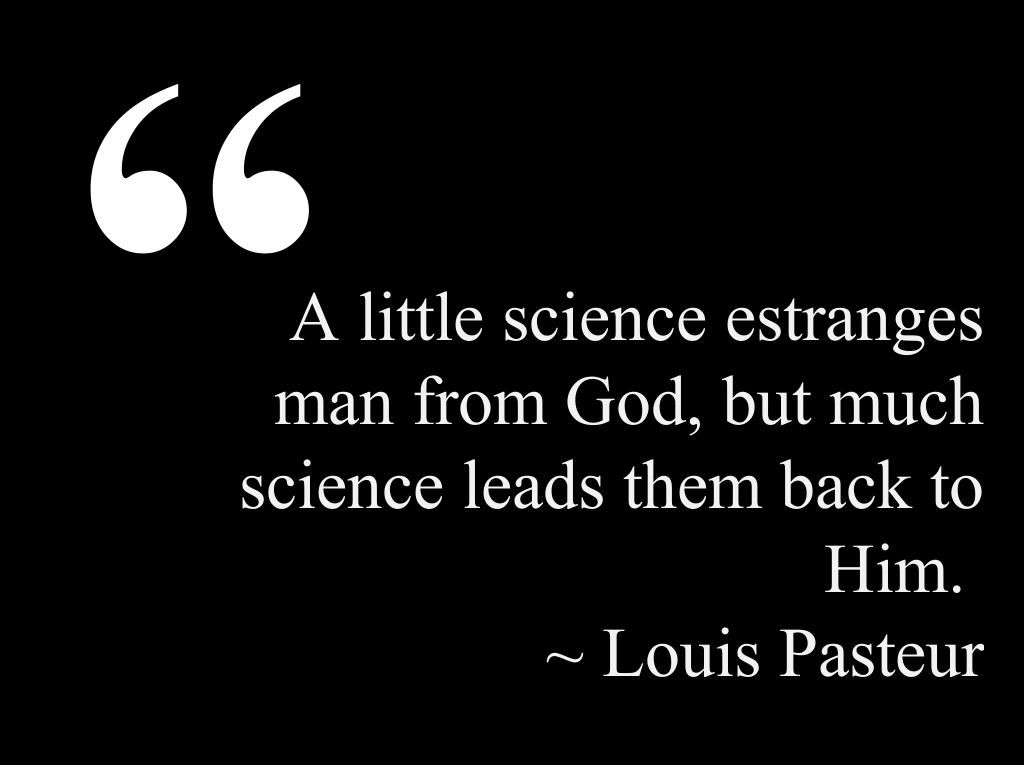
     As many scientists are now acknowledging, the scientific evidence strongly and ultimately points in the direction of intelligent design, and thus ultimately to the reality of a Creator.  But for the atheist there's a downside to acknowledging a Creator -- a downside which has lead many to adopt atheism instead.  It's not any profound "no-God" or "anti-God" evidence. It's not the supposed "God-particle."  It's the fact that people intuitively know that if there is a Creator (who has placed the fingerprint of his beauty, wisdom, orderliness, design, power, justice and the like, on all he has made) it suggests there had to have been a purpose in creating, and a specific plan for those that were created to inhabit what he made. A plan that includes how we should  live and interact with him and each other, and treat what has been created and given to us as a gift.
     Which means that faith in a Creator ultimately leads one to believe there must be some sort of ethical expectations; righteousness and sin issues (do and don't issues); morality and justice issues.  In atheism anything goes, for if life simply evolved from nothing (an impossibility by the way), then it has no meaning. There is no true basis for law, justice, right or wrong, or morality issues. Without a Creator there is no intelligent basis for absolutes.  In creationism, however, life becomes infused with meaning and purpose and divine expectations cannot be avoided.

     What joy, meaning, and value is infused into life simply by acknowledging a Creator, Pastor Jeff

9.17.2019

Christian Leadership in Uncharted Territory

Greetings All,

     Yesterday I received a book in the mail sent to me by a wise old friend. As one who loves to climb mountains, the title captured my attention when I opened the package: "Canoeing the Mountains," by Tod Bolsinger. Yet, the secondary title clued me into the fact that it probably was not what I initially thought - "Christian Leadership in Uncharted Territory."


     As I read the first chapter I felt like the author had been a fly on the wall in many of my conversations in recent years!  He even mouthed some of the exact phrases I had used!  So, today, I let you in on an issue that has been weighing on me (and many others in ministry) for at least the past decade or longer - trying to minister in a post-Christian (often anti-Christian) culture.  This selection below is just to give you a taste of what he will address in the rest of his book -- offering hope for a breakthrough where many seem to have run into what FEELS like an impenetrable wall we were not trained or equipped to break through. Enjoy.
     "One night after a long day of meetings, an older pastor let out a heavy sigh. He was nearing retirement, and we were working together on a project that was supposed to reorganize our entire denomination in order to help our church better minister in a changing world. And that changing world weighed on him.  He remembered well how not that long ago life was different. He stirred his drink and said to me, 'You know, when I began my ministry in a church in Alabama, I never worried about church growth or worship attendance or evangelism. Back then, if a man didn't come to church on Sunday, his boss asked him about it at work on Monday.'
     Sociologists and theologians refer to this recently passed period as 'Christendom.' The seventeen-hundred-year-long era with Christianity at the privileged center of western cultural life. Christendom gave us 'blue laws' and the Ten Commandments in school [and prayer in schools]. It gave us 'under God' in the pledge of allegiance and exhortations to Bible reading in the national newspapers. (I have a copy of the Los Angeles Times from December 1963 that has stories on the Warren Commission (investigating the assassination of John F. Kennedy), the nine-thousand-member Hollywood Presbyterian Church, and a list of daily Bible readings for the upcoming week.  Can you even imagine the Los Angeles Times exhorting people to read their Bibles today?) It was the day every "city father" laid out the town square with the courthouse, the library, and a First Church of _______ within the center of the city.  For most of us these days are long gone. (For some of us, that is good news indeed. Did you notice the reference to 'man' in my friends statement?)
     In our day (unlike then) cities are now considering using eminent domain laws to replace churches with tax-revenue generating big-box stores, Sundays are more about soccer and Starbucks than about Sabbath, Christian student groups are getting derecognized on university campuses, the fastest growing religious affiliation among young adults is 'none,' there is no moral consensus built on Christian tradition (even among Christians), and even a funeral in a conservative beach town is more likely to be a Hawaiian style 'paddle out' than a gathering in a sanctuary.  As we see all this we know that Christendom as a marker of society has passed.
     Over the last ten years I have had one church leader after another whisper to me the same frustrated confession: 'Seminary didn't prepare me for this. I don't know if I can do it. I just don't know...'  A number of pastors are ready to throw in the towel. Studies show that if given the chance to do something else, most pastors would jump at it. Reportedly, upwards of fifteen hundred pastors leave the ministry EVERY MONTH  [Every year more than 4000 churches in the U.S. close their doors, almost double the number from 20 years ago.] 
     A couple years ago I learned that three of my pastor friends around the country had resigned  -- on the same day. There were no affairs, no scandals, and no one was renouncing the faith. But three good, experienced pastors turned in resignations and walked away. One left church ministry altogether.  The details are as different as the pastors themselves, but the common thread is that they finally got worn down by trying to bring change to a church that was stuck and didn't know what to do. Their churches were stuck and declining, stuck and clinging to the past, stuck and lurching to quick fixes, trying to find an easy answer for what were clearly bigger challenges. What all three churches had in common was that they were mostly blaming the pastor for how bad it felt to be stuck.
'If only you could preach better.' 
'If only you were more pastoral and caring.' 
'If only our worship was more dynamic.' 
'Please, pastor, do something!'  (That is what we pay you for, isn't it?)


     And to make matters worse, the pastors don't know what to do either. As a seminary vice-president I am now charged with confronting this reality head-on. Our graduates were not trained for this day. When I went to seminary, we were trained in the skills that were necessary for supporting faith in Christendom.  When churches functioned primarily as vendors of religious services for a Christian culture, the primary leadership toolbox was:  1. TEACHING (for providing Christian education).  2. LITURGICS (for leading Christian services).  3. PASTORAL CARE (for offering Christian counsel and support).  In this changing world we need to add a new set of leadership tools..." 

     If you would like to know what those new and necessary tools are, you will need to purchase his book for yourself!  As a pastor who has lived long enough to see Christendom progressively and purposefully deconstructed, and replaced at almost every turn with secularized and post-Christian alternatives, it has been stretching.  I'm not one of the pastoral casualties he lists, but in all honesty there have been times I have come pretty close. In fact, given those statistics it may be time to start a "pastor support group" for those who feel they are on the verge of being one of those 1500 pastors every month who leave the ministry.
     I haven't had time to read far into his book, but I wanted to share the introductory chapter so people can know there is a voice of encouragement from someone who has his ear to the ground, and has himself been a pastor ministering in our post-Christian culture.   A culture where traditional styles of leadership and ministry (which garnered much fruit in the not-so-distant past) can actually be a hindrance and obstacle in the present. His word to pastors - "Start with conviction, stay calm, stay connected, and stay the course - even when navigating loss."
     Ministry has always required people to, "run the race with perseverance"  (Hebrews 12:1-2).  Yet today is one of those cultural seasons or times when like a runner in a marathon on a hot and humid day, people in ministry are encountering what in the Boston Marathon is called, "Heartbreak Hill" -- a long gradual incline at the 20 mile mark.  It's a "grueling test of endurance" as one writer puts it, which drives many to give up before the finish line.  A place where one must be mentally prepared, make adjustments, and persevere, or become a casualty.  If you happen to be at that place, maybe you might want to see what Bolsinger has to say.

Living in the Grace of Jesus, Pastor Jeff

8.06.2019

Thoughts on Leadership


Greetings All!

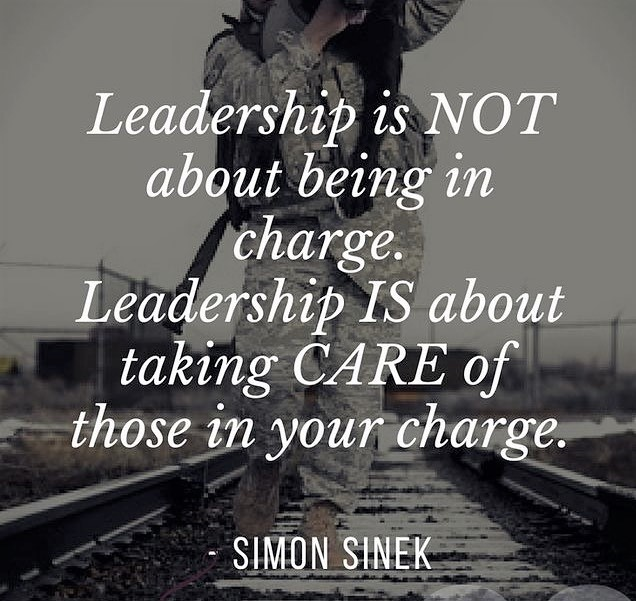
     This week's post is a collection of 25 quotes relating to leadership.  I post them for three reasons.  First, because it is my conviction that no matter who we are, someone is looking up to us as an example, or for guidance of one sort of another, which makes us a leader of sorts even when we don't have the title and didn't ask for the responsibility.  One does not have to be delegated the authority to carry out the role, and we can inadvertently carry out the role without even knowing we are!  The person simply trying to be an example to others is being a leader in their own right.
     The second reason I post them is because we can all gain insight and wisdom from leaders of the past who have shared what guided their leadership -- even if we don't consider ourselves to be one.  And last, I share it because as I looked hem over I was amazed how much current thought of leadership is little more than a confirmation (plagiarization of sorts) of the teaching of Jesus on the topic, or practical insights gained from His words and example, even when those giving the advice are not themselves Christians. I had many more than listed. I paired them down to 25. I offer them as the best of what I found.  If you have a favorite (or favorites) and have a chance, let me know which ones.  Enjoy.

Thoughts on Leadership

1. "The true test of a leader is this: A respect for that person that is so deep that people will continue following their lead even when the official title and delegated authority have been taken away."

2. “I start with the premise that the function of leadership is to produce more leaders, not more followers.”  Ralph Nader

3. “Leaders must possess courage.  Yet do not be mistaken: Courage is not the absence of fear; courage is the determination not to let our very real fears paralyze us, hold us back, or scare us into silence and inactivity when words and actions are what is needed.”
4. “You aren’t fit to lead until you know how to follow.  If you want to become a remarkable leader, follow a leader of character, conviction, and vision. Don’t ask people to follow you until you’ve humbly followed someone else. Following is perhaps the most neglected development principle of remarkable leadership… Follow advice from those more knowledgeable.  Follow a vision bigger than yourself.  Follow someone you respect.  Follow the most noble person available.  Follow someone who is going somewhere.  Remarkable leaders are remarkable followers. Admiration of big-egoed-leaders degrades us all.  Worry less about becoming a remarkable leader and more about becoming a remarkable follower.”   Dan Rockwell

5. “The chief characteristic of Christian leaders, Jesus insisted, is humility not authority, and gentleness not power… The authority by which the Christian leader leads is not power but love, not force but example, not coercion but reasoned persuasion. Leaders have power, but power is safe only in the hands of those who humble themselves to serve.”  John Stott

6. “A leader is one who knows the way, goes the way, and shows the way.”   John C. Maxwell

7. “Perfection is not attainable, but if we chase perfection, we can catch excellence.”    Vince Lombardi

8. “When everything seems to be going against you, remember that the airplane takes off against the wind, not with it...  I never failed, I just learned 10,000 ways that won't work.”   Henry Ford
9. “According to Scripture, virtually everything that truly qualifies a person for leadership is directly related to character.  It’s not about style, status, personal charisma, clout, or worldly measurements of success. Integrity is the main issue that makes the difference between a good leader and a bad one.”   John MacArthur

10. “Be strong enough to stand alone, smart enough to know when you need help, and brave enough to ask for it.”   Unknown

11. “True greatness, true leadership, is found in giving yourself in service to others, not in coaxing or inducing others to serve you.”   J. Oswald Sanders

12. "My research debunks the myth that many people seem to have… that you become a leader by fighting your way to the top. Rather, you become a leader by helping others to the top.  Helping your employees is as important as, and many times more so than, trying to get the most work out of them."   William Cohen

13. "The first and most important choice a leader makes is the choice to serve, without which one's capacity to lead is severely limited."    Robert Greenleaf

14. “The ability to learn is the most important quality a leader can have.”   Sheryl Sandberg

15. "We must be silent before we can listen.  We must listen before we can learn.  We must learn before we can prepare.  We must prepare before we can serve.  We must serve before we can lead."   William Arthur Ward
16. “To change your life, you have to admit what’s not working. You have to humble yourself. You have to ask for help. You have to learn... Your ego will defend your current circumstances, but you cannot allow a fleeting feeling of shame to eclipse reason. You cannot live the rest of your life as you are just because you are too prideful to admit something isn’t right.”   Brianna Wiest

17. “If your objective is to be as good as you can be, then you’re going to want criticism.”  Ray Dalio

18. "If leadership serves only the leader, it will fail.  Ego satisfaction, financial gain, and status can all be valuable tools for a leader, but if they become the only motivations, they will eventually destroy a leader. Only when service for a common good is the primary purpose are you truly leading."   Sheila Murray Bethel

19. “A leader takes people where they want to go. A great leader takes people where they don’t necessarily want to go but ought to be.”   Rosalynn Carter

20. "People do not care how much you know until they know how much you care."   John C. Maxwell
21. "When you get to be the president, there are the honors, the 21-gun salutes, all those things.  You have to remember it’s not for you.  It’s for the presidency…  It's amazing what you can accomplish if you do not care who gets the credit.”    President Harry S. Truman

22. "Be more concerned with your character than your reputation, because your character is what you really are, while your reputation is merely what others think you are."    John Wooden

23. “A man who wants to lead the orchestra must turn his back on the crowd.”   Max Lucado

24. "Do the thing you fear, and the death of fear is certain."   Ralph Waldo Emerson

25. "Servant leadership is all about making the goals clear and then rolling your sleeves up and doing whatever it takes to help people win.  In that situation, they don't work for you; you work for them."   Ken Blanchard
     So, what are the key characteristics of good leadership?  Humility, learning to be a follower, the heart of a servant, integrity, character, love, determination, a desire to see others excel, pushing beyond our fears, and many more. They are all virtues that anyone can apply to their lives.  And when we do, we may in some cases find people following our lead -- even when that wasn't our objective.

Living in His Grace, Pastor Jeff

1.15.2019

Ecclesiastes, The Search For Meaning

Greetings All,

     I trust this email finds you well!  Today I thought I would share some thoughts on one of my favorite books in the Bible -- the Book of Ecclesiastes.  These "thoughts" come from a Brit (I'm assuming from the name he's originally from Wales).  His name is Selwyn Hughes, and they come from a Bible Study booklet in the series, "Every Day With Jesus."  The title of this particular volume is: Ecclesiastes, The Search For Meaning."
     Solomon begins this book with a rather shocking statement: "Meaningless, meaningless," says the Teacher... Everything is meaningless!"  Yet we must remember it's a statement qualified by the other frequently-repeated phrase in the book, "under the sun," which essentially means, "focused only on the things of earth."   "Under the sun" essentially means, "life lived without consideration of God," or "life viewed apart from the acknowledgement God," or "life lived apart from a relationship with God."   So, with that clarification, I hope you find these thoughts challenging, relevant and useful. Enjoy.
     "The main message of the book comes through it's opening statement: "Everything is meaningless."  Seeing the utter futility of life is the first step to an encounter with God. Many are not ready to meet with the Lord until they have been silenced by the futility of this world in which they live. I heard someone say that the first book of the Bible everyone should read is the book of Ecclesiastes -- because it silences you.  When we see as clearly as Solomon saw that the world does not provide us with the life for which our souls were created, then we are more likely to turn to the true source of happiness -- the eternal God Himself.  One of the reasons why some of us do not know God well is because we have never been convinced of the utter futility of trying to find life in things. We have not been silenced. We must let Ecclesiastes silence us, and and in that silence we may experience a deeper awareness of God...
     One of the reasons why Solomon uses such forceful language...is to break through our defensive attempts to avoid reality.  It was T. S. Elliot who once said: "Humankind cannot bear too much reality." Psychologists warn that we should be careful about stripping away people's defenses, as coming face to face with reality too quickly can cause those who are fragile to slide into depression. The author of Ecclesiastes seems unconcerned about this, however, and tells us over and over again, and with deep conviction that life, "under the sun" is futile... 
     He tells us how his determination to find purpose for living led him to deep and serious study. But study, and trying to grasp the meaning of the universe by the intellect alone, proved also to be futile. He says that it is like "chasing after the wind" (chap. 1:17).... Yet if education, intellectualism, and philosophy are not the routes to making life work, then what is? Perhaps (say some) life can be found in pleasure. Not so, says Solomon [and who would know better than a man who had 700 wives and 300 live in prostitutes?!]. Pleasure pleases, but it is powerless to quench the ache that exists in the soul.
     Solomon provides us with a list of ways that pleasure can be gained, but he gives all of them the "thumbs down."  The first pleasure is laughter (2:2).  Send in the clowns.  Bring on the jokers. Let's hear the funny one-liners. But as almost everyone knows, those who bring laughter to thousands are themselves often desperately unhappy.  Billy Graham tells the story of a man who went to a doctor for help with his depression. "I'll give you something better than anti-depressants," said the doctor. "Go to see the clown at the local circus. He has just arrived in the town and is sending people into hysterics." The man looked at the doctor and dolefully said, "I am that clown."
     If laughter cannot satisfy, then perhaps drink will help.  "I tried cheering myself with wine," Solomon says (2:3). But clearly that did not satisfy either. He then threw himself in a great round of activity -- great projects and achievements like building a house for himself, planting vineyards, purchasing male and female slaves, buying up herds and flocks, amassing silver and gold, and finally equipping himself with a harem -- what he describes as, "the delights of the heart of a man" (Chap. 2, v 4-8).  He even tried fame and making a name for himself (v.9). But did these things work? Here's his conclusion: "everything was meaningless, a chasing after the wind..."  He is not saying these things did not bring pleasure. He is making the point that this kind of pleasure just does not last...
     Facing the realities of life can greatly provoke anxiety. The moment when we face the fact that there is nothing in this world -- no person, place or thing -- that can meet the deepest ache in our soul, is probably one of the most solemn moments of our existence. Many can't face that kind of reality so they escape into such things as fantasies, endless rounds of activity, drink, sensual pleasures, and so on...  Satisfaction in things is found only when they are seen as being behind God and not in front of Him. When God is not first, then everything around which we wrap our affections are unsatisfying idols. There are two paths we can choose: One is to find life in God and enjoy the provision of His hands; the other is to find life in things, and turn our back on God. The latter is "meaningless," says Solomon. It's like "chasing after the wind.'"
     I myself went through a period, in my late teens and early 20's, of trying to make sense of the world if God did not exist.  It was one of the primary things that drove me into a lengthy period of depression.  Thinking God did not exist made it much easier to sin, but it also made life (and all I did) meaningless and inconsequential. If there are no eternal consequences for anything we do, life becomes completely meaningless and somewhat intolerable. It even led me to entertain thoughts of suicide.
     I still say to this day that the only way one can be an atheist and think life has meaning is to lie to oneself.  To make up what a world without God can never supply.  To be "content" in a life lived apart from God ("under the sun") does not come from asking important questions and getting satisfying answers, it comes from refusing to ask enough questions.  It comes from being content not to connect the dots, or follow the path godless thinking to the depressing dead end where it will always lead when life is considered without reference to God.
     I do not encourage anyone to stop asking questions. I encourage them to ask one after another after another and not stop!  Because I believe (as Solomon shows and many others have discovered) that at the end of those all those questions -- if they dare ask them all -- one will run headlong into the eternal Absolute that stands behind all that exists. The road of truly seeking does not lead to nothing, it leads through the nothingness of human futility to the ultimate reality we call God. But we must press things to the limit, because it's a lesson many can only learn after trying all those other things and discovering they end in futility and will not satisfy the truly thirsty soul.

Grace and Peace, Pastor Jeff


1.02.2019

Attitude Adjustment

Greetings All!

     What does one do when they find their job unfulfilling?  One answer?  Try looking at their job in a different light.
     I was searching through my documents (looking for something else) when I found this "thought" which I saved over a year ago. It was written by Gene Twilley, who works for CCO (Coalition for Christian Outreach) and oversees CCO staff who work on college campuses doing outreach in the Philadelphia area.  I felt his insights could help those caught is a similar predicament, so I thought I would pass it along as we begin 2019.  It is entitled "Attitude Adjustment."  Most all of us could use that on one occasion of another!  Enjoy.


Attitude Adjustment

     "Eight months after finishing my undergraduate studies, I started working as an auto liability claims adjuster for a very large insurance company. There were ample benefits with the job—from day one, I was vested in a matched 401k; I had a pension, nearly a month of vacation per year, and great health benefits.  I loved the people I worked with An older African-American woman called me her newly adopted son. We worked in collaborative cubicles—four to a large cube—and laughed a lot.
     But I hated the work.  In a claims environment, every call is a complaint The workload is heavy. I was threatened with physical violence over the phone, bullied with potential lawsuits, and accused of all sorts of character flaws.  There were and are far worse places to be employed. But in the moment of any sort of seemingly bad circumstance, we don’t usually think about what could be worse. We long for something better.
     Then my wife and I attended a wedding for one of her co-workers, and I was making small talk with a woman I didn’t know, and who I probably wouldn’t recognize if I saw her today.  In the midst of conveying to her what I did, before I had the opportunity to complain about my job, she exclaimed, “How exciting! You have the opportunity to help put people’s lives back together every day.”

Sobering.
Clarifying.
Convicting.
     I was willing to approach my work as a Christian who had hope in Jesus, but not as a Christian who had hope that my work actually mattered.  I don’t know where this woman was in terms of faith, but she pointed out something that I was completely missing.
     Isaiah 61 is a messianic prophetic utterance. Jesus took up this section, read it in a synagogue in Nazareth, and explained, “Today this Scripture has been fulfilled in your hearing” (Luke 4:21).

     He was anointed to preach good news to the poor.
     He was sent to proclaim liberty to captives.
     He was sent to give sight to the blind
     He came to release the oppressed.

     In all of that, Jesus was announcing the “year of the Lord’s favor.” In the broader context of Isaiah 61, we see other really good things too! There is comfort for those who mourn. Those who sit in shame and in repentance are made beautiful. They are planted deeply into God’s grace, that they might praise rather than mourn. The people of God are called by the Servant of God to be re-creators of things that are broken… All that hope, that expectation, that rebuilding of the things that have been broken—it’s in Isaiah 61. It all finds its beginning, current, and end in Jesus.
     And this is the kind of hope that can lift me out of myself and all my meandering thoughts about greener pastures. I start to ask different questions.  After all, aren’t we called to care about the situations that God has placed us in, the broken places already in our midst? How can we make the most of our God-given opportunities today? How might we redeem the time that he’s given into our possession?
     As a claims adjuster, I was occupied with my work—getting through the day, looking for the next best thing. It was a job, not a calling.  Or was it?  What if every opportunity to serve others is a calling from the Lord?  Tim Keller explains, “our work can be a calling only if it is re-imagined as a mission of service to something beyond merely our own interests. Thinking of work mainly as a means of self-fulfillment and self-realization slowly crushes a person.”
     Calling is found at the sweet spot where my vertical and horizontal relationships meet—where I love the Lord and where I love my neighbor. Too often, maybe we’re disappointed with where we are because we simply don’t see the potential of the work ahead of us. But what if some of us are so concerned with our own emptiness that we don’t see the joy set before us?  Isaiah 61 tells a bigger story, and in this story, work becomes service, pain becomes joy, and despair becomes hope.  Come, Lord Jesus. Give us eyes to see." 
     Where might an "attitude adjustment" (or simply looking at something from a different perspective) help you in your struggle to find fulfillment in something which is not at present?  Only you can know. But it is worth pondering!

Living in the Grace of Jesus, Pastor Jeff