Visitors

free counters
Showing posts with label Conversion. Show all posts

9.24.2019

What do you think?

Greetings All,

     Today I offer you some isolated quotes from four different authors and present them to you with this question: "What do you think?"
     When you read each one what is your initial response?  Do you agree or disagree?  And if so, why?  Are they clear or hard to understand?  I know most everyone is pretty busy, but if you did have a spare moment I would enjoy hearing your thoughts!  And if you do happen to respond, please note which comment you are responding to -- comment #1 by Richard Lovelace, comment #2 by William Carey, comment #3 by John Owen,  or comment #4 B.B. Warfield.  Enjoy.

     “Only a fraction of the present body of professing Christians are solidly appropriating the justifying work of Christ in their lives.  Many have so light an apprehension of God’s holiness and of the extent and guilt of their sin, that consciously they see little need for justification (little need for forgiveness and pardon through the substitutionary work of Jesus), although below the surface of their lives they are deeply guilt-ridden and insecure…  Many have a theoretical commitment to this doctrine [of justification by faith] but in their day-to-day existence they rely on their sanctification for justification, in the Augustinian manner, drawing their assurance of acceptance with God from their sincerity, their past experience of conversion, their recent religious performance, or the relative infrequency of their conscious, willful disobedience.  Few know enough to start each day with a thoroughgoing stand upon Luther’s platform: you are accepted, looking outward in faith and claiming the wholly alien righteousness of Christ as the only ground for acceptance, and relaxing in that quality of trust which will produce increasing sanctification as faith is active in love and gratitude.”                 
Richard Lovelace, “Dynamics of Spiritual Life.”


     On his 70th birthday, pioneer missionary William Carey, who translated the whole Bible (or large parts of it) into 23 Indian dialects and Persian; who wrote a Mahratta-English dictionary, a Bengali-English dictionary, a Bhotanta-English dictionary, and a Sanscrit-English dictionary; and who worked tirelessly as a missionary in India for 41 years (between 1792 and 1833) wrote to one of his sons these words:  I am this day 70 years old, a monument of divine mercy and goodness, though on a review of my life I find very much for which I ought to be humbled in the dust. My direct and positive sins are innumerable. My negligence in the Lord's work has been great. I have not promoted His cause nor sought His glory and honor as I ought.  Notwithstanding all of this, I am spared till now and am still retained in His work, and I trust I am received into the divine favor through Him (Christ).” 
William Carey
“Believers obey Christ as the one by whom all their obedience is accepted by God. Believers know all their duties are weak, imperfect and unable to abide in God’s presence. Therefore, they look to Christ as the one who bears the iniquity of their holy things, who adds incense to their prayers, gathers out all the weeds from their duties and makes them acceptable to God... The actual aid and internal operation of the Spirit of God is necessary to produce every holy act of our minds, wills and emotions in every duty whatsoever.  Notwithstanding the power or ability that believers have received by the principle of new life implanted in salvation, they still stand in need of the divine enablement of the Holy Spirit in every single act or duty toward God.”
John Owen
     "It is the conviction that there is nothing in us, or done by us, at any stage of our earthly development which is the cause of our acceptance with God. We must always be accepted for Christ’s sake or we cannot ever be accepted at all. This is not true of us only when we initially believe, it is just as true after we have believed and it will continue to be true as long as we live. Our need of Christ does not cease with our believing, nor does the nature of our relation to Him or to God through Him ever alter regardless of our attainments in Christian graces or our achievements in Christian behavior. It is always on His "blood and righteousness” alone that we can rest. There is never anything that we are or have or do that can take His place or that takes a place along with Him. We are always unworthy, and all that we have or do of good is always of pure grace…  There is emphasized in this attitude the believer's continued sinfulness in fact and in act and his continued sense of his sinfulness. And this carries with it recognition of the necessity of unbroken penitence throughout life. The Christian is conceived fundamentally, in other words, as a penitent sinner.
     We are sinners, and we know ourselves to be sinners, lost and helpless in ourselves. But we are saved sinners, and it is our salvation which gives the tone to our life—a tone of joy which swells in exact proportion to the sense we have of how much we deserve just the opposite.  For it is he to whom much is forgiven who loves much and, who loving, rejoices much.  “It is a great paradox but glorious truth of Christianity,” says Thomas Adams, “that a good conscience may coexist with a consciousness of evil. Though we can have no satisfaction in ourselves, we may have perfect satisfaction in Christ.”
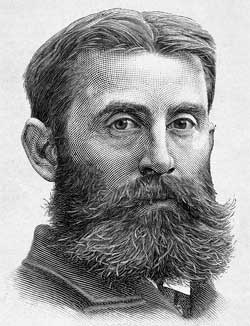
B. B. Warfield


     As I am sure you already know, I am in agreement with all the statements above and believe they accurately reflect the biblical teaching. But if you do not, or feel you would change them in any way, or feel they are out of sync with the message of the Bible I'd love to hear how you disagree or would alter them!

In His Grace, Pastor Jeff 

7.02.2019

The Comforter

Greetings All!

This week's "thought" comes from someone we haven't heard from for quite a while - Charles H. Spurgeon.  He has been dubbed the "Prince of Preachers" and is considered by many to be the most gifted preacher ever.  This excerpt comes from a message he preached on October 6, 1872 entitled "The Comforter."   Spurgeon began his preaching career in 1850 at the age of 15. By the time he was 19 he had accepted a call to pastor one of the biggest Baptist churches in London.  Within a short time they had to build an addition onto the church to increase the seating capacity from 1200 to 5000 seats to accommodate the weekly crowds. He was an extraordinarily gifted man.
     To those who wrongly believe that Christianity was universally popular back in the mid-to-late-800's in England, this somewhat auto-biographical account should clear up that misunderstanding.  I've been reading this sermon in my devotional time and found it both interesting and true; that's why I wanted to pass it along to you.  Enjoy.


The Comforter

     “In the 15th chapter of John’s Gospel we find the Savior describing His saints in the world as hated and persecuted for His sake, and He bids them expect this. But He consoles them in verses 26-27: “When the Comforter is come, whom I will send unto you from the Father, even the Spirit of truth which proceeds from the Father, He shall testify of Me. And you also shall bear witness, because you have been with Me from the beginning.”
     Now verses 18-27 mean just this—while Jesus Christ was here on earth, if anyone had anything to say against Him or His disciples, the Master came forward to the front, and He soon baffled His foes so that they confessed, “Never has anyone spoken like this man” (John 7:46). At this present time our Master and head is gone from us, so how are we to answer the attacks of the world?  The answer is we have another Counselor who comes to speak for us, and if we had but confidence in Him, beloved, He would have spoken for us much more loudly than He has sometimes done!
     Whenever we learn to leave the business in His hands, He will do two things for us:  FIRST - He will speak for us Himself, and SECOND - He will enable us also to bear witness.  At this present time many questions of doctrine are brought up for discussion, many objections to the truth of God are blocked, and there are many who would lay the axe at the very root of Christianity and cut it down as a rotten tree!  What is our answer?  I will tell you: Nearly all the books that have been written to answer modern philosophies are a waste of time and a waste of paper.  The only way in which the church can hold her own, and answer her detractors is by real power from God!

     Has she done anything for the world?

     Can she produce results?

     By her fruits shall she be proved to be a tree of life to the nations!
     Now the Spirit of God, if we would but trust Him, and give up all this idolatry of human learning, cleverness, genius, eloquence, rhetoric, and I know not what beside, would soon answer our adversaries!  He would silence some of them by converting them as He answered Saul of Tarsus by turning him from a persecutor to an apostle. He would silence others by confounding them and making them see their own children and relations brought to know the truth of God! If there is not a miraculous spiritual power in the Church of God at this day, she is an impostor!  At this moment the only vindication of our existence is the presence and work of the Holy Spirit among us.  Is He still working and witnessing for Christ? I fear He is not in some churches.
     Here in our fellowship we behold Him. Look at His workings in this place.  Nearly 20 years ago [back in August of 1854] our ministry began in this city under much opposition and hostile criticism. The preacher [that is, Spurgeon himself] being condemned on all hands as vulgar, unlearned, and, in fact, a “nine days’ wonder”!  Jesus Christ was preached by us in simpler language than men had been accustomed to hear, and every one of our sermons was full of the old-fashioned gospel. Many other pulpits were intellectual, but we held to the pure Scriptures.  Rhetorical essays were the wares retailed by most of the preachers, but we gave the people the gospel.  We brought out before the world the old Reformers’ doctrines, Calvinistic truth, Augustinian teaching, and Pauline dogma! We were not ashamed to be the, “Echo of a long-dead evangelism,” as some wiseacre called us.
     We preached Christ and Him crucified, and by the space of these 20 years have we ever lacked a congregation? When has not this vast hall been thronged? Have we ever lacked conversions? Has a Sunday passed over us without them? Has not the history of this church, from its littleness in Park Street until now, been a march of triumph with the hearts and souls of men being the spoils of the war and the flag under which we have marched been Christ crucified?
     And it is so everywhere! Only let men come back to the gospel and preach it ardently, not with pretty words and the artificiality of polished speech, but as a burning heart compels them, and as the Spirit of God teaches them to speak it.  Then will great signs and wonders be seen!  We must have signs following—else we cannot answer the world!  Let them sneer; let them rave; let them curse; let them lie—God will answer them!  It is ours in the power of the Spirit of God to keep on preaching Christ and glorifying the Savior.  Just as Jesus always met the adversary in a moment, and the disciples had no need of any other defender, so we have another Helper, who in answer to prayer will vindicate His own cause, and gloriously avenge His own elect.”
     In a world of competing ideas and religious views, something must set Christianity apart from all the rest. Something more than "mere morality" as C. S. Lewis called it.  Something more than mere religious gatherings.  Something that shows our faith to be different from all the rest.  And that "something" (as Spurgeon points out) must be the power of God!  People must be able to see and sense the evidences of God's presence and the supernatural working of the Holy Spirit among His people if we are to truly testify to the reality of Jesus and His gospel (I Cor. 14:24-25 / II Cor. 10:3-5).
     Be it the miracle of an extraordinary and other-worldly love; the miracle of someone turned to repentance and faith; the miracle of a healing or a prophetic word that hits home as if it were tailor made; or the miracle of a regenerate heart -- the greatest miracle of all -- the power of God must be seen if people's objections are to be stifled!  "The only way in which the church can hold her own, and answer her detractors is by real power from God!...  If there is not a miraculous spiritual power in the Church of God at this day, she is an impostor!  At this moment the only vindication of our existence is the presence and work of the Holy Spirit among us...  Only let men come back to the gospel and preach it ardently, not with pretty words and the artificiality of polished speech, but as a burning heart compels them, and as the Spirit of God teaches them to speak it. Then will great signs and wonders be seen!  We must have signs following—else we cannot answer the world!"
     To use the words of Isaiah in his deep yearning for a visible and incontestable manifestation of God's power: "Oh, that you would rend the heavens and come down, that the mountains would tremble before you!" (Is. 64:1-2) That's what we need more than anything else -- a fresh outpouring of the Spirit of God in incontestable and saving power!  Not manufactured miracles, but God-given miracles.  Not the stuff of mere human emotion, but the supernatural intervention of a sovereign God.  And it must stem from earnest prayer and the gospel ardently preached, as Spurgeon says, from a burning heart that's moved and compelled by the Holy Spirit.  Our prayer, Like Isaiah's, must be, "Come down Lord!"

     With Prayer for the Renewing of Christ's Church on Earth, Pastor Jeff

5.28.2019

When I Don't Desire God


Greetings!

For over a year I've been engaging numerous young people in conversations about God, church, and simply life in general.  In the process one major theme has repeatedly come up: Many young people are struggling to experience joy in God.  As a result some gave given up on God.  Many say their friends are depressed and struggle to find meaning and motivation in life.  I know there are various reasons for this, but I send out this week's "thought" because it offers at least one possible remedy for the problem.  It's found in John Piper's book, "When I Don't Desire God," the sequel to his best-selling book "Desiring God - The Confessions of a Christian Hedonist."  Both books are well-worth reading if you have not yet done so.  Enjoy.
     "One of the greatest witnesses I know of to the power of regular disciplined reading of the Bible for the sake of love-producing joy is George Mueller (1805-1898), who is famous for founding orphanages in Bristol, England, and for depending on God for meeting all his needs.  He asked the very question this book is asking: "In what way shall we attain to this settled happiness of soul? How shall we learn to enjoy God? How shall we obtain such an all-sufficient soul-satisfying portion in him as shall enable us to let go of the things of this world as vain and worthless in comparison? I answer: This happiness is to be obtained through the study of the Holy Scriptures. God has therein revealed Himself unto us in the face of Jesus Christ."  
     That's what we have seen so far in this book: Happiness in God comes from seeing God revealed to us in the face of Jesus Christ through the Scriptures.  Mueller says, "In them...we become acquainted with the character of God. Our eyes are divinely opened to see what a lovely Being God is!  And this good, gracious, loving, heavenly Father is ours -- our portion for time and for eternity."  Knowing God is the key to being happy in God.  "The more we know God," says Mueller, "the happier we are... When we became a little acquainted with God... our true happiness... commenced; and the more we become acquainted with him, the more happy we become.  What will make us exceedingly happy in heaven?  It will be the fuller knowledge of God."  Therefore the most crucial means of fighting for joy in God is to immerse oneself in the Scriptures where we see God in Christ most clearly.
     When Mueller was seventy-one years old, he spoke to younger believers: "Now...I would give a few hints to my younger fellow-believers as to the way in which to keep up spiritual enjoyment. It is absolutely needful... we should read regularly through the Scriptures, consecutively, and not just pick out here and there a chapter.  If we do, we remain spiritual dwarfs. I tell you so affectionately. For the first four years after my conversion I made no progress, because I neglected the Bible. But when I regularly read on through the whole Bible with reference to my own heart and soul, I directly made progress. The my peace and joy continued more and more. Now I have been doing this for 47 years. I have read through the Bible about 100 times and I always find it fresh when I begin again. Thus my peace and joy have increased more and more.
     He would live and read his Bible for another twenty-one years. But he never changed his strategy for satisfaction in God. When he was seventy-six, he wrote the same thing he had learned for over fifty years: "I saw more clearly than ever, that the first and primary business to attend to every day was, to have my soul happy in the Lord."  And the means stayed the same: "I saw that the most important hing I had to do was to give myself to the reading of the word of God, and to meditation upon it... What is the food of the inner man?  Not prayer, but the word of God; and... not the simple reading of the Word of God, so that it only passes through our minds like water runs through a pipe, but considering what we read, pondering over it, and applying it to our hearts.""
     In a society that tries to get us to question the uniqueness, validity, authority and divine origin of the Scriptures as being "God-breathed" revelation (II Timothy 3:16-17), it is not unusual to see people laying aside the priority of Bible reading, Scriptural meditation and Bible memorization.  Yet they do it to their own peril and the impoverishment of their own soul. They rob themselves of the possibility of the peace and joy that come from knowing God.  For as both Mueller and Piper note: "This happiness is to be obtained through the study of the Holy Scriptures...." "Happiness in God comes from seeing God revealed to us in the face of Jesus Christ through the Scriptures...."  "Knowing God is the key to being happy in God."  "The more we know God the happier we are."
     Did not Jesus essentially tell us the same thing regarding the soul-feeding and soul-satisfying function of God's Word in the Scriptures?  Is He not looking out for our greatest good -- our spiritual happiness, contentment and satisfaction in God -- when He says:  "Man does not live by bread alone, but by every word that proceeds from the mouth of God."  And as we know, by the word "live" he is not simply speaking of physical life as opposed to death, He's speaking of being alive inwardly, or thriving spiritually, of finding our soul-sustaining nourishment in the Scriptures.
     With prayers that you may seek to feast more earnestly and consistently upon the Word that was given to sustain your happiness in God, Pastor Jeff

9.11.2018

The Moment The "Light Goes On"

Greetings All!

     This week's "thought" is the story of one man who met Jesus. It tells of the moment in that man's life when the "light went on," it all made sense, and by the Holy Spirit working through the Gospel he was made new.  The man's name is Max Lucado, the well-known and best-selling author of many Christian books.  As with many other believers, his conversion came at the most unexpected of times, in the most unexpected way, in a rather ordinary place, through a man of little or no renown.  It's yet another confirmation that when God calls people to Himself, he often uses the most ordinary and unexpected of people to do so. And He does it that way to assure us that our salvation comes through the powerful message of the Gospel, applied to the heart and mind by the Spirit, and not as the result of the abilities, charisma, or persuasiveness of any earthly messenger.  Enjoy. 

     Many believers can distinctly recall the events surrounding their conversion experience...  "Do you remember yours? Where were you the night the door was opened? Do you remember the touch of the Father?  Who walked with you the day you were set free? Can you still see the scene?  Can you feel the road beneath your feet?  I hope so. I hope that permanently planted in your soul is the moment the Father stirred you in the darkness and led you down the path.  It's a memory like no other.  For when he sets you free, you are free indeed.
     Ex-slaves describe well their hour of deliverance. Can I tell you mine?  It was a Bible class in a small West Texas town. I didn't know what was more remarkable, that a teacher was trying to teach the book of Romans to a group of ten-year-olds, or that I remember what he said.  The classroom was mid-sized, one of a dozen or so in a small church.  My desk had carvings on it and gum under it. Twenty or so others were in the room, though only four or five were taken by the message.  We all sat back, too sophisticated to appear interested. Starched jeans. High top tennis shoes.  It was summer.  The slow-setting sun cast the window in gold. 
     The teacher is an earnest man.  I can still see his flattop, his belly bulging from beneath his coat that he didn't even try to button. His tie stops midway down his chest. He has a black mole on his forehead, a soft voice, and a kind smile. Though he is hopelessly out of touch with the kids of 1965, he doesn't know it. His notes are stacked on a podium underneath a heavy black Bible. His back is turned to us and his jacket goes up and down his belt-line as he writes on the board. He speaks with genuine passion. He is not a dramatic man, but tonight he is fervent.
     God only knows why I heard him that night. His text was Romans six. The blackboard was littered with long words and diagrams. Somewhere in the process of describing how Jesus went into the tomb and came back out, it happened. The jewel of grace was lifted and turned and I could see it from a new angle... and it stole my breath. I didn't see a moral code. I didn't see a church. I didn't see ten commandments or hellish demons. I saw what one other ten-year-old in that class -- Mary Barbour -- saw.  I saw my Father enter my dark night, awaken me from my slumber, and gently guide me -- no carry me -- to freedom."
     So, I ask the same question Max Lucado started with: Do you remember your conversion?  Do you remember the time you were "awakened from your slumber" (or more in keeping with Scripture, do you remember when God "raised you to life when you were dead in trespasses and sins" - Ephesians 2:1 / Ephesians 2:4-5 / Colossians 2:13)?  Have you since come to reflect and realize it was not the doing of any person (including yourself), but the miraculous and supernatural work of a gracious God softening a heart of stone and making it a heart of flesh and tender toward Christ?  A gift to one who could NEVER be good enough, or worthy enough, to deserve it?  Do you remember that event in your life?  Does the memory of it still stir your soul?  Have you every truly come to Christ and received new birth through the Spirit?  Jesus came, lived, died, rose, and is coming again, says Scripture.  Do you believe it?  Has the Father entered into the darkness of your soul to raise you to life and carry you to freedom?  Oh, what a day that was!  Or for some others, oh what a day that will be...

In the Bonds of Gospel Grace, Pastor Jeff

5.22.2018

Conversion Story of Saint Augustine

Greetings All!

     Last week we considered the conversion story of Charles H. Spurgeon.  This week I'll be sharing the conversion story of Saint Augustine. In the weeks to come I will share some others, because I find the stories of God's unique and saving work in the lives of many different people extremely fascinating!
     For those who are unaware, Augustine lived from 354-430 A.D. in North Africa.  He was born in Numidia (or what is today the country of Algeria) to Berber parents, a group of people indigenous to northern Africa. His father was well-to-do, and his mother Monica was a devout Christian woman.  From a young age it was obvious that Augustine was extremely gifted and intelligent, and so he was sent away to school at 11 years old. There he studied Latin literature and philosophy, as well as pagan beliefs and practices. By 15 years old he admits he preferred hedonism to studying, and by 16 he started to enjoy stealing and began satisfying his sexual cravings.
     At the age of 17 he went away to school in Carthage (present day Tunisia) to study rhetoric. It was here that he would break his mother's heart in two ways:  First, he would fully embrace a hedonistic lifestyle and embark on an affair with a girl that would last 15 years (followed by another affair with another young woman). Lust was the sin that consumed him, and led him at one point to pray his now famous prayer, "Grant me chastity and continence; but not yet."   The second was his rejection of Christianity and his "conversion" to Manichaeanism, a highly elaborate form of Gnosticism which taught that "light" (goodness) was gradually being removed from this world of matter and returning to the world of light (the immaterial spirit world) from which it came, making the world progressively more dark and evil as a result.
     Augustine developed great rhetorical skills and became very knowledgeable of the philosophies behind many faiths. In fact, word of his comprehensive knowledge of many subjects and philosophies, combined with his superior rhetorical skills, led him to be asked (at the age of 30) to be the instructor of rhetoric to the imperial court in Milan, winning him, "the most visible academic position in the Latin world at that time."   After arriving at Milan, Augustine heard of a great Christian preacher named Ambrose. He went to listen to him to see if he was (as some suggested) one of the greatest speakers and rhetoricians in the world.  More interested in his speaking skills than the topic of his messages Augustine went and listened, quickly discovering that Ambrose was indeed one of the best speakers he had ever heard.  He would later confess that Ambrose was one of the primary human instruments God used to break down one of the two major intellectual roadblocks he had in regard to Christianity.
     The following is an account, taken from his classic work, "The Confessions," speaks of the actual moment when he considers himself to have been converted. Enjoy.

     "I fled into the garden with my friend Alypius following step by step, for I had no secret in which he did not share...  We sat down as far as possible from the house. I was greatly disturbed in spirit, and angry at myself with a turbulent indignation, because I had not entered God's will and covenant, while all my bones cried out for me to enter...  Now, when deep reflection had drawn up out of the secret depths of my soul all my misery, and had heaped it up before the sight of my heart, there arose a mighty storm [within me], accompanied by a mighty rain of tears. So that I might give way fully to my tears and lamentations, I stole away from Alypius, for it seemed to me that solitude was more appropriate for the business of weeping. I went far enough away that I could feel that his presence was no restraint upon me....
     [Under great conviction and sorrow for my sins] I flung myself down under a fig tree and gave free course to my tears... And, not indeed in these words, but in this way, I cried to [God]: "And Thou, O Lord, how long? How long, O Lord?  Will you be angry with me forever?  O remember not against us our former iniquities."  For I felt I was still enthralled by them...  I was saying these things and weeping in the most bitter contrition of my heart when suddenly I heard the voice of a young boy or girl -- I know not which -- coming from the neighboring house. It was chanting over and over again in song: "Tolle Lege. Tolle Lege" ("Pick it up, read it. Pick it up, read it").  Immediately I ceased weeping and began most earnestly to wonder whether it was usual for children in some kind of game to sing such a song, but I could not remember ever having heard anything like it.  So, stopping the torrent of my tears, I got to my feet, for I could not help but think this was a divine command to open the Bible and read the first passage I should see.  I had heard about how Anthony had accidentally come into church when the Gospel was being read and received the admonition as if what had been read was addressed specifically to him: "Go sell all you have and give it to the poor, and you shall have treasure in heaven, and come follow me." By such an oracle he was converted...
     So I quickly returned to the bench where Alypius was sitting, for there I had put down the apostle's book (Romans) when I had left there.  I snatched it up, opened it, and in silence read the first paragraph my eyes fell upon: "Not in rioting and drunkenness, not in sexual immorality or wantonness, not in strife and envying, but put on the Lord Jesus Christ and make no provision for the flesh to fulfill the lusts thereof" [Romans 13:13].  I wanted to read no further, nor did I need to. For instantly, as the sentence ended, there was infused in my heart something like the light of full certainty and all gloom and doubt vanished away.  Closing the book, and putting my finger or something else to mark the spot, I began -- now with a tranquil countenance -- to tell it all to Alypius. He then disclosed to me what had been going on in himself, of which I knew nothing. He asked to see what I had read. I showed him and he read on even further than I had read. I had no known what came next, but it was this: "Him that is weak in the faith, receive." This he applied to himself and told me so. By these words he was strengthened and joined me in full commitment [to Christ] without any restless hesitation.
     Then we went in to my mother and told her what had happened, to her great joy.  We explained to her how it had occurred and she leaped for joy triumphant; and she blessed You who are "able to do exceedingly abundantly above all we can ask or think." For she saw that You had granted her far more than she had ever asked for in all her pitiful and sad-hearted lamentations."

     Years earlier (when Augustine was in his late teens) Monica had a dream. In it she was standing on "a rule of wood" (a plank or platform she took to be the "rule of faith"). In the dream, she met a young man to whom she despaired of her son's "living death" [in sin] and expressed her desire that he should come to know God. The young man told her to have no fear and to look around to see who was with her on the rule... and there stood her son Augustine!  She considered the dream prophetic in nature and told Augustine. He threw it back in her face and told that far from the dream meaning that he would become a Christian, it meant that she would join him and embrace Manichaeanism!
     After asking Ambrose and others to do something numerous time to intervene on Augustine's behalf, Ambrose told her: "Leave him alone and just pray,"  and added, "Go, I beg you. The son of so many tears cannot perish."   What a wonderful account of how the God of grace rescues and redeems His chosen ones through the conviction of sin, the preaching of the Gospel, the simple reading of the Word, and the love of a mother who would not give up praying for her wayward son.

In His Service, Pastor Jeff


5.15.2018

Look to Jesus

Greetings All,

     I hope you like stories!  Because that's what this week's "thought" is -- the conversion story of Charles H. Spurgeon.  As a Spurgeon fan I was familiar with it, but I went online to find it again since I wanted to share it in a class I am presently teaching on Sunday mornings called, "Controversial Topics."  Due to Spurgeon's prominence as England’s (some would say the world's) most famous, most gifted, most quoted, and most popular preacher, his life has been the topic of much study.  In fact, his conversion story, along with those of St. Augustine and Martin Luther, are said to be the three most famous in all Church history.  And since it's been an inspiration to so many, I thought I would share it with you!


     Spurgeon's conversion to Christ took place on January 6, 1850, in Colchester, England. He was 15 years old, and for a couple of years leading up to this occasion he had come to be under great conviction for his sin as a result of reading,‘God’s 10 words’(the Ten Commandments).  Knowing he was not right with God, and being unable to find any relief for the guilt of his sin, he had become miserable, depressed, and despondent, convinced he would be in hell (and even having dreams about it) if he was unable to find the way of salvation.  It is an amazing story.  Enjoy.


Look to Jesus

     Of the message he heard on that cold January day he writes:  “The good news that I was, as a sinner, to look away from myself and to Christ instead... came as fresh to me as any news I had ever heard in my life.  Had I never read my Bible? Yes, and I read it earnestly. Had I never been taught by Christian people? Yes, I had, by mother, and father [who was a minister], and others. Had I not heard the gospel? Yes, I think I had. And yet, somehow, it was like a new revelation to me that I was to ''believe and live.''  I confess that I was tutored in piety, put into my cradle by prayerful hands, and lulled to sleep by songs concerning Jesus; having heard the gospel continually, with line upon line and precept upon precept, here much and there much. Yet, when the Word of the Lord came to me with power, it was as new as if I had lived among the unvisited tribes of Central Africa, and had never heard the tidings of the cleansing fountain filed with blood, drawn from the Savior's veins..."

     The following is his own personal account of the events of that day:

     "I sometimes think I might have been in darkness and despair until now, had it not been for the goodness of God in sending a snowstorm one Sunday morning while I was going to a certain place of worship. Unable to go any further, I turned down a side street and came to a little Primitive Methodist Church.  In that chapel there may have been a dozen or fifteen people. I had heard of the Primitive Methodists, how they sang so loudly that they made people’s heads ache; but that did not matter to me. I wanted to know how I might be saved...
     The minister did not come that morning; he was snowed up, I suppose. At last a very thin-looking man, a shoemaker, or tailor, or something of that sort, went up into the pulpit to preach. Now it is well that preachers be instructed, but this man was extremely uneducated. He was obliged to stick to his text for the simple reason that he had little else to say. The text was—"LOOK UNTO ME, AND BE YE SAVED, ALL YE ENDS OF THE EARTH" (Isaiah 45:22).  He did not even pronounce the words rightly, but that did not matter. There was, I thought, a glimmer of hope for me in that text.
     The preacher began this way: "This is a very simple text indeed. It says ‘Look.’ Now lookin’ don’t take a deal of pain. It ain’t liftin’ your foot or your finger; it’s just ‘Look.’ A man needn’t go to College to learn to look. You may be the biggest fool, and yet you can look. A man needn’t be worth a thousand a year to look. Anyone can look; even a child can look.  But the text says, ‘Look unto ME.’ Ay!" he said in broad Essex, "many of ye are lookin’ to yourselves, but it’s no use lookin’ there. You’ll never find any comfort in yourselves. Some say look to God the Father. No, look to Him by-and-by. Jesus Christ says, ‘Look unto Me.’ Some o’ ye say, ‘We must wait for the Spirit’s workin.’  You have no business with that just now.  Look to Christ. The text says, ‘Look unto Me!’ "  Then the good man followed up his text in this way: "Look unto Me; I am sweatin’ great drops of blood. Look unto Me; I am hangin’ on the cross. Look unto Me, I am dead and buried. Look unto Me; I rise again. Look unto Me; I ascend to Heaven. Look unto Me; I am sitting at the Father’s right hand. O poor sinner, look unto Me! Look unto Me!"
     When he had managed to spin out about ten minutes or so, he was at the end of his rope. Then he looked at me under the gallery, and I dare say that with so few present, he knew me to be a stranger.  Fixing his eyes on me, as if he knew all my heart, he said, "Young man, you look very miserable." Well, I did, but I was not accustomed to have remarks on my personal appearance made from the pulpit. However, it was a good blow, struck right home.  He continued, "And you will always be miserable—miserable in life and miserable in death—if you don’t obey my text.  But if you obey now, this moment, you will be saved." Then lifting up his hands, he shouted, as only a Primitive Methodist could do, "Young man, look to Jesus Christ. Look! Look! Look! You have nothing to do but look and live!"
     I saw at once the way of salvation. I know not what else he said—I did not take much notice of it—I was so possessed with that one thought.  I had been waiting to do fifty things, but when I heard that word, "Look!" what a charming word it seemed to me. Oh! I looked until I could almost have looked my eyes away! There and then the cloud was gone, the darkness had rolled away, and that moment I saw the sun...  I can testify that the joy of that day was utterly indescribable. I could have leaped. I could have danced! There was no expression, however fanatical, which would have been out of keeping with the joy of that hour. Many days of Christian experience have passed since then, but there has never been one which has had the full exhilaration, or the sparkling delight, which that first day had.  I thought I could have sprung from the seat in which I sat, and have called out with the wildest of those Methodist brethren, "I am forgiven! I am forgiven! A monument of grace! A sinner saved by the blood!"
     My spirit saw its chains broken to pieces, I felt that I was an emancipated soul, an heir of heaven, a forgiven one, accepted in Jesus Christ, plucked out of the miry clay and out of the horrible pit, with my feet set upon a rock and my future established...  Between half-past ten o’clock, when I entered that chapel, and half-past twelve o’clock, when I was back again at home, what a change had taken place in me! Simply by looking to Jesus I had been delivered from despair, and I was brought into such a joyous state of mind, it was immediately noticed by my family.
     Spurgeon described his walk home from church like this: I was perfectly at rest in Christ, satisfied with him, and my heart was glad… I thought I could dance all the way home. I could understand what John Bunyan meant when he declared he wanted to tell the crows on the ploughed land all about his conversion. He was too full to hold; he felt he must tell somebody.”
     Later that day he says: ‘I remember standing before the fire, leaning on the mantelshelf, after I got home, and my mother had spoken to me.  I heard her say outside the door, “There is a change come over Charles.”  She had not had half-a-dozen words with me; but she saw that I was not what I had been.  I had been dull, melancholic, sorrowful, depressed; and when I had looked to Christ, the appearance of my face changed. I had a smile, a cheerful, happy, contented look at once, and she could see it.” 

------------------------------------------------

     That night Spurgeon waited for the other children to go to bed before he told his father what had happened, and by the middle of February (six weeks later) he was going door to door, once a week, with Gospel tracts to 33 different homes!  By 19 years old he was the lead pastor at the New Park Street Church in London, where he was preaching to crowds in the thousands. He ministered to a grand total of 10 million people during his lifetime, and by the end of end of the 19th century, more than 100 million sermons of Spurgeon’s sermons had been sold in 23 languages, an unmatched figure before and since. Today, this number has surpassed 300 million copies. He is history’s most widely read preacher, with over 3,800 messages and about 135 of his books still in print.

In the Service of the Gospel,  Pastor Jeff