Visitors

free counters
Showing posts with label William Carey. Show all posts

9.24.2019

What do you think?

Greetings All,

     Today I offer you some isolated quotes from four different authors and present them to you with this question: "What do you think?"
     When you read each one what is your initial response?  Do you agree or disagree?  And if so, why?  Are they clear or hard to understand?  I know most everyone is pretty busy, but if you did have a spare moment I would enjoy hearing your thoughts!  And if you do happen to respond, please note which comment you are responding to -- comment #1 by Richard Lovelace, comment #2 by William Carey, comment #3 by John Owen,  or comment #4 B.B. Warfield.  Enjoy.

     “Only a fraction of the present body of professing Christians are solidly appropriating the justifying work of Christ in their lives.  Many have so light an apprehension of God’s holiness and of the extent and guilt of their sin, that consciously they see little need for justification (little need for forgiveness and pardon through the substitutionary work of Jesus), although below the surface of their lives they are deeply guilt-ridden and insecure…  Many have a theoretical commitment to this doctrine [of justification by faith] but in their day-to-day existence they rely on their sanctification for justification, in the Augustinian manner, drawing their assurance of acceptance with God from their sincerity, their past experience of conversion, their recent religious performance, or the relative infrequency of their conscious, willful disobedience.  Few know enough to start each day with a thoroughgoing stand upon Luther’s platform: you are accepted, looking outward in faith and claiming the wholly alien righteousness of Christ as the only ground for acceptance, and relaxing in that quality of trust which will produce increasing sanctification as faith is active in love and gratitude.”                 
Richard Lovelace, “Dynamics of Spiritual Life.”


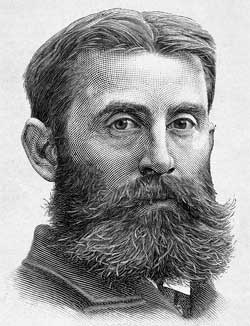
     On his 70th birthday, pioneer missionary William Carey, who translated the whole Bible (or large parts of it) into 23 Indian dialects and Persian; who wrote a Mahratta-English dictionary, a Bengali-English dictionary, a Bhotanta-English dictionary, and a Sanscrit-English dictionary; and who worked tirelessly as a missionary in India for 41 years (between 1792 and 1833) wrote to one of his sons these words:  I am this day 70 years old, a monument of divine mercy and goodness, though on a review of my life I find very much for which I ought to be humbled in the dust. My direct and positive sins are innumerable. My negligence in the Lord's work has been great. I have not promoted His cause nor sought His glory and honor as I ought.  Notwithstanding all of this, I am spared till now and am still retained in His work, and I trust I am received into the divine favor through Him (Christ).” 
William Carey
“Believers obey Christ as the one by whom all their obedience is accepted by God. Believers know all their duties are weak, imperfect and unable to abide in God’s presence. Therefore, they look to Christ as the one who bears the iniquity of their holy things, who adds incense to their prayers, gathers out all the weeds from their duties and makes them acceptable to God... The actual aid and internal operation of the Spirit of God is necessary to produce every holy act of our minds, wills and emotions in every duty whatsoever.  Notwithstanding the power or ability that believers have received by the principle of new life implanted in salvation, they still stand in need of the divine enablement of the Holy Spirit in every single act or duty toward God.”
John Owen
     "It is the conviction that there is nothing in us, or done by us, at any stage of our earthly development which is the cause of our acceptance with God. We must always be accepted for Christ’s sake or we cannot ever be accepted at all. This is not true of us only when we initially believe, it is just as true after we have believed and it will continue to be true as long as we live. Our need of Christ does not cease with our believing, nor does the nature of our relation to Him or to God through Him ever alter regardless of our attainments in Christian graces or our achievements in Christian behavior. It is always on His "blood and righteousness” alone that we can rest. There is never anything that we are or have or do that can take His place or that takes a place along with Him. We are always unworthy, and all that we have or do of good is always of pure grace…  There is emphasized in this attitude the believer's continued sinfulness in fact and in act and his continued sense of his sinfulness. And this carries with it recognition of the necessity of unbroken penitence throughout life. The Christian is conceived fundamentally, in other words, as a penitent sinner.
     We are sinners, and we know ourselves to be sinners, lost and helpless in ourselves. But we are saved sinners, and it is our salvation which gives the tone to our life—a tone of joy which swells in exact proportion to the sense we have of how much we deserve just the opposite.  For it is he to whom much is forgiven who loves much and, who loving, rejoices much.  “It is a great paradox but glorious truth of Christianity,” says Thomas Adams, “that a good conscience may coexist with a consciousness of evil. Though we can have no satisfaction in ourselves, we may have perfect satisfaction in Christ.”
B. B. Warfield


     As I am sure you already know, I am in agreement with all the statements above and believe they accurately reflect the biblical teaching. But if you do not, or feel you would change them in any way, or feel they are out of sync with the message of the Bible I'd love to hear how you disagree or would alter them!

In His Grace, Pastor Jeff 

10.01.2014

William Carey - "The Father of Modern Day Missions"

Greetings All,

     Today's 'thought' comes from a book entitled "The One Year Book of Christian History." The authors are E. Michael and Sharon Rusten. It is set up in a daily devotional style and each entry is tied to some event in history that happened on that particular day of the year. For those who enjoy learning about church history, I highly recommend it.
     Today's selection is about William Carey.  He is known to us today as, "The Father of Modern Day Missions," though he was not the first to push the foreign missionary endeavor, and many ministers in his day called him, "the hare-brained enthusiast."  Yet for an uneducated shoemaker his accomplishments in the furtherance of missions are stunning. I trust you will find his story inspiring and challenging. Enjoy.

     "William Carey was born in 1761 to a poor Anglican family in rural England. He wanted to become a professional gardener, but a skin disease prevented him from working out in the sun. He therefore began training as a shoemaker's apprentice at the age of fourteen. This was a providential career shift because a fellow apprentice, John Warr, was a Christian.
     Being from a staunch Anglican family that despised Dissenters (non-Anglicans), Carey was uneasy with the evangelical arguments presented to him. However, over time Carey began to feel a "growing uneasiness and stings of conscience gradually increasing" with regard to Warr's beliefs. After a traumatic incident when Carey was caught trying to pass off a counterfeit coin as real money to his employer, he was so ashamed that for the first time he began to see himself as morally bankrupt and in need of salvation. Over the next two years he came to "depend on a crucified Savior for pardon and salvation." He was baptized in 1783.
     Although he did not attend high school or college, Carey possessed a keen intellect. He taught himself five languages (Latin by the age of 12, and hew went on to master Greek, Hebrew, French and Dutch). By the end of his life knew dozens of languages and dialects.

     Carey became a Calvinist Baptist preacher and followed a strict system of study. He studied the classics on Mondays, science and history on Tuesdays, and the Hebrew and Greek Scriptures the rest of the week. During this time he became increasingly burdened for overseas missions. He published a pamphlet called, "An Inquiry into the Obligation of Christians to use Means for the Conversion of the Heathens." (He also made a map of the world out of a scrap piece of leather, hung it on the wall in his cobblers shop, and prayed over the countries of the world.)
     For years he tried to convince fellow Baptist ministers of the need to form a missionary society in order to spread the Gospel across the world. Although the leaders of the denomination kept putting him off, he persisted. 
     On the evening of May 30, 1792, Carey preached at the annual Baptist association meeting. His text was Isaiah 54:2-3, and his theme was, "Expect Great Things From God; Attempt Great Things For God."  He urged his fellow pastors to commit to venturing forth among the nations with the Gospel, having confidence that God would bless the message and extend His kingdom.
     Carey's address made a profound impression on the ministers in attendance...The next day, May 31, 1792, they agreed to form the "Baptist Society for Propagating the Gospel Among the Heathen." A snuff box was passed around to collect contributions for the new undertaking, later renamed The Baptist Missionary Society.
     In 1793 Carey and two other men sailed for India as missionaries. Carey worked there until his death in 1834 without ever taking a furlough.
     His comprehensive approach to missions included evangelization, church planting, and Bible translation, but also included working for social reform. He established schools, hospitals, and a savings bank. He founded the Agricultural and Horticultural Society of India, started a Bengali newspaper, supervised the start of India's first printing press, paper mill, and steam engine.  He also taught languages at a local college, wrote a Bengali-English dictionary, and founded the first Christian college in Asia. He was instrumental in legislation outlawing Suttee (the burning alive of Hindu wives on the funeral pyres of their deceased husbands).
     In all, Carey translated the complete Bible into six languages and portions into twenty-nine others (and that was after the warehouse containing the Sanskrit and Bengali dictionaries he had written, two grammar books, and ten translations of the Bible went up in flames, in 1812. In surveying the scene Carey said, "In one short evening years of labor were consumed. How unsearchable are the ways of God...The Lord has laid me low, that I may look more simply to Him.")         
     He expected great things from God, and attempted great things for God, and God brought them to pass."

   As former colleague used to say, "It goes to show what God can do with a heart touched and made willing by God."  Carey was among the greats in the modern missions movement -- self-trained, self-educated, and God-motivated. Oh for a few more of his kind!
Blessings on your day, Pastor Jeff

4.24.2013

The Diary of David Brainerd


Greetings All,

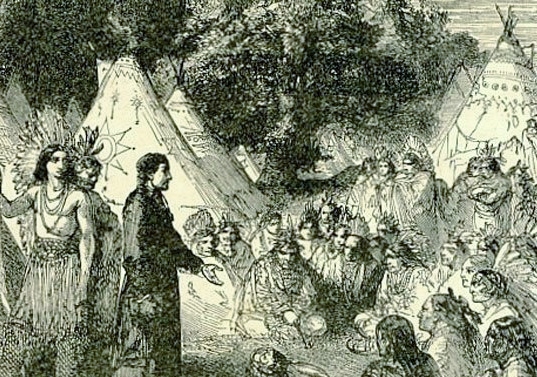
This weeks thought comes to you from, "The Diary of David Brainerd."  Brainerd was primarily a missionary to the Indians, but also, on occasion, to any European settlers who attended his services. He worked along the Delaware River "wilderness" in Pennsylvania and New Jersey.

     He was converted on July 12, 1739 at 21 years old, just one year before the the First Great Awakening exploded through a six week evangelistic tour of New England by the Anglican preacher George Whitefield. Brainerd describes his conversion as an experience which left him filled with "joy unspeakable," a joy which transported him, "to a new world."
     Shortly thereafter, he left his home in Connecticut to labor under very difficult circumstances, living in makeshift shelters he constructed in the woods and eventually a rustic cabin. After a short but fruitful ministry, sacrificially preaching to and discipling converts from 1740-1747, he contracted tuberculosis at 28 and died in the house of Jonathan Edwards at 29 years of age. After his death Jonathan Edwards found his diary, felt its contents could edify and challenge the Church, and therefore printed it -- though Brainerd himself was unaware its contents would ever become public, or so well known.
     His diary has had great effect. It was read by William Carey and others who were so inspired by his life and sacrificial service that they themselves resolved to leave the comforts of the familiar and pursue a life in missions. The following two excerpts are from Friday and Sunday, February 15 and 17, 1745 (in the cold of midwinter)! My own son David is named after David Brainerd, and his diary, edited by Jonathan Edwards, is well worth the read. Enjoy.
      "February 15 (1745). Was engaged in writing again almost the whole day. In the evening was much assisted in meditating on that precious text, John 7:37, "Jesus stood and cried." etc. I had then a sweet sense of the grace of the gospel; my soul was encouraged, warmed and quickened. My desires were drawn out after God in prayer, and my soul was watchful, afraid of losing so sweet a guest as I then entertained. I continued long in prayer and meditation, intermixing one with the other; and was unwilling to be diverted by anything at all from so sweet an exercise. I longed to proclaim the grace I then meditated upon to the world of sinners. O how quick and powerful is the word blessed of God!

Lord's Day, February 17. Preached to the white people (my Indian interpreter being absent) in the wilderness upon the sunny side of a hill. Had a considerable assembly, consisting of people who lived (at least many of them) not less than thirty miles away; some of them came twenty miles. I discoursed to them all day from John 7:37, 'Jesus stood and cried, saying, If any man thirst,' etc. In the afternoon it pleased God to grant me great freedom and fervency in my discourse; and I was enabled to imitate the example of Christ in the text, who stood and cried. I think I was scarce ever enabled to offer the free grace of God to perishing sinners with more freedom and plainness in my life. Afterwards I was enabled earnestly to invite the children of God to come renewedly, and drink of this fountain of the water of life, from whence they have heretofore derived unspeakable satisfaction. It was a very comfortable time to me.

There were many tears in the assembly and I doubt not that the Spirit of God was there, convincing poor sinners of their need of Christ. In the evening I felt composed, and comfortable, though much tired. I had a sweet sense of the excellency and glory of God; and my soul rejoiced that he was, 'God over all, blessed forever.' Yet I was too much crowded with company and conversation, and longed to be more alone with God. Oh that I could forever bless God for the mercy of this day, who 'answered me in the joy of my heart.'"
In reading this account it amazes me how the people of that day would walk (or ride horses) 20-30 miles through the cold of winter, into the woods, to sit on the side of a hill in temperatures that most likely would not have exceeded 40 degrees Fahrenheit  listening for hours as Brainerd preached about the free grace of God in Christ.
No building, no pews, no cushions, no heat, just outdoors all day, on a hill, in the middle of February! And most, as Brainerd notes, were not even Christians, but sinners yet to find Christ. It's no wonder so many preachers long to be transported back in time to such days!  And though we've probably become to soft to ever display such earnestness and commitment, we can still pray for a move of the Spirit of God that would cause tears of gratitude and repentance to flow down our cheeks; a powerful move of God that would "convince poor sinners of their need of Christ." 
May it be so, Pastor Jeff