Visitors

free counters
Showing posts with label Acceptance. Show all posts

9.24.2019

What do you think?

Greetings All,

     Today I offer you some isolated quotes from four different authors and present them to you with this question: "What do you think?"
     When you read each one what is your initial response?  Do you agree or disagree?  And if so, why?  Are they clear or hard to understand?  I know most everyone is pretty busy, but if you did have a spare moment I would enjoy hearing your thoughts!  And if you do happen to respond, please note which comment you are responding to -- comment #1 by Richard Lovelace, comment #2 by William Carey, comment #3 by John Owen,  or comment #4 B.B. Warfield.  Enjoy.

     “Only a fraction of the present body of professing Christians are solidly appropriating the justifying work of Christ in their lives.  Many have so light an apprehension of God’s holiness and of the extent and guilt of their sin, that consciously they see little need for justification (little need for forgiveness and pardon through the substitutionary work of Jesus), although below the surface of their lives they are deeply guilt-ridden and insecure…  Many have a theoretical commitment to this doctrine [of justification by faith] but in their day-to-day existence they rely on their sanctification for justification, in the Augustinian manner, drawing their assurance of acceptance with God from their sincerity, their past experience of conversion, their recent religious performance, or the relative infrequency of their conscious, willful disobedience.  Few know enough to start each day with a thoroughgoing stand upon Luther’s platform: you are accepted, looking outward in faith and claiming the wholly alien righteousness of Christ as the only ground for acceptance, and relaxing in that quality of trust which will produce increasing sanctification as faith is active in love and gratitude.”                 
Richard Lovelace, “Dynamics of Spiritual Life.”


     On his 70th birthday, pioneer missionary William Carey, who translated the whole Bible (or large parts of it) into 23 Indian dialects and Persian; who wrote a Mahratta-English dictionary, a Bengali-English dictionary, a Bhotanta-English dictionary, and a Sanscrit-English dictionary; and who worked tirelessly as a missionary in India for 41 years (between 1792 and 1833) wrote to one of his sons these words:  I am this day 70 years old, a monument of divine mercy and goodness, though on a review of my life I find very much for which I ought to be humbled in the dust. My direct and positive sins are innumerable. My negligence in the Lord's work has been great. I have not promoted His cause nor sought His glory and honor as I ought.  Notwithstanding all of this, I am spared till now and am still retained in His work, and I trust I am received into the divine favor through Him (Christ).” 
William Carey
“Believers obey Christ as the one by whom all their obedience is accepted by God. Believers know all their duties are weak, imperfect and unable to abide in God’s presence. Therefore, they look to Christ as the one who bears the iniquity of their holy things, who adds incense to their prayers, gathers out all the weeds from their duties and makes them acceptable to God... The actual aid and internal operation of the Spirit of God is necessary to produce every holy act of our minds, wills and emotions in every duty whatsoever.  Notwithstanding the power or ability that believers have received by the principle of new life implanted in salvation, they still stand in need of the divine enablement of the Holy Spirit in every single act or duty toward God.”
John Owen
     "It is the conviction that there is nothing in us, or done by us, at any stage of our earthly development which is the cause of our acceptance with God. We must always be accepted for Christ’s sake or we cannot ever be accepted at all. This is not true of us only when we initially believe, it is just as true after we have believed and it will continue to be true as long as we live. Our need of Christ does not cease with our believing, nor does the nature of our relation to Him or to God through Him ever alter regardless of our attainments in Christian graces or our achievements in Christian behavior. It is always on His "blood and righteousness” alone that we can rest. There is never anything that we are or have or do that can take His place or that takes a place along with Him. We are always unworthy, and all that we have or do of good is always of pure grace…  There is emphasized in this attitude the believer's continued sinfulness in fact and in act and his continued sense of his sinfulness. And this carries with it recognition of the necessity of unbroken penitence throughout life. The Christian is conceived fundamentally, in other words, as a penitent sinner.
     We are sinners, and we know ourselves to be sinners, lost and helpless in ourselves. But we are saved sinners, and it is our salvation which gives the tone to our life—a tone of joy which swells in exact proportion to the sense we have of how much we deserve just the opposite.  For it is he to whom much is forgiven who loves much and, who loving, rejoices much.  “It is a great paradox but glorious truth of Christianity,” says Thomas Adams, “that a good conscience may coexist with a consciousness of evil. Though we can have no satisfaction in ourselves, we may have perfect satisfaction in Christ.”
B. B. Warfield
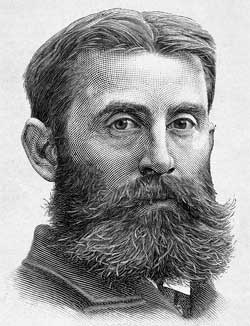


     As I am sure you already know, I am in agreement with all the statements above and believe they accurately reflect the biblical teaching. But if you do not, or feel you would change them in any way, or feel they are out of sync with the message of the Bible I'd love to hear how you disagree or would alter them!

In His Grace, Pastor Jeff 

5.01.2018

The Grace of Salvation

Greetings All,

     Though I've been sending these "thoughts" out for years I realized today that I've never sent one out from Max Lucado (yes, a one-sentence quote once, but no extended thought).  So, I thought I would remedy that!  Max is a best-selling Christian author. Most of you will recognize his name. It's hard to say how many books he's written or sold -- in the millions for sure (at least on the books sold side)!  His skill?  Making hard to understand truth understandable to most anyone.  He has an uncanny way of simplifying the complex and putting the cookies on the lower shelf. This particular thought has to do with The Grace of Salvation (or how one is saved), and comes from his book, "A Gentle Thunder."  Enjoy.


     "What is it, then, that God wants us to do?  What is the work he seeks? Just believe.  Believe the One he sent.  'The work God wants you to do is this: Believe the One he sent" (John 6:29 NCV). Someone is reading this and shaking his or her head and asking: 'Are you saying it is possible to go to heaven with no good works?  The answer is no. Good works are a requirement. Someone else is reading and asking, 'Are you saying it is possible to go to heaven without good character?'  My answer again is no. Good character is also required.  In order to enter heaven one must have good works and good character.
     But, alas, there is a problem. You have neither. Oh, you've done some nice things in your life. But you do not have enough good works to go to heaven regardless of your sacrifice. No matter how noble your gifts, they are not enough to get you into heaven.  Nor do you have enough character to go to heaven. 
     Please don't be offended (Then, again, be offended if necessary.) You're probably a very decent person. But decency is not enough. Those who see God are not the decent, they are the holy. 'Anyone whose life is not holy will never see the Lord' (Hebrews 12:14 NCV).  You may be decent. You may pay taxes and kiss your kids and sleep with a clear conscience. But apart from Christ you aren't holy. So how can you go to heaven?

     Only believe.
     Accept the work already done, the work of Jesus on the cross.
     Only believe.
     Accept the goodness of Jesus Christ.
     Abandon your own works and accept his.
     Abandon your own decency and accept his.
     Stand before God in his name, not yours.
     "Anyone who believes and is baptized will be saved, but anyone who does not believe will be punished" (Mark 16:16 NCV).   It's that simple? Yes, it's that simple. It's that easy? There was nothing easy at all about it. The cross was heavy, the blood was real, and the price was extravagant. It would have bankrupted you or me, so Jesus paid it for us. Call it simple. Call it a gift. But don't call it easy.  Call it what it is.  Call it grace." 

     It's an affirmation of the Gospel truth that salvation is by grace alone, though faith alone, in Christ alone.  The Heidelberg Catechism (written in 1563) put it this way.

Question & Answer #60:

Question How are you righteous before God?

Answer: "Only by true faith in Jesus Christ.
Even though my conscience accuses me 
of having grievously sinned 
against all God’s commandments;
of never having kept any of them,
and of still being inclined toward all evil,
nevertheless,
without any merit of my own, 
and out of sheer grace,
God grants and credits to me the perfect satisfaction, 
righteousness, and holiness of Christ,
as if I had never sinned 
nor ever been a sinner, 
and as if I had been as perfectly obedient 
as Christ was obedient, for me.
All I need to do is accept this gift with a believing heart."
     The Law of God in the Old Testament demands two things of us: Perfect and flawless obedience, as well as punishment for all disobedience.  And the grace proclaimed in the Gospel is this: what God demanded of us, Christ supplied for us, in both his life of perfect obedience and his death for sin.  And these two together (and only these two together) become the righteousness that God credits to the believing sinner that they might be saved.  "Upon a life I did not live, upon a death I did not die, I stake my whole eternity" (Horatius Bonar).
     What could bring more comfort, peace, assurance, joy and gratitude to any believer's heart than to know that Christ is our perfection, and Christ is our pardon, and therefore our eternal acceptance with God rests upon Him and not us (I Corinthians 1:30-31).  This is grace in its most extravagant form. And in understanding it, how could our hearts not overflow with joy, be filled with gratitude, or burn with a desire to live for such a kind and merciful God?

In The Bonds of Christian Affection, Pastor Jeff

2.27.2018

Praying with The Puritans

Greetings All,

     This past weekend I attended a conference in Pittsburgh, PA, for the CCO (Coalition For Christian Outreach) where there just happened to be a bookseller.  My curiosity got the best of me, and I walked over to see what books were on the shelves.  I practiced great restraint (for me) and ended up walking out with only four new books to add to my library!  One, which was entitled: "Kneeling With Giants - Learning To Pray With History's Best Teachers," by Gary Neal Hansen, caught my attention.


     I've only gotten through two of it's chapters so far, but I found one section both interesting and helpful.  It's called, "Praying with The Puritans" and encourages us to use their common form of praying by meditation and writing.  Enjoy.

Praying With The Puritans

     "Back in student days, after a bad breakup, my journal saved my sanity. I bought a little black book to hold my dark, grieving thoughts, and in it I poured out lamentation, confusion and anger. I wrote, and wrote, and wrote, until I didn't need to anymore.  A couple years later, I looked back and found that pretty much every page was the same. You could say writing was a kind of therapy, but for me it was prayer. God was listening. Healing came.
     I often pray best with a pen.... Writing in my journal draws me quickly and surely into God's company. God is there, listening, and I find myself understood and accepted. That changes me. It may seem an odd and indirect form of prayer -- I do not start each journal entry with "Dear God" -- but if prayer is conversation, the act of writing allows me to take my part of the dialogue seriously.  It slows me down, and hidden things come to light.  Burdens are lifted. Insights and possibilities emerge....
     To all who resist writing as a way of prayer, I plead for an imaginative openness. A great many people find that writing sparks spiritual growth.... The first time I tried to write in a journal, I found myself so anxious I destroyed every page. I was not afraid that someone would see it. The struggle was with myself. Here were my feelings, the insides of me, spread out on a page. I felt almost naked. Later, and to my own surprise, I tried again. Soon writing in my journal was the way to come honestly to God and find grace. All I can say is that it is worth it to keep coming back to the experiment of prayerful writing...  If this is a new way to pray, it can be a challenge. The good news is that many Christians have prayed this way throughout history.  And there is no better example than the Puritans.
     Now, before you start rolling your eyes, let me say that these sixteenth and seventeenth-century Calvinists from England and then America have gotten a bad rap. We assume the joke is true that a Puritan is defined as someone terribly afraid that someone, somewhere, is having fun.  In literature class we read The Scarlet Letter by Nathaniel Hawthorne (1804-1864) or The Crucible by Arthur Miller (1915-2005) [neither one of which ever met or had any interaction with a Puritan] and forever after when we hear "Puritan" we picture poor Hester Prynne being judged and shamed, or the horror of the Salem witch trials.  However, if you read what the Puritans wrote about the Christian life, the picture changes. They brought single-minded passion to their pursuit of God. They lived with a focused, prayerful longing to be made new in Christ. They may have been more conscious of sin than most Christians are today, but they were also more aware of God's blessings and grace. These were inner experiences, but I can describe them confidently because when they prayed about them they often did so with pen in hand. Written approaches to prayer were so important to the Puritans that they wrote manuals to teach each other how to do it. 
     The Puritans, as Calvinists, had a very heavy doctrine of providence, believing that God was actively involved in virtually everything in their lives and the world. Today the idea has fallen on hard times. Many assume God is not actively involved, or they look at things that happen in the world and wonder what God could possibly have been thinking. Providence filled John Beadle (an English Puritan who lived from 1595-1667 and wrote "Diary of a Thankful Christian") with a sense of wonder. He claimed that if we only looked, we would see God's name, wisdom, power and faithfulness in every blade of grass and every drop of rain. Nurturing awareness of providence can bring us to awe as well. Believing, as Elizabeth Barrett Browning put it, "earth's crammed with heaven, and every common bush alive with God" makes it more likely that we will notice God at work, take off our shoes, and kneel.
     Beadle lists a number of topics to write about in our journals. Some are more clearly powerful than others, but they all help us move forward in seeing God at work, and giving thanks, knowing God better and loving God more. 

            1.) "Let every man keep a strict account of his effectual calling." "Effectual calling" is the Puritan term for the way God got through and made you a Christian... 
       2.) "Take special notice of all divine assistance.. either in the performance of the duties that are required of us, or in bearing those evils that are inflicted upon us." 
       3.) "Remember, and for that end put into your journal all deliverance's from dangers, either to you or yours."
       4.) "All the instruments, all the people and means that God has in providence at any time used for your good, must not be forgotten." 
       5.) "And finally, mark what returns, what answers God gives to your prayers, and write them down... as most remarkable pledges of His love." 
     When I first became a believer (38 yeas ago) I did this very thing more often (having no idea the Puritans had done it before me). I even have those journals in my possession still, and the answers to many prayers recorded there. But in our fast paced society that habit fell by the wayside. Thankfully, this chapter convinced me I need to pick up my pen and journal again.  You may want to give it a try as well. After all, how could one not benefit from prayerfully writing about God's grace and involvement in their lives, or recording for future days a written record to remind them of His power, providence, intervention, rescue, provision, and daily expressions of kindness?  I dare say it could do everyone nothing but good! 

In His Service, Pastor Jeff

9.26.2017

God in the Whirlwind

Greetings All,

     Today I would like to do something I have never done before -- re-post a "thought" I posted almost two years ago.  It is by David F. Wells, a gracious man I have both met and spoken with.  He was a professor at Gordon-Conwell, a prolific writer, a rigorous researcher, and a profound thinker committed to pursuing and understanding truth. His book, from which I have taken this excerpt, is entitled: "God in the Whirlwind."
     I share it because recently I have been looking at figures regarding the current state of the Church/Christianity in America, and I have sought to understand "why"?  Figures like, 4000-7000 churches are closing their doors every year.  Figures that tell us that 70.6 Americans identify themselves as Christian while less than 20% ever actually go to church.  Figures that show that at the turn of the last century (1900) there were approximately 27 churches for every 10,000 people, but at the turn of this century (2000), there were only 11 churches for every 10,000 people.  Or the recent Barna study which found that only two in every 10 Americans under the age of 30 believe attending church is either important or worthwhile.
     Some of this disillusionment is surely the fruit of scandals that have rocked the church - both evangelical and Catholic - which eroded people's confidence in organized religion. That must obviously be said. Yet in this thought, Dr. Wells hits on a few other significant issues that have led to such statistics. I found them helpful. I trust you may as well. Enjoy.

     "Many therapists are now finding that although young people grew up in good homes, had all they wanted, went on to college, and (perhaps) entered the workplace, they are nevertheless baffled by the emptiness they feel. Their self-esteem is high but their self is empty. They grew up being told they could be anything they wanted to be, but they do not know what they want to be. They are more connected to more people through the internet, and yet they have never felt more lonely. They want to be accepted, and yet they often feel alienated. Never have we had so much; never have we had so little. That is our paradox...
     On the one hand, the experience of abundance, of seemingly unlimited options, of opportunity, of ever-rising levels of affluence, almost inevitably produces an attitude of entitlement. Each successive generation, until recently, has assumed it will do better than the previous generation... It is not difficult to see how this sense of entitlement naturally carries over into our attitude toward God and his dealings with us. It is what leads us to think of him as a cheerleader who only wants our success. He is a booster, an inspiring coach, a source of endless prosperity for us...  Purveyors of the health-and-wealth "gospel" that is being exported from the West to the underdeveloped parts of the world, seem quite oblivious to the fact that their take of Christian faith is rooted in this kind of experience. Had they not enjoyed Western medical expertise and Western affluence, it is rather doubtful that they would have thought that Christianity is all about being healthy and wealthy. At least in the church's long, winding journey through history, we have never heard anything exactly like this before...
     And while it is the case that we moderns have had this experience of plenty, it also the case -- and this is the other side of the paradox -- that our experience of plenty is accompanied by the experience of emptiness and loss. We carry within us many deficits -- a sense of life's harshness, frustrations at work, bruised and broken relationships, shattered families, inability to sustain enduring friendships, lack of a sense of belonging in this world and a sense that this world is vacant and hostile.  So we look to God for some internal balm, some relief from these wounds. We become inclined to think of God as our Therapist. It is comfort, healing, and inspiration that we want most deeply. That is what we seek from him. That, too, is what we want most from our church experience.  We want it to be comforting, uplifting, inspiring, and easy on the mind. We do not want Sunday (or perhaps Saturday evening) to be another workday, another burden, something that requires effort and concentration. We already have enough burdens and struggles, enough things to concentrate on in our workweek. On the weekend, we want relief.
     It is not difficult to see, then, how this two-sided experience, this paradox, has shaped our understanding of God... It is the end product of at least two closely related mega-changes that have been underway in our culture since at least the 1960's.  FIRST, in our minds, we have exited the older moral world in which God was transcendent and holy, and we have entered a new psychological world in which he is only immanent and only loving. This is the framework in which we now understand everything.   SECOND, we are now thinking of ourselves in terms, not of human nature, but of the self. And the self is simply an internal core of intuitions. It is the place where our own unique biography, gender, ethnicity, and life-experience all come together in a single center of self-consciousness. And every self is unique because no one has exactly the same set of personal factors.  It is no surprise that we are now inclined to see life, to understand what is true, to think of right and wrong, in uniquely individual ways. We each have our own perspective on life, and its meaning, and each perspective is as valid as any other. And none of it is framed by absolute moral norms.
     This is where the overwhelming majority of Americans live... And out of this has come what Philip Rieff has called "psychological man." This is the person who is stripped of all reference points outside of him or herself. There is no moral world, no ultimate rights and wrongs, and no one to whom he or she is accountable. This person's own interior reality is all that counts, and it is untouched by any obligation to community, or understanding from the past, or even by the intrusions of God from the outside. The basis on which lives are being built is that there is nothing outside the self on which they can be built. And this self wants only to be pleased. It sees no reason to be saved. This is therapeutic deism, where morals are self-focused and self-generated... 
     The institutional aspect of the Christian faith, the church, came to be viewed with skepticism. Credence was given instead to what is internal. Not to church doctrine, which others had formulated. Not to church authority.  Indeed, not to any external authority at all.  Rather, it is in private intuitions that God is found... Here were the seeds that by the end of the 1990's had produced throughout the West millions of people who were spiritual but not religious. In both America and Europe, around 80 percent said they were spiritual, but were decidedly hostile to all religions. They were opposed to doctrines they were expected to believe, rules they had to follow, and churches they were expected to attend. They resisted each of these... The impulses that began in the 1960's had by the 90's become dominant... Robert Nisbit in his book, "Twilight of Authority" says, "Across the board, given our self-preoccupation and our total self-focus, there is a retreat from what is important to the community to what is important only to the individual, from the weighty to the ephemeral, from others to ourselves"...
     There come those times in a nation's life, Os Guinness has written, when its people rise up against the founding principles of their own nation. This is one of those times in America. It is far more dangerous than any terrorist attack. It is, in fact, "a free people's suicide," as Guinness put it in the title of his book.  Why? Because what holds the republic together has never been simply the Constitution and our laws. The law is an exceedingly blunt instrument when it comes to controlling human behavior. There are many things that are unethical that are not illegal. Most lying, for example, is not illegal but it is always unethical. Our criminal and civil laws can control only so much of our behavior.  It is virtue that does the rest.  And that is precisely what is being eroded in this self-oriented, self-consumed culture.  Here is the acid that is eating away at the nation's foundations, degrading objective values, uprooting older customs, and leaving people with no clear sense of purpose and, indeed, no purpose at all other than their own self-interest.  Under the postmodern sun, everyone has a right to their own version of reality. When this comes about, any culture loses its ability to renew its own life." 
     I share this not to be pessimistic. God is not bound by our statistics or cultural trends.  I share it as a way of asking the one question that always confronts the Church in any such situation -- how will we respond?  What will we do?  Our society (even the world) seems to be at a turning point. You can feel it in the air. Yet it lacks a consensus (a "common sense" regarding the core truths of life). And thus we must ask what will hold it together as the tension of conflicting ideologies threaten to tear it apart?
     Obviously, I don't have all the answers.  But I have been praying.  Praying for wisdom.  Praying for compassion.  Praying for the Church and the world we all live in. Praying for the Spirit of Jesus to fill human hearts and replace all the hostile rhetoric.  Praying for a Church that often seems more captive to culture and political allegiances than to Christ to get back to her roots of trusting in the power of the Gospel to redeem and fill people's hearts with love -- even for those they disagree with. In fact, even for their enemies, as Jesus made so clear in Matthew 5:44, where He laid that out as one of the defining characteristics of someone who claimed to be a disciple that bore His name. Praying all the more earnestly for divine intervention every day - as one who believes the self must be built -- for it is deeply reliant, whether it admits it or not -- on things outside itself.

Just some food for thought!  Pastor Jeff

1.10.2017

Principles of Spiritual Growth

Greetings All,

Today's selection comes from a book given to me by a fellow missionary friend in Honduras many years ago.  We were walking along the shoreline of a coastal island discussing the struggles of ministry, the knowledge of our own sinfulness, and thus our mutual sense of feeling unworthy for the task, when suddenly he voiced the phrase I myself have used so often: "Hey, I have a short little book you should read...."   Not much later it was in my hands, and like many other books I've read, I found it very helpful.
So these many years later I will share with you some of the parts I found helpful and highlighted about 20+ years ago.  (Yes, to the horror of many fellow book lovers, I do mark up all my books, and love picking up used ones where others have done the same!)  The book is called "Principles of Spiritual Growth," and was written by Miles J. Stanford.  Each builds upon the others.  Enjoy.

     "Many Christians mourn over their weakness, thinking that if only they were stronger all would be well. The idea that our failure to lead a holy life is due to our impotence, leads naturally to a false conception of the way of deliverance. If we are preoccupied with the power of sin, and with our inability to overcome it, then we naturally conclude that to gain victory over sin we must have more power. 'If only I was stronger,' we say, 'I could overcome my violent outbursts of temper." And so we plead with the Lord to strengthen us that we may exercise self-control. But this is altogether wrong. This is not Christianity. God's means of delivering us from sin is not by making us stronger and stronger, but by making us weaker and weaker. 'This is surely a peculiar way of victory,' you say, but it is the divine way. God sets us free from the dominion of sin, not by strengthening our old man, but by crucifying him. Not by helping him to do anything, but by removing him from the scene..."
     "Immaturity considers the Lord Jesus to be a Helper. Maturity knows Him to be Life itself.  Dr. J. E. Conant wrote, "Christian living is not our living with Christ's help, it is Christ living His life in us.  Therefore, that portion of our lives that is not His living is not Christian living; and that portion of our service that is not His doing is not Christian service; for all such life and service have but a human and natural source, and Christian life and service have a supernatural and spiritual source." Paul insisted, "I have been crucified with Christ, and I no longer live, but Christ lives in me. The life I live in the body I live by faith in the Son of God, who loved me and gave Himself for me." (Gal. 2:20)." 
     "In preparation, there is a tearing down before there can be a building up. "Come, let us return to the Lord; for He has torn, and He will heal us, He has smitten and He will bind us up" (Hosea 6:1).  This applies to both growth and service.  J. C. Metcalfe writes: "It is more than comforting to realize that it is those who have plumbed the depths of failure to whom God invariably gives the call to shepherd others. This is not a call given to the gifted and highly trained, or the polished as such. Without a bitter experience of their own inadequacy and poverty they are quite unfitted to bear the burden of spiritual ministry. It takes a man who has discovered something of the measures of his own weakness to be patient with the failings of others. Such a man also has first-hand knowledge of the loving care of the Chief Shepherd, and His ability to heal one who has come humbly to trust in Him and Him alone. Therefore he does not easily despair of others, but looks beyond sinfulness, willfulness, and stupidity, to the might of unchanging love. The Lord Jesus does not give Peter the charge "Shepherd my lambs" on hearing Peter's self-confident affirmation of undying loyalty (Matthew 26:33). He gives it after Peter has utterly failed to keep his vows and has wept bitterly in the streets of Jerusalem."
     "The first step in getting out of the struggle of the seventh chapter of Romans, and into the victory of the eighth chapter, is to pass through the struggle spoken of in the seventh. Of all the needy classes of people, the neediest of this earth are not those who are having a heartbreaking, agonizing struggle for victory, but those who are having no struggle at all, and thus no victory, yet do not know it. Those who are satisfied and jogging along in a pitiable absence of almost all the possessions that belong to them in Christ.  J. C. Metcalfe gives this same fact an added witness: "Many a young Christian, who has not been warned of this necessary voyage of discovery upon which the Holy Spirit will certainly embark him (Rom. 7), has been plunged into almost incurable despair at the sight of the sinfulness which is his by nature.
     He has in the first place rejoiced greatly in the forgiveness of his sins, and his acceptance by God; but sooner or later he begins to realize that not all is well, and he has failed and fallen from the high standard he set for himself to reach in the first flush of conversion. He begins to know something of the experience Paul so graphically describes: "The good I want to do, that I do not do, but what I hate, that I do" (Rom. 7:15). And, in consequence, he feels that the bottom has fallen out of his Christian life. Then, perhaps, the Devil whispers to him that it is just no good in going on, because he will never be able to make the grade. Little does he know how healthy his condition is, and that this shattering discovery is but the prelude to a magnificent series of further discoveries of things which God has expressly designed for his eternal enrichment.
     All through life God has to show us our own utter sinfulness and need, before He is able to lead us on into the realms of grace, in which we shall glimpse His glory. Self-revelation (regarding our sin) precedes divine revelation -- that is a principle for spiritual birth and spiritual growth. The believer who is going through struggle and failure is the Christian who is being carefully and lovingly handled by his Lord in a very personal way. He is being taken through the experience (years in length) of self-revelation, and into death -- the only basis upon which to "know Him" and the power of His resurrection... (Phil 3:10).
     God works by paradox. Success comes via failure; life springs out of death, etc. The only element in the believers life that crumbles is that which has to go anyway. New life can never be harmed or affected. This disintegration is something the believer cannot enter into or engineer on his own.  Self can never cast out self.  He has to be led into it by the mercy of the Holy Spirit -- into failure; abject and total...
     So often the means utilized by the Spirit is an unsaved mate, or even a saved one!  Or poor health, yes, and good health too!  A thousand and one things are used by Him -- in fact, everything (Rom. 8:28-29), to bring out the worst in us, ultimately enabling us to see that the Christian life has to be, "not I, but Christ."  People, circumstances, etc., are never the cause of failure. Self's reaction to them is the cause, and the one problem to be dealt with. "It's me, it's me, O Lord."

Just some helpful contrary-to-the-ways-of-the-world Gospel truth to chew on and be encouraged by!
With you in the Bonds of this life's struggles, Pastor Jeff

5.17.2016

A Song of Ascents - A Spiritual Autobiography

Greetings All,

This week's thought is really more of a personal testimony -- a fascinating testimony of one man's conversion -- that of E. Stanley Jones (1884-1973) the well-known missionary evangelist to India who concentrated on reaching the educated classes of India, before branching out (through books and conferences) into a world-wide ministry. The following account can be found in his autobiography: "A Song of Ascents - A Spiritual Autobiography."
          His conversion took place just before the turn of the 20th century (in 1899) and getting a theological education at Asbury Seminary he left for India to pursue his dream of taking Christ to the nations in 1907. His books, The Christ of the Indian Road,  Victorious Living,  Abundant Living,  The Unshakable Kingdom, and The Divine Yes (written one year before he died, and one year after a stroke at 88 years old) were all popular books.

     He was a pacifist, and an advocate for Indian Independence for English rule, as well as a close friend of Mahatma Gandhi.  He wrote a biography of Gandhi after his assassination, and Dr. Martin Luther King Jr. said it was the book which inspired him to non-violence in the civil rights movement. This is the story of his conversion.  It is amazingly insightful, and greatly inspiring, so I thought I would pass it on to you. Enjoy.

     "I am an ordinary man doing extraordinary things because I'm linked with the extraordinary.  But apart from this I am very ordinary... and worse. A woman put it this way: "Apart from the Holy Spirit, Brother Stanley would be a mess."  She was right.  But with the Holy Spirit I am not a mess, but a message. This is not boasting. This is witnessing to Another.  To say anything else would be a false humility which is concealed pride.
     How did it all begin?  My first remembered contact with religion was when, as a little boy, I went to the Sunday school at Frederick Avenue Methodist Church, South, in Baltimore, dressed in a brand new suit. To call attention to my new suit, and me, I took a collection plate and began to pass it around before the grown-ups standing chatting. I didn't hope to get any money.  I hoped to collect compliments for my new suit and incidentally, for myself.  Hardly an auspicious beginning with religion.  And yet, I had unwittingly run into the central problem in religion -- the problem of the self-assertive self.

       My second crisis contact with religion was when, about ten years later, at the age of fifteen, I was in the gallery of the Memorial Church, with a group of boys, mostly my chums. The speaker was an Englishman from John Bunyan's church in England. He was a man of God, and at the close of his address, he pointed his finger to where we were seated and said: "Young men, Jesus said, "He that is not with me is against me."  It went straight to my heart. I knew I wasn't with him, but I didn't want to be against him.  It shook me.  I turned to my chum and said: "I'm going to give myself to Christ. Will you?"  He replied: "No, I'm going to see life first." Then I saw I would have to go alone, and I did.
       I climbed over the altar, and took my place among the seekers.  I felt undone and wept -- wept because I was guilty and estranged.  I fumbled for a latchstring to the kingdom of God, and missed it, for they didn't tell me the steps to find it. I stood up at the close when they asked us if it was all right with us.  I wanted the Kingdom of God, wanted reconciliation with my heavenly Father, but took church membership as a substitute.

       My mother came into my room the next morning and silently kissed me before I got out of bed. Her son was a Christian. But I soon found out I wasn't.  I felt religious for a few weeks, and then it all faded out and I was back again to where I was before, the springs of my character and my habit formation unchanged. I had been horizontally converted, but not vertically.  I was outwardly in, but not inwardly in.  It was a sorry impasse.  I could have lived out my life on that level the balance of my days, a cancelled-out person, neither here nor there.
       But as I look back, I am not sorry I went through that half-conversion which was a whole failure.  For the fact that I got out of that failure was used to encourage those who have settled down into a compromised stalemate, dull, listless, and with no note of victory. They too can get into the real thing. So my failure could be used to help others to victory.
       The real thing came two years later. An evangelist, Robert J. Bateman, came to Memorial Church. Through his rough exterior I saw there was reality within.  He was a converted alcoholic, on fire with God's love.  I said to myself, "I want what he has."  This time I was dead serious.  I was not put off by catch phrases and slogans.  I wanted the real thing or nothing. No halfway house for me; I wanted my home.  For three days I sought. During those three days I went to the altar twice.
       One of those times my beloved teacher, Miss Nellie Logan, knelt alongside me and repeated John 3:16 this way: "God so loved Stanley Jones, that he gave his only begotten Son, that if Stanley Jones will believe on him, he shall not perish but have everlasting life."  I repeated after her but no spark of assurance kindled in my heart.
       The third night came. Before going to the meeting I knelt beside my bed and prayed the most earnest prayer I had prayed so far in my life. My whole life was behind that simple prayer: "O Jesus, save me tonight." And he did!  A ray of light pierced my darkness. Hope sprang up in my heart. I found myself saying, "He's going to do it."   I now believe he had done it, but I had been taught that you found him at the altar of prayer. So I felt I must go to church to an altar of prayer.
         I found myself running the mile to the church. The eagerness of my soul got into my body. I was like Christian (in Pilgrim's Progress) running from the City of Destruction to the Celestial City!  I went into the church and took the front seat, a thing I had never done before.  I was all eagerness for the evangelist to stop speaking so I could get to that altar of prayer.  When he did stop, I was the first one there!  I had scarcely bent my knees when Heaven broke into my spirit. I was enveloped by assurance, by acceptance, by reconciliation. I grabbed the man next to me by the shoulder and said: "I've got it."
       "Got it?"  What did I mean?  I see now it was not an "it," it was a him. I had him -- Jesus -- and he had me.  We had each other.  I belonged. My estrangement, my sense of being an orphan, were gone. I was reconciled. As I rose from my knees I felt I wanted to put my arms around the world and share this with everybody. Little did I dream at that moment that I would spend the rest of my life literally trying to put my arms around the world to share this with everybody. But I have. 
       This was a seed moment. The whole of my future was packed into it. Crude? No, creative. Emotional? It took an emotional upheaval to carry me across from a self-preoccupied life to a Christ-preoccupied life. The center of my being was changed from self to Savior.  I didn't try by an act of my will to give up my sins -- they were gone. I looked into his face and was forever spoiled for anything that was unlike Him. The whole of me was converted. There was nothing the same except the name. It was the birthday of my soul. Life began there... He put a song in my heart, for I now had something to sing about. Many undertones and overtones have enriched that Song, but there I caught the standard note -- "Jesus" -- a Savior from what I didn't want to be to what I wanted to be... From the day I was given that "note" to this day, sixty-six years later, I have been sounding that "note" through all the world. And I hope my last gasp will be, "I commend my Savior to you.""

       What else needs to be said? Nothing!

With Prayers for Christ's Richest Blessings on your Life,  Pastor Jeff