Visitors

free counters
Showing posts with label Glorification. Show all posts

1.09.2018

Sanctification

Greetings All!

     Not too long ago I was speaking with a group of college-age Christians when I brought up the topic of sanctification. There was dead silence.  “What’s sanctification?” one boy asked.  “It’s being set apart for God, or as belonging to God,” I said. “It means growing in holiness.”   Since they still looked a bit confused and didn’t totally understand the term holiness, I said: “You know, like growing to be more godly or coming to reject sin more and more. Seeking to do what Christ wants and resisting the things of the world.” 
     Yet, try as I might to explain it, it was a topic they found hard to grasp.  And these weren’t unbelievers or non-churched people, they were churched people, one young man being a pastor’s kid.  So, I figured that if they struggled with the concept of sanctification, maybe others do as well.  And if so, to help remedy that lack of understanding, I offer these quotes on sanctification from well-known Christians.  I trust they will help!  Enjoy!

     "There are three things which the true Christian desires in respect to sin: Justification, that it may not condemn; Sanctification, that it may not rein; and Glorification, that it may cease to be."       Richard Cecil

     "I asked her what was so scary about unmerited free grace? She replied something like this: If I was saved by my good works – then there would be a limit to what God could ask of me or put me through.  I would be like a taxpayer with rights. I would have done my duty and now I would deserve a certain quality of life. But if it is really true that I am a sinner saved by sheer grace – at God's infinite cost – then there's nothing he cannot ask of me."    Tim Keller
     "Associate with sanctified persons. They may by their counsel, prayers, and holy example, be a means to make you holy."    Thomas Watson

     "The Christian life requires hard work. Our sanctification is a process wherein we are co-workers with God. We have the promise of God's assistance in our labor, but His divine help does not annul our responsibility to work (Phil. 2:12-13).”    R. C. Sproul
     "Some Christians overlook the blessing of sanctification, and yet to a thoroughly renewed heart, this is one of the sweetest gifts of the covenant. If we could be saved from wrath, and yet remain unregenerate, impenitent sinners, we should not be saved as we desire, for we mainly and chiefly pant to be saved from sin and led in the way of holiness.”     Charles Spurgeon

     “Is my wife more like Christ because she is married to me? Or is she like Christ in spite of me? Has she shrunk from His likeness because of me? Do I sanctify her or hold her back? Is she a better woman because she is married to me?"    R. Kent Hughes
     "The one marvelous secret of a holy life lies not in imitating Jesus, but in letting the perfections of Jesus manifest themselves in my mortal flesh. Sanctification is "Christ in you."... Sanctification is not drawing from Jesus the power to be holy; it is drawing from Jesus the holiness that was manifested in Him, and He manifests it in me."  Oswald Chambers

     "The sanctified body is one whose hands are clean. The stain of dishonesty is not on them, the withering blight of ill-gotten gain has not blistered them, the mark of violence is not found upon them. They have been separated from every occupation that could displease God or injure a fellow-man."    A. B. Simpson

     "Those who have been justified are now being sanctified; those who have no experience of present sanctification have no reason to suppose they have been justified."   F.F. Bruce
     One of God’s primary purposes in the life of everyone He saves is to restore His sin-damaged and sin-fractured image within us.
     This is one of the three primary aspects of “salvation” which includes: 1st) JUSTIFICATION or being saved from the wrath of God against our sin, and brought into a pardoned, reconciled, or right standing with God, by grace, through atonement and faith in Christ or His blood (Rom. 3:21-26).  2ndSANCTIFICATION or being saved from the power and personality-distorting effects of sin in two ways: In an immediate way at the time of our conversion (definitive sanctification), and then in a gradual way for the remainder of our lives (progressive life-long sanctification) where God conforms us more and more into the likeness of Jesus, who is “the radiance of His glory and the exact representation of His being" (Heb. 1:3).  And 3rd) GLORIFICATION or being saved from the indwelling presence of sin within us all together at the time of our death and/or resurrection.
     So, "salvation" is to be saved from sin’s penalty (justification) and power (sanctification) and presence (glorification). It's one of the reasons you can't really speak about salvation from a biblical perspective without speaking of sin!  It also explains what Richard Cecil means in the first quote, and why F.F. Bruce can say what he says in the last quote. "God chose us before the foundation of the world to be holy and blameless in Him"  (Eph. 1:4) and "predestined us to be conformed to the image of His Son" (Rom. 8:29).  That was His eternal purpose for us, and it always involves sanctification!

In the Bonds of the Gospel, Pastor Jeff 


3.30.2016

"Who are the Mormons, where did they come from, and what do they believe?"

Greetings All,


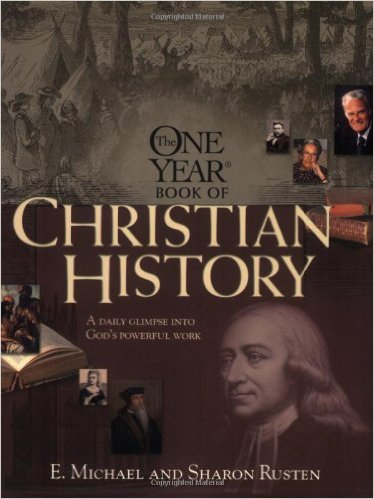
Today's "thought" is meant to be informative and instructive. It comes from a book I have quoted from before, "The One Year Book of Christian History," authored by E. Michael Rusten and Sharon Rusten.  I include this post because it is a short basic answer to a question I get asked often: "Who are the Mormons, where did they come from, and what do they believe?" If you have ever wondered about their origins and some of what they believe, this is a helpful little answer to those questions. Enjoy.

     "In 1820 a fourteen-year-old boy named Joseph Smith Jr. claimed to have received a vision in which God the Father and God the Son appeared to him and told him that they had chosen him to help restore true Christianity. Apparently not overly moved by this revelation, he went back to digging for Captain Kidd's treasure with his father and brother [on their farm in NY].
     When he was seventeen, he claimed to have been visited by an angel named Moroni, who told him that he would receive the "golden plates" of the Book of Mormon to translate.  In 1827 Smith alleged that he unearthed the plates in Cumorah, a hill near Palmyra, New York. Smith said he translated the "reformed Egyptian hieroglyphics" with the help of the miraculous glasses he supposedly received from Moroni.  Oliver Cowdery, a schoolteacher and a convert of Smith's, assisted in the translation, although no one but Smith ever saw the golden tablets.
     In 1829 during the translation, the "Prophet" as he liked to be called, alleged that John the Baptist was sent by Peter, James and John to bestow the "Aaronic priesthood" on himself and Oliver.  Early in 1830 they completed their translation, and "The Book of Mormon" was published and copyrighted. On April 6, 1830, Joseph Smith Jr., his two brothers Hyrum and Samuel, Oliver Cowdery, and David and Peter Whitmer Jr., met in Fayette, New York, to found a new religious society they called, "The Church of Christ." Eventually known as "The Church of Jesus Christ of Latter-Day Saints," the Mormon Church was begun.

     Soon after, the Mormons moved to Kirkland, Ohio, where they attracted many new followers. In six years they grew to more than 16,000 members. Because of Smith's reputation as a charlatan, and accusations that his religion was a hoax, the new church had to move several times. Next they moved to Jackson County, Missouri, and then to Nauvoo, Illinois, but their problems followed them to each new location. The trouble intensified in Nauvoo when their practice of polygamy became public. The exact number of Smith's wives is not known, but it has been estimated to be as high as fifty.
     When Smith called for the destruction of a newspaper that was outspokenly anti-Mormon, the state of Illinois stepped in to control the dispute and jailed Joseph Smith and his brother Hyrum.  On June 27, 1844, an angry mob stormed the jail and murdered both men.
     After the death of Joseph Smith, Brigham Young became the leader of the Mormons. Young led the group across the Great Plains and over the Rocky Mountains to the Salt Lake Valley (in present day Utah) in 1846.  Finally, the Mormons were granted recognition as a legitimate religion. Brigham Young had twenty-seven wives and fifty-six children. Today the Mormons claim more than 11 million members, more than half who live outside the United States.

     What do Mormons believe? Simply stated, Mormons teach that all gods were originally men [who were good enough to become gods] and that all men have the potential to become gods. Being a king and priest to God is a step toward becoming a god. They believe that all persons were pre-existent and, depending on their good works, go to one of three levels of heaven: telestial (for unbelievers), terrestial (for ignorant but good people), and celestial (for good Mormons).  Jesus, who is the Jehovah of the Old Testament, will reign over a millennial kingdom from Independence, Missouri."

Just a few more points of interest:
1.) Mormons believe in many gods.  
2.) Jesus is a God (one of many), but was not always a God -- he progressed to become a God. 
3.) He was pre-existent, but in Mormon theology so are the spirits of all people, waiting for people to provide them bodies to live in through procreation. 
4.) The Gods have begotten spirit children. 
    a.) These spirit children are restless until they have a body to reside in. 
    b.) Bodies for these spirit children are provided through human procreation.
    c.) Therefore man's chief end is to glorify the Gods by having babies. 
    d.) Procreation is man's primary duty, the more children one has the more virtuous they become. (This seems to be what gave birth to their view of polygamy, a practice disavowed in 1890 in "The Anti-polygamy Manifesto" in order for Utah to gain statehood -- though it is still practiced by small splinter groups.). 
5.) Mormons also believe that a person is saved by a mixture of grace, faith, repentance, baptism, good works, and obedience to Mormon doctrine. 
6.) They believe Christ's shed blood only cleanses us from original sin, or Adam's transgression, and opened the door to full salvation which one must work for once the door is opened. 
7.) Mormons also baptize on behalf of the dead (thus their extensive interest in genealogy). Since they believe one cannot be saved apart from baptism, they receive baptism proxy on behalf of dead ancestors in order to save them.  
8.) They also believe in the doctrine of eternal progression: "As man is, God once was: as God is, man may become."  (See "Mormonism," by John Gerstner, Baker Books, "The Church of Jesus Christ Latter Day Saints," by Steven Tsoulkalas.)

     I hope such information may be helpful to others who have sought to understand how Mormonism differs from historic Christianity, since many terms used in conversation are similar, but their meanings and definitions differ.
"The truth will set you free," Pastor Jeff

11.04.2014

Glorifying God


Greetings All,

     Today's 'thoughts' come to you from Thomas Watson (1620-1686), and are found in a recent devotional book containing various selections from his writings. The book is entitled "Glorifying God - A Year Long Collection of Classic Devotional Writings by Thomas Watson."  It was complied and adapted by Patti M. Hummel.
     Watson was an English Puritan who was widely read in days past, and both inspired and mentored (through his many books) the great Charles Spurgeon.  In fact, what Spurgeon says of one of his books could summarize most every one he wrote: "This is a happy union of sound doctrine, heart-searching experience, and practical wisdom."  Today's selections have to do with glorifying God by being cheerful and delighting in Him.  Enjoy. 

"Serve the Lord with gladness."  (Psalm 100:2)

     "It brings glory to God when the world sees a Christian who is cheerful in the worst times; who, with the nightingale, can sing in the dark of night as well as the light of day.  The people of God have many reasons to be cheerful. They are justified and adopted, and this creates inward peace, and makes music in their hearts, whatever outer storms may be buffeting them. If we consider what Christ has done for us by His blood, and wrought in us by His Spirit, it is a reason for great cheerfulness, and this cheerfulness glorifies God.
     It reflects upon a master when the servant is always drooping and sad. It speaks of his life being hard because his master does not give him what is fitting. When God's people hang their heads, it looks as if they do not serve a good master, or have fallen from their choice to follow Him, which reflects dishonor upon God.
     As the gross sins of those who claim to be believers bring scandal on the gospel, so do the uncheerful lives of the godly.  Our service to God does not glorify Him unless we do so with gladness. A Christians cheerful looks glorify God.  Our Christian faith does not take away our joy, it refines it.  It does not break our violin, but tunes it and makes the music produced by it even sweeter."  

"Though you have not seen Him, you love Him..."  (I Peter 1:8)

"God is a delicious good. That which is the chief good must ravish the soul with pleasure. There must be in it a rapturous delight and quintessence of joy. There is certain sweetness about God's person which delights, even ravishes, the soul. God's love drops such infinite sweetness into the soul that is unspeakable and full of glory.
     When we delight in God even though we see Him only by faith, what will our joy be when we see Him face to face? If the saints found so much delight in God while they are suffering, oh what joy and delight will they have when they are being crowned!
     God is a superlative good. He is better than anything you can compare with Him. He is better than health, riches, and honor. Other things maintain life, He gives life. Who would weigh anything on a scale opposite the Deity? Who would weigh a feather against a mountain of gold? God excels all things more infinitely than the sun outshines the light of a candle.
     God is an eternal good. He is the Ancient of Days, yet never decays nor grows old (Daniel 7:9). The joy He gives is eternal, the crown does not fade way. The glorified soul shall forever comfort itself in God, feasting on His love, and sunning itself in the light of His countenance. God is the chief good, and the enjoyment of God is the highest contentment any soul is able to know."

     The first question of the Westminster Shorter Catechism, along with its answer, are well-known to many. Question: "What is the chief end of man?  Answer: "To glorify God and enjoy Him forever."

     Yet John Piper is well-known for changing two words in that answer and suggesting it should instead be: "To glorify God by enjoying Him forever."  In fact Piper goes on to suggest: "God is most glorified in us when we are most satisfied in Him." Who could disagree? It fits perfectly with Watson's thoughts.

     We glorify God most fully when we show the onlooking world that God fully satisfies our soul. And in keeping with that, what better visible expression is there of that satisfaction of soul than a cheerfulness that radiates from our countenance?
     Of course, we are not to fake smiles, or pretend to be cheerful when we are not -- for that would dishonor God as well.  Likewise, Watson and Piper are not suggesting we will never have down days where we must work through sorrow or disappointment. But I believe they are suggesting we should not get stuck there.
     In fact, when we find ourselves there, our aim should be to seek His face with all our hearts, reflect on all He has done for us, bask in His comforting presence, call to mind all His infinite perfections, and feast on the Gospel truth of His incomprehensible and irrevocable love for us in Jesus. We are to let the remembrance of His great grace toward us warm our hearts, stir our souls, and dispel the gloom that can overtake us when we focus on our circumstances, instead of our merciful and wise Father in heaven who loves us and grows us through them.
Blessings on your day, Pastor Jeff

9.24.2014

The International Anthem: Come and See What the Lord Has Done

Greetings All,

     This week's 'thought' comes to you from an young man (an elder in my congregation) who preached for us this past Sunday on the topic of world missions.  He, his wife and children hope to be on the mission field soon, and thus I would venture to guess his comments underlie a great part of their motivation for desiring to go abroad. I thought his insights were superb and would be a blessing to others, and thus I send them along. 
     His name is Pete Falconero, and this selection comes from his message to us entitled: "The International Anthem:  Come and See What the Lord Has Done." Enjoy and be encouraged! 

     "Charles Spurgeon once said: "It is the WHOLE BUSINESS of the WHOLE CHURCH to take the WHOLE GOSPEL to the WHOLE WORLD."
     Does the term "whole business" mean that everything we do in the church, including the local ministries, needs to be focused on Global Missions? The answer is No... and yes.  Missions doesn't need to be in the forefront of every ministry, but every ministry should have an impact on Global Missions.
     What we’re doing here with our local church and local ministries is igniting small fires of passion for the glory of God in all the geographic areas around our church.  But these are not fires we want to contain.
     We want to let these fires spread horizontally to neighboring towns and counties and states and countries and peoples.  We set little fires with the hope that these will become a huge conflagration of wildfires sweeping across the globe.  In this way, missions IS the WHOLE MISSION of the church.

     The existence of any 'mission' whether its a Navy Seals mission, or Christian Missions, indicates there is a problem that requires the dispatching of men and women into a strategic location. There is a situation for which there is great risk and yet great reward.
     So in the context of Christian Missions, what is the problem? Romans 3:23 says the WE are the problem. The crux of the problem is that, "all have sinned and fallen short of the glory of God." ALL. Every person in every nook and cranny on the face of planet earth.
     We share this in common with our human family: We've all fallen short of his glory.  Man has deviated from his design and now everything is wrecked. Every problem on earth is due to man’s fall from glory… sickness, oppression, violence, and perversions of every kind. It all points at us... But -- praise God -- this is not the whole story.  Missions exists because the story’s not over.  Missions seeks to re-introduce mankind to its over-riding purpose: To glorify God in all things.
     The first question of the Westminster Shorter Catechism asks: "What is the chief end of man?"  And the answer?  "To glorify God and enjoy Him forever." There are tons of verses to support this conclusion. And notice it says "chief end" not "chief ends."  It’s singular because glorifying God and enjoying God always go hand in hand.  And when we joyfully proclaim the glories of God to the world, we are showing His true worth to us.  This is worship. God’s glory and our joy are the essence of worship.
     As John Piper says, it is also the engine of missions. “Missions," he says, "is not the ultimate goal of the Church. Worship is. Missions exists because worship doesn't. Worship is ultimate, not missions, because God is ultimate, not man. When this age is over, and the countless millions of the redeemed fall on their faces before the throne of God, missions will be no more. It is a temporary necessity. But worship abides forever.  Worship, therefore, is the fuel and goal of missions. It’s the goal of missions because in missions we simply aim to bring the nations into the white hot enjoyment of God’s glory. The goal of missions is the gladness of the peoples in the greatness of God.”   The gladness of peoples in the greatness of God -- that alone is enough of a reason for Missions right there.
     Read Psalm 98. The psalmist starts out by singing the glories of God for His marvelous works, His salvation, His righteousness, His love, His faithfulness.  And he is bursting at the seams with joy. He is so joyful in his glorification of God that he can’t keep this to himself. So in v. 4 he invites all the earth to sing along! The people, the mountains, the rivers, the sea.  Everyone and everything grab an instrument!  You can’t miss out on singing this song!  All created things doing what they were created to do: Joyfully proclaiming the glory of God in song.

     For most of us, singing is a response to a joyful state.  My wife knows when I’m in a good mood because I go around singing -- in the car, in the shower.  I don’t know what kind of notes I’m hitting, they aren't the right ones, and she let’s me know -- but I am singing!  Yet, conversely, when I’m upset, I don’t sing.  I've never once said, “I’m so mad I could just sing." Because worship requires joy.  Worship must include both glorifying God and enjoying God. If worship didn't include glory and joy, than we could just get Siri from the iPhone up here to lead worship by reading us some lyrics.

     So, again, this is the problem: There are people all over the world that aren't worshiping or glorifying the One True God.  And they are not experiencing the overwhelming joy that is the result. We want to open up the peoples of the world to Joy.  Not just happiness.  If it was just circumstantial happiness we’re after, we could fly around the world airdropping puppies and clowns.  People need the joy of knowing Christ.  And here’s my definition of Joy: Joy is the fixed smile of the soul that comes when one is glorifying and worshiping God.
     This is the BIG WHY for missions. There are smaller why’s, but they all flow out of this BIG why: The glorification of God for the enjoyment of all peoples."

     It was a fantastic message.  And if you would like to hear it uncut, as he covers the other three points, you can simply click on http://www.christcommunitybiblechurch.org/ and listen to it.  It's the most recent message from the sermon archive.
May God's richest blessings rest upon you,  Pastor Jeff