Visitors

free counters
Showing posts with label Pleasure. Show all posts

1.15.2019

Ecclesiastes, The Search For Meaning

Greetings All,

     I trust this email finds you well!  Today I thought I would share some thoughts on one of my favorite books in the Bible -- the Book of Ecclesiastes.  These "thoughts" come from a Brit (I'm assuming from the name he's originally from Wales).  His name is Selwyn Hughes, and they come from a Bible Study booklet in the series, "Every Day With Jesus."  The title of this particular volume is: Ecclesiastes, The Search For Meaning."
     Solomon begins this book with a rather shocking statement: "Meaningless, meaningless," says the Teacher... Everything is meaningless!"  Yet we must remember it's a statement qualified by the other frequently-repeated phrase in the book, "under the sun," which essentially means, "focused only on the things of earth."   "Under the sun" essentially means, "life lived without consideration of God," or "life viewed apart from the acknowledgement God," or "life lived apart from a relationship with God."   So, with that clarification, I hope you find these thoughts challenging, relevant and useful. Enjoy.
     "The main message of the book comes through it's opening statement: "Everything is meaningless."  Seeing the utter futility of life is the first step to an encounter with God. Many are not ready to meet with the Lord until they have been silenced by the futility of this world in which they live. I heard someone say that the first book of the Bible everyone should read is the book of Ecclesiastes -- because it silences you.  When we see as clearly as Solomon saw that the world does not provide us with the life for which our souls were created, then we are more likely to turn to the true source of happiness -- the eternal God Himself.  One of the reasons why some of us do not know God well is because we have never been convinced of the utter futility of trying to find life in things. We have not been silenced. We must let Ecclesiastes silence us, and and in that silence we may experience a deeper awareness of God...
     One of the reasons why Solomon uses such forceful language...is to break through our defensive attempts to avoid reality.  It was T. S. Elliot who once said: "Humankind cannot bear too much reality." Psychologists warn that we should be careful about stripping away people's defenses, as coming face to face with reality too quickly can cause those who are fragile to slide into depression. The author of Ecclesiastes seems unconcerned about this, however, and tells us over and over again, and with deep conviction that life, "under the sun" is futile... 
     He tells us how his determination to find purpose for living led him to deep and serious study. But study, and trying to grasp the meaning of the universe by the intellect alone, proved also to be futile. He says that it is like "chasing after the wind" (chap. 1:17).... Yet if education, intellectualism, and philosophy are not the routes to making life work, then what is? Perhaps (say some) life can be found in pleasure. Not so, says Solomon [and who would know better than a man who had 700 wives and 300 live in prostitutes?!]. Pleasure pleases, but it is powerless to quench the ache that exists in the soul.
     Solomon provides us with a list of ways that pleasure can be gained, but he gives all of them the "thumbs down."  The first pleasure is laughter (2:2).  Send in the clowns.  Bring on the jokers. Let's hear the funny one-liners. But as almost everyone knows, those who bring laughter to thousands are themselves often desperately unhappy.  Billy Graham tells the story of a man who went to a doctor for help with his depression. "I'll give you something better than anti-depressants," said the doctor. "Go to see the clown at the local circus. He has just arrived in the town and is sending people into hysterics." The man looked at the doctor and dolefully said, "I am that clown."
     If laughter cannot satisfy, then perhaps drink will help.  "I tried cheering myself with wine," Solomon says (2:3). But clearly that did not satisfy either. He then threw himself in a great round of activity -- great projects and achievements like building a house for himself, planting vineyards, purchasing male and female slaves, buying up herds and flocks, amassing silver and gold, and finally equipping himself with a harem -- what he describes as, "the delights of the heart of a man" (Chap. 2, v 4-8).  He even tried fame and making a name for himself (v.9). But did these things work? Here's his conclusion: "everything was meaningless, a chasing after the wind..."  He is not saying these things did not bring pleasure. He is making the point that this kind of pleasure just does not last...
     Facing the realities of life can greatly provoke anxiety. The moment when we face the fact that there is nothing in this world -- no person, place or thing -- that can meet the deepest ache in our soul, is probably one of the most solemn moments of our existence. Many can't face that kind of reality so they escape into such things as fantasies, endless rounds of activity, drink, sensual pleasures, and so on...  Satisfaction in things is found only when they are seen as being behind God and not in front of Him. When God is not first, then everything around which we wrap our affections are unsatisfying idols. There are two paths we can choose: One is to find life in God and enjoy the provision of His hands; the other is to find life in things, and turn our back on God. The latter is "meaningless," says Solomon. It's like "chasing after the wind.'"
     I myself went through a period, in my late teens and early 20's, of trying to make sense of the world if God did not exist.  It was one of the primary things that drove me into a lengthy period of depression.  Thinking God did not exist made it much easier to sin, but it also made life (and all I did) meaningless and inconsequential. If there are no eternal consequences for anything we do, life becomes completely meaningless and somewhat intolerable. It even led me to entertain thoughts of suicide.
     I still say to this day that the only way one can be an atheist and think life has meaning is to lie to oneself.  To make up what a world without God can never supply.  To be "content" in a life lived apart from God ("under the sun") does not come from asking important questions and getting satisfying answers, it comes from refusing to ask enough questions.  It comes from being content not to connect the dots, or follow the path godless thinking to the depressing dead end where it will always lead when life is considered without reference to God.
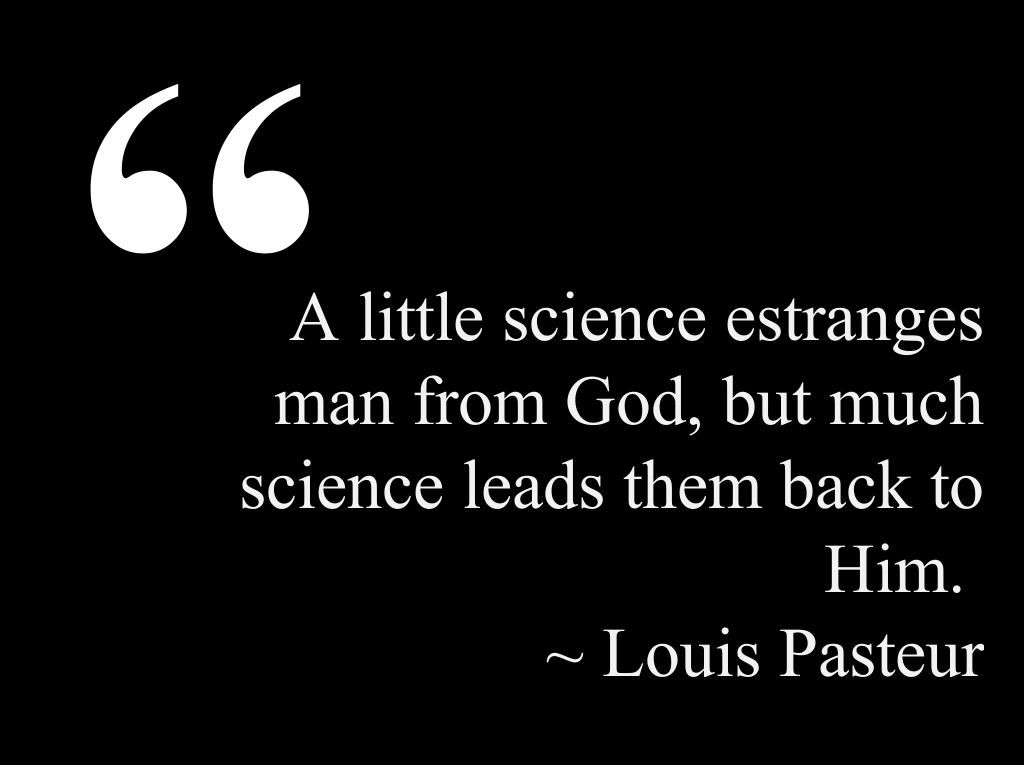
     I do not encourage anyone to stop asking questions. I encourage them to ask one after another after another and not stop!  Because I believe (as Solomon shows and many others have discovered) that at the end of those all those questions -- if they dare ask them all -- one will run headlong into the eternal Absolute that stands behind all that exists. The road of truly seeking does not lead to nothing, it leads through the nothingness of human futility to the ultimate reality we call God. But we must press things to the limit, because it's a lesson many can only learn after trying all those other things and discovering they end in futility and will not satisfy the truly thirsty soul.

Grace and Peace, Pastor Jeff


10.09.2018

Every Good Endeavor - Connecting Your Work to God's Work

Greetings All!

     This week's "thought" comes to you from Tim Keller's book "Every Good Endeavor - Connecting Your Work to God's Work."   I have not finished it yet (just over half way through), but what I have read is enlightening, inspiring, well-thought-through (as is typical for Keller) and so helpful for those seeking to find meaning and purpose in their jobs or work.  Better yet (as the title suggests), it is helpful for those who would like to connect their work to God's work in this world, and bring redemptive change into their workplace.  In my humble opinion, this book really is a must read.
     We all function according to some type of underlying worldview -- a worldview that guides our choices, priorities and pursuits. "Our worldview," says Keller, "places our work in the context of a history, a cause, a quest... and in so doing it frames the strategy of our work at a high level."  My challenge to you today is to see if your worldview is Christian, non-Christian, or a mixture of competing worldviews spliced together?  Read below and find out...  Enjoy.
The Gospel and Other Worldviews

     "Any worldview consists of posing and answering three questions:  1. How are things supposed to be?  2. What is the main problem with things as they are?  3. What is the solution and how can it be realized?  Leslie Steven's book (Seven Theories of Human Nature) includes Christianity among its "theories," but the author points out how different Christianity is from the alternatives. He observes that "if God has made man for fellowship with Himself, and if man has turned away and broken his relationship to God, then only God can forgive man and restore the relationship." In other words, the biblical worldview uniquely understands the nature, problem, and salvation of humankind as fundamentally relational.  We were made for a relationship with God, we lost our relationship with God through sin against him, and we can be brought back into that relationship through his salvation and grace.
     Plato, Marx, and Freud all identify some part of the created world as the main problem and some other part of the created world as the main solution. The protagonists and antagonists of their respective world-stories are played by finite things.  Thus, Marxism assumes that our problems come from greedy capitalists who won't share the means of economic production with the people. The solution is a totalitarian state.  Freud, on the other hand, believed that our problems come from repression of deep desires for pleasure. The villains are played by the repressive moral "gatekeepers" in society, like the church. The solution is the unrepressed freedom of the individual.  Many people have a worldview that to some degree is indebted to the Greeks or Plato. They think the problem with the world rests in undisciplined and selfish people who won't submit to traditional moral values and responsibilities. The solution is a "revival" of religion, morality, and a virtue in society.  Philosopher Al Wolters writes: "The great danger is to always single out some aspect of God's good creation and identify it, rather than the alien intrusion of sin, as the villain. Such an error conceives of the good-evil dichotomy as intrinsic to the creation itself...  Something in the good creation itself is identified as the source of evil.  In the course of history this "something" has been variously identified as the body and it's passions (Plato and much of Greek philosophy), as culture in distinction from nature (Rousseau and Romanticism), as authority figures in society and family (psycho-dynamic psychology), as economic forces (Marx), as technology and management (Heidegger and existentialists)...  As far as I can tell the Bible is unique in its rejection of all attempts to either demonize some part of creation as the root of our problems, or to idolize some part of creation as the solution. All other religions, philosophies, and worldviews in one way or another fall into the trap of idolatry -- of failing to keep creation and fall distinct.  And this trap is an ever-present danger for Christians [as well]."
     Look again at the uniqueness of Christianity. Only the Christian worldview locates the problem with the world NOT in any part of the world, or any particular group of people, but in sin itself (our loss of relationship with God). And it locates the solution in God's grace (our restoration of a relationship with God through the work of Christ).  Sin infects us all, and so we cannot simply divide the world into the heroes and the villains. (And if we did we would certainly have to include ourselves among the latter as well as the former.) Without an understanding of the Gospel, we will be either naively Utopian or cynically disillusioned We will be demonizing something that isn't bad enough to explain the mess we are in, and we will be idolizing something that isn't powerful enough to get us out of it. This is, in the end, what all other worldviews do... The Christian story line, or worldview, is: Creation (plan), Fall (problem), Redemption and Restoration (solution): 
     1.  The whole world is good.  God made the world and everything in it was good. There are no intrinsically evil parts of the world.  Nothing is evil in its origin... You can find this "creational good" in everything. 
     2. The whole world is fallen.   There is no aspect of the world affected by sin more or less than any other. For example, are emotion and passions untrustworthy and reason infallible?  Is the physical bad and the spiritual good?  Is the day-to-day world profane but religious observances good? None of these is true. But non-Christian story lines must adopt some variations of these in order to villainize and even demonize some created thing instead of sin.
     3. The whole world is going to be redeemed. Jesus is going to redeem spirit and body, reason and emotion, people and nature. There is no part of reality for which there is no hope.

     The Gospel is the true story that God made a good world that was marred by sin and evil, but through Jesus Christ he redeemed it at infinite cost to himself, so that someday he will return to renew all creation; end all suffering and death; and restore absolute peace, justice, and joy in the world forever. The vast implications of this gospel worldview -- about the character of God, the goodness of the material creation, the value of the human person, the fallenness of all people and all things, the primacy of love and grace, the importance of justice and truth, the hope of redemption -- affect everything, and especially our work." 
     That's obviously a bit to chew on!  But I hope it helps you see how the worldview one chooses to adopt will have great effect on how they view their work, carry out their work, and choose to live. My question is:  Do you have a Christian worldview?  Or, like many, have you adopted elements of a Marxist, Greek, Capitalist, or Freudian worldview?  Everyone has a worldview that under-girds their life choices and endeavors. Is your a Gospel worldview, or a syncritistic mix of many others with a small element of Christian lingo or references to Jesus added in?
     And I must stress that it is NOT irrelevant.  Since God commands us: "Love the Lord your God with all your heart and all you soul and all your mind and all your strength," it would seem to lay upon us as believers an unavoidable responsibility to think things like this through as best we possibly can.  For whatever worldview we have has a profound effect on influencing the choices we make, why we make them, and what we will pursue. It will impact how we treat people, why we love and value the things we do, live as we do, and view work the way we do. 
     So my prayer for everyone is this:  If you have come to Christ, yet retained a non-Christian worldview (or elements from various ones), you will seek (by the grace God gives) to root those elements out and replace them with distinctly Christian or Gospel elements -- something Keller's book distinctly aims at helping us with! 

In His Service, Pastor Jeff 

10.11.2016

Sexual Morality in a Christless World

Greetings All,

     This week's selection is about sex. Or more to the point, it's about the new views of sexual morality and how they vary from Christian sexual morality.  I copied and pasted it from a blog by Tim Challies.
     It's actually a critique of a book by Matthew Rueger entitled, "Sexual Morality in a Christless World."  Yet it offers to us some very helpful insights about the revolutionary nature of Christian sexual ethics in light of history, and I would add, the alarming rise of sexual violence, human sex trafficking of children and adults, and the type of environment that arises when people throw off all thoughts of sexual restraint.  I recommend both this blog entry by Challies as well as the book by Matthew Rueger. Enjoy.


Sexual Morality in a Christless World
Tim Challies

Times are changing. Sexual morality is undergoing nothing less than a revolution as traditional morality gives way to something radically different. The former morality, based on the Christian scriptures, is being shoved aside by a new one that not only departs from the Bible, but outright rejects it. Meanwhile, Christians who abide by those traditional sexual morals are increasingly seen as outcasts, backward people dangerously hung up on ancient, oppressive principles. It is all very disconcerting.
Into the fray steps Matthew Rueger with his book, "Sexual Morality in a Christless World."  Though the last few years have brought us no shortage of books on how to live on this side of the sexual revolution, Rueger offers something unique… he shows that Christian sexual morality has not always been traditional but was at one time its own revolution. In other words, Christians have been here before, and there is much we can learn from our own history… He offers a fascinating yet disturbing examination of what Roman culture considered good and normal. “Rome’s sexual climate is a model of the utopia for which today’s sexual ‘progressives’ are striving.”
     Yet it was hardly Utopian. He shows that “In the Roman mind, man was the conqueror who dominated on the battlefield as well as in the bedroom. He was strong, muscular, and hard – in both body and spirit. Society looked down on him only when he appeared weak or soft.” Respectable men were permitted to have sexual relations with just about anyone, provided they were the aggressors rather than receivers of such sexual acts.  Marriage existed, of course, but was not first about mutual love, but about the provision of an heir. A far purer form of love was the love of a man for a boy, so a culture of pederasty arose in which adult men carried on overt sexual relationships with adolescent boys. Prostitution was rampant. Rape was widespread and accepted, provided a man raped someone of a lower status. In so many ways Roman sexual morality was abhorrent and one of its most prominent features was the strong dominating the weak.
     And then Christians showed up. Christians began to teach that men were to be chaste, that homosexuality and pederasty were sinful, that men were to love and honor their wives, that wives and husbands had equal authority over one another’s bodies. Such teaching was not only seen as repressive, but as full-out destabilizing to the Roman system. No wonder, then, that the whole culture turned against Christians.  “Though Christian morality promoted genuine self-emptying love and was positive for society, it nonetheless set Christ’s people against the prevailing culture. Romans did not like being told that some of their favorite activities were displeasing to the Christian God, and they pushed back.”  And here is where we can draw important lessons for our day, for today, too, Christian sexual morality is seen as destabilizing to the culture around us, as a serious societal sin…
     Rueger also shows that Christian morality was almost as opposed to contemporary Judaism as it was to Rome. This was especially true in according equal rights to men and women, in protecting women from divorce, and in putting away notions of sexual purity that harmed women. Again, Christianity offered a sexual morality that was kind and equitable and that protected the weak and marginalized.
     With all of that context, he is able to show how these Christian teachings were full-out counter-cultural, how they were radical, not traditional. He shows how Christian sexual morality helped individuals, helped the marginalized, and helped society—it was a tremendous blessing to everyone.  Yet Christians suffered because their views were seen as destabilizing and harmful. Though today we see that their morality was actually a blessing, at that time it was considered a curse. And Christians suffered terribly for it...
     Rueger says “My desire in writing this book is to help Christians engage the world around them in reasoned discussion.” He does so very well. And his greatest contribution is helping us understand that this is not the first time that Christians have been at odds with the culture. This is not the first time the biblical understanding of sex and sexuality has caused the culture to turn on Christians, to consider them disloyal, to push them to the margins. For that reason we need books like this one to interpret the times and equip us for today and the days to come. I thoroughly enjoyed this work and highly recommend it."

     As I have repeatedly stated over the years (in light of studying history) -- our cultures sexual morals (or progressive eradication of them) is not a sign of progress, but the sign of a cultural regression which is taking us back to what existed before Christianity appeared on the scene some 2000 years ago.  And as those sexual morals are separated entirely from Christ, and Christianity, history will likely repeat itself and we will actually see more sexual violence toward women, more children put into the growing sex trade, and a continuing devaluation of the Christian virtue of committed and sacrificial love between a husband and a wife. And it will become harder and harder to police, because it will become more and more common, and more and more acceptable, and seen as less and less problematic to the societal conscience.
     As Jesus predicted for the latter days, "the love of most will grow cold" (Matthew 24:12).  And Paul restated that same truth when he said that people being "without love" (for anyone but themselves or money or pleasure - II Timothy 3:2-5) will be a sign of the approach of the last days.
     No predictions. I know better!  Just some earnest food for thought, Pastor Jeff


4.19.2016

Thought-Provoking one-liner's from C.S. Lewis

Greetings All,

     Today's "thoughts" are all short, sweet, thought-provoking one-liner's from C.S. Lewis.  I trust one, two or more might speak truth to your heart. Enjoy!


"The terrible thing, the almost impossible thing, is to hand over your whole self -- all your wishes and precautions -- to Christ."

Mere Christianity (1952)

"When Christ died, he died for you individually just as much as if you had been the only person in the world."
Mere Christianity (1952)

"God whispers to us in our pleasures, speaks to us in our conscience, but shouts in our pains; it is his megaphone to rouse a deaf world."
The Problem of Pain (1940)

“There are far, far better things ahead than any we leave behind.”
Collected Letters of C. S. Lewis  (2006)

“A man can no more diminish God's glory by refusing to worship Him than a lunatic can put out the sun by scribbling the word 'darkness' on the walls of his cell.”
The Great Divorce  (1945)

"There are only two kinds of people: those who say to God, "Thy will be done," and those to whom God says, "All right, then, have it your way."
The Great Divorce (1945)
“The instrument through which you see God is your whole self. And if a man's self is not kept clean and bright, his glimpse of God will be blurred.” 
Mere Christianity (1952)

“No man knows how bad he is till he has tried very hard to be good."
Mere Christianity (1952)

"We do not want merely to see beauty . . . We want something else which can hardly be put into words - to be united with the beauty we see, to pass into it, to receive it into ourselves, to bathe in it, to become part of it." 
Transposition and Other Addresses (1949) 
"God cannot give us a happiness and peace apart from Himself, because it is not there. There is no such thing."
Mere Christianity (1952)

"The sun looks down on nothing half so good as a household laughing together over a meal."
The Weight of Glory (1949)

“It is safe to tell the pure in heart that they shall see God, for only the pure in heart want to.”
The Problem of Pain (1940)

"Love is not affectionate feeling, but a steady wish for the loved person's ultimate good as far as it can be obtained."
God In The Dock (1970)

"When we Christians behave badly, or fail to behave well, we are making Christianity unbelievable to the outside world."
Mere Christianity (1952)

“Each day we are becoming a creature of splendid glory or one of unthinkable horror.” 
Mere Christianity (1952)

"To love at all is to be vulnerable." 
The Four Loves (1960)

“I sometimes wonder if all pleasures are not substitutes for joy.” 
Mere Christianity (1952)
May the Joy of the LORD be your strength, Pastor Jeff

11.11.2015

Instruments in the Redeemer's Hands -- People In Need of Change Helping People In Need of Change

Greetings All,

   As promised in my last thought, this thought will deal with some of the keys to true heart change (and thus life change).


   It comes to you from the same book as last week, Paul David Tripp's -- "Instruments in the Redeemer's Hands -- People In Need of Change Helping People In Need of Change." 
     If you have ever found yourself struggling with a sin that never seems to go away, or one where you seem to gain victory over it for a while, only to have it resurface as strong as ever when you go through stressful situations or encounter similar temptations, it is likely because you are simply seeking to control your environment, or outward behaviors, without casting down the internal heart-idols that feed those behaviors. Tripp explains how this works. Enjoy.

The Heart of the Matter 

     "Though the Bible has much to say about the heart, few Christian books on marriage and family, communication, conflict resolution, or even discipleship focus on it. These practical books seldom display an understanding of the centrality of the heart and how it operates... An interesting Old Testament passage can help us do this.  "Some of the elders of Israel came to me and sat down in front of me. Then the word of the LORD came to me: 'Son of man, these men have set up idols in their hearts and put wicked stumbling blocks before their faces. Should I let them inquire of me at all? Therefore speak to them and tell them, 'This is what the sovereign LORD says: When any Israelite sets up idols in his heart and puts a wicked stumbling block before his face and then goes to a prophet, I the LORD will answer him myself in keeping with his great idolatry. I will do this to recapture the hearts of the people of Israel, who have all deserted me for their idols.' "  (Ezek. 14:1-5).
     These elders of Israel have come to the prophet Ezekiel with questions they want to ask God. It would seem they are doing the right thing. But God recognizes that there is something wrong with them... They have idols in their hearts, a more personal and fundamental form of idolatry than ritual religious or cultural idolatry. An idol of the heart is anything that rules me other than God. As worshiping beings, human beings always worship someone or something. This is not a situation where some people worship and some people don't.  If God isn't ruling my heart, someone or something else will.  It is the way we were made...
     Sin is fundamentally idolatrous. I do wrong things because my heart desires something more than the Lord. Sin produces a propensity toward idolatry in all of us. We all migrate away from worship and service of the Creator toward worship and service of created things (Rom. 1:21-25). This is the great spiritual war beneath every battle of behavior -- the war for control of the heart...  The deepest issues of life are issues of worship. Worship is more fundamental to our essential nature than the pain, pressures, or pleasures of our experiences. What we worship determines our responses to all our experiences. Sin is much more than doing the wrong thing. It begins with loving, worshiping and serving the wrong thing. Sin in some way always involves idolatry.
     The Ezekiel passage gives God's response to the elders. Because these men have idols in their hearts, God says he is going to answer them "in keeping with their great idolatry."  What does this mean?  God is saying, "Because you have idols in your hearts, the only thing I want to talk about is your idolatry."  Why?...  Why would God refuse to talk to them about anything but their idols? A crucial phrase explains God's response and reveals much about how the heart functions: "These men have set up idols in their hearts and put wicked stumbling blocks before their faces" (Ezek. 14:3). Imagine that someone places his hand up to his face so that he is looking through his fingers. What will happen to his vision? It will be seriously obstructed, and the only way to clear it is to remove his hand.  In a similar way, an idol in the heart creates a stumbling block before the face.  Until the idol is removed, it will distort and obscure everything else in that person's life. This is the principle of inescapable influence: Whatever rules the heart will exercise inescapable influence over the person's life and behavior.
     I once counseled a successful executive from New York City. He was the most controlling man I ever met.  He had been married for thirty years and handled all the financial, parenting, and decorating decisions of the family. He was so obsessed with control that he would rearrange his wife's clothes closet according to his prescribed plan (blouses, skirts, pants, and dresses, in graduated shades of color)! Now imagine that I did not know all this as I spoke to his wife. His controlling tendencies would not be in my mind as I listened to her complain that she and her husband never talk and that many conflicts are left unresolved. What would happen if I rolled up my counselor's sleeves and gave her husband good biblical instruction on communication and conflict resolution? Would this lead to changes in his marriage?  The answer is no, because he would use his new understanding and skills to get what his heart worshiped. Because my counsel would not have addressed this man's idols of the heart, it would only produce a more successful controller.  As long as the desire for dominance ruled his heart, he would use whatever principle and skills he learned to establish even greater control over his family.
     If we fail to examine the heart and the areas where it needs to change, our ministry efforts will only result in people who are more committed and successful idolaters. This is why God will only answer the elders of Israel in keeping with their heart idolatry. If they do not change there, whatever God tells them will only be used to serve the idols that rule their hearts...
     Idols are god-replacements... They command my daily devotion, shape my daily routine, and guide the way I interact with life, though they have no power whatsoever to deliver...  God's Word alone insists that we are always serving God or some aspect of the creation, and whatever rules our hearts, will exercise inescapable influence over our lives and behavior...  This is why the principle of the Ezekiel passage is so important, and why the focus of God's transforming grace is heart change. Our spiritual battle is a war for the heart. When that is won people will behave in ways that please their Creator. God will never be satisfied with the crumbs of externalism."

     Trying to change our external behaviors without repenting of, or dethroning the idols that feed our desire to do sinful things, is a venture in futility. It's like trying to cool down a boiling pot of water by fanning it, while refusing to douse the fire that heats it from below!  Quench the fire -- get rid of the fire -- and the pot will cool by itself. Unfortunately, though, many Christians (ignorant of their idols) don't even see the fire that making all their efforts at external control useless. They don't know what their idols are.
     So, if you do have a sin that you never seem to be able to conquer, it's likely because you have never dislodged the idol (or idols) that feed it. In fact, its the sins we struggle with the most that indicate the presence of a firmly entrenched heart-idolatry (ie: a respect idolatry, performance idolatry, perfection idolatry, control idolatry, wealth idolatry, beauty idolatry, popularity idolatry, tranquility idolatry, prestige idolatry, family idolatry, competition or sports idolatry, sensuality idolatry and so forth)!
     And what's the cure?  Pray, ask God to help you identify your idol(s), repent for overvaluing them or placing them on a plain of value higher than God, and then turn away from them.  Sweep them off the altar of your heart and repent for ever having let them gain such an elevated place there. Only then will you see true heart change. And remember, if you inquire of the Lord, while harboring idols in your heart, the only thing He will speak to you about is those idols -- for until they are removed (like that hand from in front of your face) you won't be able to see clearly, or respond rightly, even if He does speak to you and grant you knowledge of other things.
That we might experience true deliverance and heart change, Pastor Jeff 

4.22.2014

Pure Pleasure

Greetings All,

     I came across this week's "thought" in Gary Thomas book "Pure Pleasure."
     It speaks of the joy parents should have in raising sinful kids, or spouses should have in loving their sinful spouse.  Yes, that right - sinful kids and a sinful spouse. I'll let him explain!  Enjoy.

     "I have participated in more small groups than I can count. During the initial 'life story' testimony each time, each participant, without exception, describes moments of tragedy, weakness, sin and brokenness, met finally by the strong redeeming grace of Christ. At the end of these exercises, I am in awe of the pain everyone has felt and oftentimes caused.
     And yet parents still manage to seem genuinely surprised when sin and 'common weaknesses' manifest themselves in their children. Spouses seem shocked when partners stumble in any number of ways.  Though a world population rapidly approaching seven billion people proves that not one of us has ever reached moral perfection -- that, in fact, few could even claim to have reached moral excellence -- we resent each other for falling short of perfection and even begin to define each other by our sin.
     This lack of graciousness demeans the sacrifice of the cross and stops celebration cold. The only chance we have for joy as fallen people living in a fallen world is the gospel of the cross and its corresponding truths of forgiveness and grace. Sadly, however, many Christian homes become places of judgment, accusation, and pronounced disappointment.
     Here's the stark reality: If you can't love, celebrate, and enjoy raising a sinful kid, then you can't love, celebrate, and enjoy any child. If you can't love and play with a sinful spouse, then you'll never be able to take pleasure in any spouse, for the simple reason that you can't find any sinless kids or spouses. Let's not allow sin and our universal brokenness to stop our play, cease our celebration, or impair our ability to take pleasure in the company of each other."
     His words are so true! We do seem more accepting of others sins and flaws, and show more grace and love to complete strangers, than we do to our own spouses and children. Of course, that may be because (as the old adage to states): "We don't have to live with them!"
     Those across town don't disrupt our times of quiet with needless noise, wake us early or keep us up late, add stress to our already busy schedules through irresponsibility, disrespect us in the confines of our own home, rebel against house rules, do the same thing we asked them not to do for the umpteenth time(!), and so forth and so on. Yes, it seems its easier to accept that people are sinners when we don't have to live with them 24/7!
     Yet Mr. Thomas is right: We really haven't learned to be gracious or loving until we can love the sinners in our own homes -- those we married or those who inherited our sin-tainted genes.
     What he said deserves repeating: "If you can't love, celebrate, and enjoy raising a sinful kid, then you can't love, celebrate, and enjoy any child. If you can't love and play with a sinful spouse, then you'll never be able to take pleasure in any spouse, for the simple reason that you can't find any sinless kids or spouses."
     We must either learn to celebrate, enjoy and love sinners, or find ourselves very, very lonely and disgruntled people -- people who are unable to even enjoy anything about ourselves, since we fall into that same category of imperfect sinners. In Christ God loves us, rejoices in us and even delights in us -- despite our flaws. We would do well to learn from His example.
With you in the fight to love as we should, Pastor Jeff

2.18.2014

Faith In Future Grace vs. Lust

Greetings All,

     This week's 'thought' has to do with a struggle most all men wrestle with (every one I've ever known anyway) -- lust.  And in particular, sexual lust. It comes to you from John Piper in his book, "Future Grace."  If you (or someone you know) is looking for help in the fight for purity, this excerpt offers some solid, relevant, helpful truth on how to gain victory over lust.
     So, if that's what you want (and if you struggle with it you should!), I encourage you to read on.  Enjoy. 

Faith In Future Grace vs. Lust
     "Suppose I am tempted to lust. Some sexual image comes into my mind and beckons me to pursue it. The way this temptation gets its power is by persuading me to believe that I will be happier if I follow it. The power of all temptation is the prospect that it will make me happier. No one sins out of a sense of duty. We embrace sin because it promises, at least in the short run, things will be more pleasant. 
     So what should I do?  Some people would say, 'Remember God's command to be holy (I Peter 1:16), and exercise your will to obey because he is God!' But something crucial is missing from this advice, namely, faith in future grace. A lot of people who strive for moral improvement cannot say, 'The life I live I live by faith' (Gal. 2:20). They strive for the purity of love, but don't realize that such love is the fruit of faith in future grace...
     When faith has the upper hand in my heart, I am satisfied with Christ and his promises. This is what Jesus meant when he said, 'Whoever believes in me shall never thirst' (John 6:35). When my thirst for joy and meaning and passion are satisfied by the presence and promises of Christ, the power of sin is broken. We do not yield to the offer of sandwich meat when we can smell the steak sizzling on the grill.
     The fight of faith is to stay satisfied with God. 'By faith Moses... [forsook] the fleeting pleasures of sin...for he was looking to the reward' (Heb. 11:24-26). Faith is not content with 'fleeting pleasures.'  It is ravenous for joy. And the Word of God says, 'In your presence there is fullness of joy; at your right hand are pleasures forever more.' (Ps. 16:11). So faith will not be sidetracked into sin. It will not give up so easily in its quest for maximum joy.
     The role of God's Word is to feed faith's appetite. And, in doing this, it weans my heart away from the deceptive taste of lust. At first, lust begins to trick me into feeling that I would really miss out on some great satisfaction if I followed the path of purity.  But then I take up the sword of the Spirit and begin to fight. I read that it is better to gouge out my eye than to lust. I read that if I think about things that are pure and lovely and excellent, the peace of God will be with me (Phil. 4:8). I read that setting the mind on the flesh brings death, but setting the mind on the Spirit brings life and peace (Rom. 8:6). I read that lust wages war against my soul (I Pet. 2:11), and that the pleasures of this life choke out the life of the Spirit (Luke 8:14). But best of all, I read that God withholds no good thing from those who walk uprightly (Ps. 84:11), and that the pure in heart will see God (Matt. 5:8).
     As I pray for my faith to be satisfied with God's life and peace, the sword of the Spirit carves the sugar coating off the poison of lust. I see it for what it is. And by the grace of God, its alluring power is broken. I wield the sword of the Spirit against the sin of lust by believing the promise of God more than I believe the promise of lust. My faith is not only a backward-looking belief in the death of Jesus, but a forward-looking belief in the promises of Jesus. It's not only being sure of what he did do, but also being satisfied with what he will do -- indeed, it is being satisfied with what he will do precisely because of what he did do (Rom. 8:32). 
     It is this Spirit-given superior satisfaction in future grace that breaks the power of lust. With all eternity hanging in the balance, we fight the fight of faith. Our chief enemy is the lie that says sin will make our future happier. Our chief weapon is the truth that says God will make our future happier. And faith is the victory that overcomes the lie, because faith is satisfied with God."
     As one can see from this selection the Bible's way of fighting sin is with faith, not with more willpower or legalistic restrictions. It is victory found in a return to believing. Believing God's promise rather than Satan's lie.
     In a fascinating little book I just read yesterday, it asks (regarding Hitler's attempted extermination of the Jews in the death camps across Europe): "How Do You Kill 11 Million People?"  (That's also the book's title.)  And what's the answer: "You lie to them."  As he shows in a fairly convincing way, you can get anybody to do almost anything if you can get them to believe a lie.  Tell them that what they do believe (have believed) is wrong, what they need to believe is what you are selling, and then make the lie you are selling as convincing as possible.  Say it with as much earnestness and charisma as you can (the non-biblical kind). That's Satan's ploy.
     Yet faith holds on to the truth -- refusing to believe the lie while also clinging to the firm promises of God. Faith exposes the lie to the soul before we are led in temptation to comply with it.
     The lie: Giving in to lust will fulfill your immediate bodily/fleshly craving for pleasure and therefore make you happy.  The truth: The pleasures of sin last only for a short time and result in death, but Christ offers joy, hope, inner peace, rest of soul, an undefiled conscience, fulfillment, delight, satisfaction, and in the future -- eternal pleasures at God's right hand. And the means of overcoming: Faith -- but especially faith in God's promise of future grace.
Blessings in the battle to believe, Pastor Jeff