Visitors

free counters
Showing posts with label Holy Spirit. Show all posts

11.26.2019

Brokenness is the Pathway to Spiritual Fruitfulness

Dear Friends,

     Today's "thought" confronts us with a reality we sometimes wish were not so.  Yet, it's a truth proclaimed both in Scripture and from the mouths or pens of numerous saints throughout history: Brokenness is the pathway to spiritual fruitfulness.  Before God can truly use you, He must first break you.  As much as we might wish it were otherwise, it is true. This selection comes from the devotional, "Streams in the Desert" by L. B. Cowman (with added content).  Enjoy.

“The sacrifices of God are a broken spirit;
a broken and contrite heart, O God,
you will not despise.”
Psalm 51:17
     “Those people God uses most to bring glory to Himself are those who are completely broken, for the sacrifice He accepts is, "a broken and contrite heart.”  It was not until Jacob’s natural strength was broken, when “his hip was wrenched” at Peniel (Gen. 32:25), that he came to the point where God could clothe him with spiritual power.  It was not until Moses struck the rock at Horeb, breaking its surface, that cool “water flowed out of it for the people to drink” (Ex. 17:6).  It was not until Gideon’s three hundred specially chosen soldiers “broke the jars that were in their hands” (which symbolized brokenness in their lives, Judg.7:19), that the hidden light of the torches shone forth and brought terror to their enemies.
     It was once the poor widow broke the seal on her only remaining jar of oil and began to pour it out that God miraculously multiplied it to pay her debts and thereby supplied her means of support (2 Kings 4:1–7).  It was not until Esther risked her life and broke through the strict laws of a heathen king’s court that she obtained favor to rescue her people from death (Est. 4:16).  It was only when Jesus took “the five loaves . . . and broke them” (Luke 9:16) that the bread was multiplied to feed the five thousand.  It was through the loaves being broken that the miracle occurred.  It was when Mary broke her beautiful “alabaster jar of very expensive perfume” (Matt. 26:7), and destroyed its future usefulness and value, that the wonderful fragrance filled the house.
     Mary (the mother of Jesus) was not only told of the joy of her being chosen by God to give birth to the Messiah, but that her heart would be pierced also -- cut and broken in two, as if by a sword. Overwhelming grief would cut deep into the joys of bearing and raising Jesus.  Peter was broken of his stubborn pride through the crushing and humiliating experience of denying Jesus three times in His hour of greatest need. Yet, through such failure and humiliation, he was made more humble and dependent on the Spirit, readied through the pain of brokenness to lead the early church.  Heartless Paul was broken on the road to Damascus as Christ appeared to him and blinded him, and he was led helpless, dazed, humbled, and broken in spirit, into the city, like a little child.  Likewise, it was when Jesus allowed His precious body to be broken by thorns, nails, and a spear, that His inner life was poured out like an ocean of crystal-clear water for thirsty sinners to drink and live! 
     It is not until a beautiful kernel of corn is buried and broken in the earth by DEATH, that its inner heart sprouts heavenward and grows to produce hundreds of other seeds or kernels. And so it has always been throughout history — GOD USES BROKEN THINGS.  Those who have been gripped by the power of the Holy Spirit and are used for God’s glory are those who have been broken in their finances, broken in their self-will, broken in their ambitions, broken in their lofty ideals, broken in their worldly reputation, broken in their desires, and often broken in their health.  Yes, He uses those who are despised by the world and who seem totally hopeless and helpless, just as Isaiah said: “The lame will carry off plunder” (Isa. 33:23).
     ‘Oh, break my heart; but break it as a field is plowed and broken for the seeds of corn… Oh, break my heart; break it, victorious God, that life’s eternal well may flow abroad... Break it as when the captive trees, breaking icy bonds, regain their liberties.  And as thought’s sacred grove to life is springing, be joys, like birds, their hope, Your victory singing.’ (Thomas Toke Bunch)”
     This theme is spoken of repeatedly throughout church history.  Martin Luther once wrote in similar terms suggesting: “God creates out of nothing. Therefore, until a man nothing, God can make nothing out of Him.”  Another saint said, “God always builds on ruins.”   Alan Redpath said: “God will never plant the seed of His life upon the soil of a hard, unbroken spirit. He will only plant that seed where the conviction of His Spirit has brought brokenness, and where the soil has been watered with tears of repentance as well as tears of joy.”   Hudson Taylor the famous missionary to China said, “When God wants to do His great works, He trains somebody to be quiet enough and little enough, and then He uses that person.”  Revival, says Isaiah, comes not to those who think they have it together, but to the broken: “This is what the high and lofty One says – He who loves forever and whose name is holy: “I live in a high and holy place, but also with him who is contrite and lowly in spirit, to revive the spirit of the lowly and revive the heart of the contrite.” (57:15).  Being broken is never pleasant, but it is the path that leads to spiritual fruit and usefulness.
     The way God makes us whole is to permit us to go through experiences that "break us" — because brokenness is the pathway to wholeness and restoration.  Pride is like steel that must be softened in the heat of the furnace before it becomes something that can be formed and molded.  The human heart is by nature like hard parched ground which must be watered with tears, and broken by the plow of trials, before the seed of His word can penetrate and take root. The will of man is like a hard lump of clay which the Potter must first pound and squeeze and stretch and then repeat the process all over again, before he can then take it and make it into a beautiful piece of colorful pottery.  Lord, how we wish there was an easier way... 

In His Service, Pastor Jeff


11.05.2019

What do I look for in a Pastor?

Greetings All,

     Another week, another message!  I so look forward to sending out these gems I glean from my reading of Christian authors.
     This week's "thought"  has to do with the trend in the church to court or win the approval of the movers and shakers in the world by conforming Christian ministry to standards people in the world would find more acceptable.  It addresses the attempt to make ministry more proper, legitimate, credible and well-received in the eyes of the world -- more professional.  And to a degree the thought may seem good. But it must be approached with caution, lest the faith be made into something it was never intended to be - just one among a plethora of other legitimate admirable professions to pursue.


     This thought comes to you from John Piper in one of his less-well-known books, "Brothers, We Are NOT Professionals."   It's a good reminder in a world that often seeks to pressure the Church to conform to its standards. Though written primarily to pastors, it has a message for every Christian. Try to understand what he's saying and I believe you will see the validity of his points.  And at the end, ask yourself: What do I look for in a pastor?  Enjoy.
     "We pastors are being killed by the professionalizing of the pastoral ministry.  The mentality of the professional is not the mentality of the prophet. It is not the mentality of the slave of Christ. Professionalism has nothing to do with the essence and heart of the Christian ministry.  The more professional we long to be, the more spiritual death we will leave in our wake. For there is no professional childlikeness (Matt. 18:3); there is no professional tenderheartedness (Eph. 4:32); there is no professional panting after God (Ps. 42:1).  But our first business IS to pant after God in prayer. Our business IS to weep over our sins (James 4:9). Is there professional weeping?  Our business IS to strain forward to the holiness of Christ and the prize of the upward calling of God (Phil. 3:14); to pummel our bodies and subdue them lest we be castaways (I Cor. 9:27); to deny ourselves and take up the blood-spattered cross daily (Luke 9:23). How do you carry a cross professionally?  We have been crucified with Christ; yet now we live by faith in the one who loved us and gave Himself up for us (Gal. 2:20).  What is professional faith?
     We are to be filled not with wine but with the Spirit (Eph. 5:18). How can you be drunk with Christ professionally? Then, wonder of wonders, we were given the gospel treasure to carry around in clay pots to show that the transcendent power belongs to God (II Cor. 4:7).  Is there a way to be a professional clay pot?  We are afflicted in every way but not crushed, perplexed but not driven to despair, persecuted but not destroyed, always carrying in the body the death of Jesus (professionally?) so that the life of Jesus may also be manifested (professionally?) in our bodies (II Cor. 4:9-11). I think God has exhibited us preachers as last of all in the world. We are fools for Christ's sake, but professionals are wise.  We are weak, but professionals are strong.  Professionals are held in honor, we are held in disrepute. We do not try to secure a professional lifestyle, but are ready to hunger and thirst and be ill-clad and homeless. When reviled, we bless; when persecuted, we endure; when slaughtered, we try to conciliate; we have become the refuse of the world, the scum of the earth (I Cor. 4:9-13).  Or have we?
     Brothers, we are NOT professionals!  We are outcasts. We are aliens and exiles in the world (I Pet. 2:11).  Our citizenship is in heaven and we wait in eager expectation for the Lord (Phil. 3:20).  You cannot professionalize the love for His appearing without killing it.  And it IS being killed.  The aims of our ministry are eternal and spiritual. They are not shared by any of the professions. It is precisely by the failure to see this that we are dying. "The life-giving preacher," says Richard Cecil, "is a man of God, whose heart is ever athirst for God, whose soul is ever following hard after God, whose eye is single to God, and in whom, by the power of God's Spirit, the flesh and the world have been crucified and his ministry is like the generous flood of a life-giving river." 
     ...The professionalization of the ministry is a constant threat to the offense of the Gospel. It is a threat to the profoundly spiritual nature of our work. I have seen it often: the love of professionalism (the desire for equality in status and pay with the world's professionals) kills a man's belief that he is sent by God to save people from hell and make them Christ-exalting, spiritual aliens in this world. If the world sets the agenda for the professional man; God sets the agenda for the spiritual man. The strong wine of Jesus Christ explodes the wineskins of professionalism. There is an infinite difference between the pastor whose heart is set on being a professional and the pastor whose heart is set on being the aroma of Christ -- the fragrance of death to some and eternal life to others (II Cor. 2:15-16).  God deliver us from the professionalizers!
     God, give us tears for our sins.  Forgive us for being so shallow in prayer, so thin in our grasp of holy truths, so content amid perishing neighbors, so empty of passion and earnestness in all our conversations.  Restore to us the childlike joy of our salvation.  Frighten us with the awesome holiness and power of Him who can cast both soul and body into hell (Matt. 10:28). Cause us to hold to the cross with fear and trembling as our hope-filled and offensive tree of life.  Grant us nothing, absolutely nothing, the way the world views it.  May Christ be all in all (Col. 3:11). Banish professionalism from our midst, Oh God, and in its place put passionate prayer, poverty of spirit, hunger for God, rigorous study of holy things, white-hot devotion to Jesus Christ, utter indifference to all material gain, and unremitting labor to rescue the perishing, perfect the saints, and glorify our sovereign Lord. Humble us, O God, under your mighty hand, and let us rise -- not as professionals, but as witnesses and partakers of the sufferings of Christ. In His awesome name. Amen." 
     Some of us (myself included) have lost elements of the passion we once had when we started out in the ministry.  In some cases wisdom has thankfully tempered a lopsided zeal, a blatant omission of duty, or a pride-motivated (rather than Christ-motivated) passion for service.  But in other cases the passion that drove us into the ministry can get driven out of us by the ministry -- sometimes by the expectations placed upon us that we need to be more like the successful worldly professionals around us.
     Yet other times it may even be due to the pastors themselves adopting the subtle worldly idea that ministry is a "profession" rather than a "calling."  One that is to be carried out even if there are no "competitive benefit packages."  Yes, carried out even if it were to mean persecution, the loss of all our possessions, or even our life (Hebrews 11:32-40 / Rev. 2:8-10).  Piper's point is well taken --  professionalization of the ministry can (and has) brought spiritual apathy to the church.  Maybe it's time to consider afresh what it means to be a follower of Jesus, and remember that the call to follow Jesus is a call to serve Him for His sake, at whatever the cost, no matter what comes our way as a result -- something most of the professionals I know would not be inclined to do in their particular professions.


In His Service, Pastor Jeff

10.29.2019

The Power of Prayer in a Believer's Life

Greetings All,

I didn't get a chance to post a "thought" last week, so I wanted to rectify that this week!   This one is by Charles H. Spurgeon and has to do with prayer.  Actually, it has to do with the Bible's command for us to pray.  Many see prayer as an optional practice one can engage in if, or when, they choose.  But the Bible sees it differently.  Thus, I offer you Spurgeon's insights on the matter, which come from the book, "The Power of Prayer in a Believer's Life," compiled and edited by Robert Hall.   Enjoy!
Prayer is Commanded 

     "We are not merely counselled or advised to pray, we are commanded to pray. This is a great condescension to our needs, weaknesses, and struggles. When a hospital is built, it is considered sufficient that the doors are open for the sick when they need help.  But no order is given that the sick must enter the hospital's care.  It is thought to be enough to offer its services without issuing a mandate that people must take advantage of them.  It seems somewhat strange, therefore, that where prayer is concerned, people need to be commanded to be merciful to their own souls.
     So marvelous is the condescension of our gracious God that He issues a command of love without which the sons of Adam would rather starve (or remain sick) than come and partake of the Gospel feast or services to help cure their soul.  God's own people need -- or else they would not have been given it -- a command to pray. Why?  Because we are very subject to periods of worldliness.  We do not forget to eat, or go to work, or go to our beds to sleep, but we do often forget to wrestle with God in prayer and spend long periods in consecrated fellowship with our Father and our God.  With many believers, the worldly ledger is so large and bulky that you cannot move it, and the Bible -- representing their devotion -- is so small that you could fit it in the pocket of their coat. Hours for the world, minutes for Christ! The world gets the best, while prayer gets the leftovers of our time.  We give our strength and freshness to the ways of making money and our tiredness to the ways of God.


     Hence it is that we need to be commanded to attend that that very act that should be our greatest joy and happiness and highest privilege to perform -- to meet with our God.  "Call upon me," He says, for He knows we are prone to forget.  "How can you sleep? Get up and call on your God!"(Jonah 1:6) is an exhortation we need to hear as much as Jonah did in the storm...
     It may be helpful for some of you to find out how often in Scripture you are told to pray. "Call on me in the day of trouble and I will deliver you" (Psalm 50:15). "Trust in Him at all times, you people, pour out your hearts to Him" (Psalm 62:8).  "Seek the Lord while He may be found; call upon Him while He is near" (Isaiah 55:6).  "Ask and it will be given to you; seek and you shall find; knock and the door will be opened to you" (Matt. 7:7).  "Watch and pray, that you do not fall into temptation" (Matt. 26:41).  "Pray without ceasing" (I Thess 5:7). "Let us therefore come boldly before the throne of grace" (Heb. 4:16).  "Draw near to God and He will draw near to you" (James 4:8).  "Devote yourselves to prayer, being watchful and thankful" (Col. 4:2). I need not multiply texts on the need for prayer when I could not exhaust them.  I have picked only a few from this great bag of pearls...
     There are also times when God commands His people to pray not only in the Bible, but directly in their hearts by the motions of His Holy Spirit. You who know the inner life understand my meaning. You suddenly feel the pressing sense that you must pray.  It may be that you do not at first take particular notice of the inclination, but it comes again, and again, and again -- "Pray!"  I find that in the matter of prayer I am like a water wheel that runs well when there is plenty of water pouring over it, but turns with very little force when the brook grows shallow. Whenever our Lord gives us the special inclination to pray, we should double our diligence. Scripture says we should pray always and never give up" (Luke 18:1), yet when God gives us the special longing and compulsion to pray, you have another command that should compel you to cheerful obedience...  See to it that you use the golden hour and reap a harvest while the sun shines. When we enjoy visitations from on high, we should be particularly constant in prayer.  If some other pressing duty comes our way, let it pass.  When God in a special way bids us to pray by the motions of His Holy Spirit, we should obey and pray." 
     It may come as a surprise to hear that God commanding us to pray is part of His condescension (in a good sense) to our struggles and weaknesses. He knows we struggle to pray. He knows we are distracted. He knows other things nudge it out. He knows we have sinful inclinations that encourage us not to pray. Therefore, out of a grace that pushes us to do those things that are good for us, He commands us to pray.  And He does so not only through the written and recorded Word in Scripture, but even more personally in our hearts by His Spirit. Spurgeon is right. Those who know the Lord know that He frequently moves us internally to pray, or want to pray, or feel we must pray, and that if we don't we will be defying Him!

Just some thoughts to ponder, Pastor Jeff 

9.24.2019

What do you think?

Greetings All,

     Today I offer you some isolated quotes from four different authors and present them to you with this question: "What do you think?"
     When you read each one what is your initial response?  Do you agree or disagree?  And if so, why?  Are they clear or hard to understand?  I know most everyone is pretty busy, but if you did have a spare moment I would enjoy hearing your thoughts!  And if you do happen to respond, please note which comment you are responding to -- comment #1 by Richard Lovelace, comment #2 by William Carey, comment #3 by John Owen,  or comment #4 B.B. Warfield.  Enjoy.

     “Only a fraction of the present body of professing Christians are solidly appropriating the justifying work of Christ in their lives.  Many have so light an apprehension of God’s holiness and of the extent and guilt of their sin, that consciously they see little need for justification (little need for forgiveness and pardon through the substitutionary work of Jesus), although below the surface of their lives they are deeply guilt-ridden and insecure…  Many have a theoretical commitment to this doctrine [of justification by faith] but in their day-to-day existence they rely on their sanctification for justification, in the Augustinian manner, drawing their assurance of acceptance with God from their sincerity, their past experience of conversion, their recent religious performance, or the relative infrequency of their conscious, willful disobedience.  Few know enough to start each day with a thoroughgoing stand upon Luther’s platform: you are accepted, looking outward in faith and claiming the wholly alien righteousness of Christ as the only ground for acceptance, and relaxing in that quality of trust which will produce increasing sanctification as faith is active in love and gratitude.”                 
Richard Lovelace, “Dynamics of Spiritual Life.”


     On his 70th birthday, pioneer missionary William Carey, who translated the whole Bible (or large parts of it) into 23 Indian dialects and Persian; who wrote a Mahratta-English dictionary, a Bengali-English dictionary, a Bhotanta-English dictionary, and a Sanscrit-English dictionary; and who worked tirelessly as a missionary in India for 41 years (between 1792 and 1833) wrote to one of his sons these words:  I am this day 70 years old, a monument of divine mercy and goodness, though on a review of my life I find very much for which I ought to be humbled in the dust. My direct and positive sins are innumerable. My negligence in the Lord's work has been great. I have not promoted His cause nor sought His glory and honor as I ought.  Notwithstanding all of this, I am spared till now and am still retained in His work, and I trust I am received into the divine favor through Him (Christ).” 
William Carey
“Believers obey Christ as the one by whom all their obedience is accepted by God. Believers know all their duties are weak, imperfect and unable to abide in God’s presence. Therefore, they look to Christ as the one who bears the iniquity of their holy things, who adds incense to their prayers, gathers out all the weeds from their duties and makes them acceptable to God... The actual aid and internal operation of the Spirit of God is necessary to produce every holy act of our minds, wills and emotions in every duty whatsoever.  Notwithstanding the power or ability that believers have received by the principle of new life implanted in salvation, they still stand in need of the divine enablement of the Holy Spirit in every single act or duty toward God.”
John Owen
     "It is the conviction that there is nothing in us, or done by us, at any stage of our earthly development which is the cause of our acceptance with God. We must always be accepted for Christ’s sake or we cannot ever be accepted at all. This is not true of us only when we initially believe, it is just as true after we have believed and it will continue to be true as long as we live. Our need of Christ does not cease with our believing, nor does the nature of our relation to Him or to God through Him ever alter regardless of our attainments in Christian graces or our achievements in Christian behavior. It is always on His "blood and righteousness” alone that we can rest. There is never anything that we are or have or do that can take His place or that takes a place along with Him. We are always unworthy, and all that we have or do of good is always of pure grace…  There is emphasized in this attitude the believer's continued sinfulness in fact and in act and his continued sense of his sinfulness. And this carries with it recognition of the necessity of unbroken penitence throughout life. The Christian is conceived fundamentally, in other words, as a penitent sinner.
     We are sinners, and we know ourselves to be sinners, lost and helpless in ourselves. But we are saved sinners, and it is our salvation which gives the tone to our life—a tone of joy which swells in exact proportion to the sense we have of how much we deserve just the opposite.  For it is he to whom much is forgiven who loves much and, who loving, rejoices much.  “It is a great paradox but glorious truth of Christianity,” says Thomas Adams, “that a good conscience may coexist with a consciousness of evil. Though we can have no satisfaction in ourselves, we may have perfect satisfaction in Christ.”
B. B. Warfield


     As I am sure you already know, I am in agreement with all the statements above and believe they accurately reflect the biblical teaching. But if you do not, or feel you would change them in any way, or feel they are out of sync with the message of the Bible I'd love to hear how you disagree or would alter them!

In His Grace, Pastor Jeff 
7.02.2019

The Comforter

Greetings All!

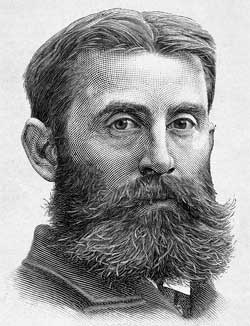
This week's "thought" comes from someone we haven't heard from for quite a while - Charles H. Spurgeon.  He has been dubbed the "Prince of Preachers" and is considered by many to be the most gifted preacher ever.  This excerpt comes from a message he preached on October 6, 1872 entitled "The Comforter."   Spurgeon began his preaching career in 1850 at the age of 15. By the time he was 19 he had accepted a call to pastor one of the biggest Baptist churches in London.  Within a short time they had to build an addition onto the church to increase the seating capacity from 1200 to 5000 seats to accommodate the weekly crowds. He was an extraordinarily gifted man.
     To those who wrongly believe that Christianity was universally popular back in the mid-to-late-800's in England, this somewhat auto-biographical account should clear up that misunderstanding.  I've been reading this sermon in my devotional time and found it both interesting and true; that's why I wanted to pass it along to you.  Enjoy.


The Comforter

     “In the 15th chapter of John’s Gospel we find the Savior describing His saints in the world as hated and persecuted for His sake, and He bids them expect this. But He consoles them in verses 26-27: “When the Comforter is come, whom I will send unto you from the Father, even the Spirit of truth which proceeds from the Father, He shall testify of Me. And you also shall bear witness, because you have been with Me from the beginning.”
     Now verses 18-27 mean just this—while Jesus Christ was here on earth, if anyone had anything to say against Him or His disciples, the Master came forward to the front, and He soon baffled His foes so that they confessed, “Never has anyone spoken like this man” (John 7:46). At this present time our Master and head is gone from us, so how are we to answer the attacks of the world?  The answer is we have another Counselor who comes to speak for us, and if we had but confidence in Him, beloved, He would have spoken for us much more loudly than He has sometimes done!
     Whenever we learn to leave the business in His hands, He will do two things for us:  FIRST - He will speak for us Himself, and SECOND - He will enable us also to bear witness.  At this present time many questions of doctrine are brought up for discussion, many objections to the truth of God are blocked, and there are many who would lay the axe at the very root of Christianity and cut it down as a rotten tree!  What is our answer?  I will tell you: Nearly all the books that have been written to answer modern philosophies are a waste of time and a waste of paper.  The only way in which the church can hold her own, and answer her detractors is by real power from God!

     Has she done anything for the world?

     Can she produce results?

     By her fruits shall she be proved to be a tree of life to the nations!
     Now the Spirit of God, if we would but trust Him, and give up all this idolatry of human learning, cleverness, genius, eloquence, rhetoric, and I know not what beside, would soon answer our adversaries!  He would silence some of them by converting them as He answered Saul of Tarsus by turning him from a persecutor to an apostle. He would silence others by confounding them and making them see their own children and relations brought to know the truth of God! If there is not a miraculous spiritual power in the Church of God at this day, she is an impostor!  At this moment the only vindication of our existence is the presence and work of the Holy Spirit among us.  Is He still working and witnessing for Christ? I fear He is not in some churches.
     Here in our fellowship we behold Him. Look at His workings in this place.  Nearly 20 years ago [back in August of 1854] our ministry began in this city under much opposition and hostile criticism. The preacher [that is, Spurgeon himself] being condemned on all hands as vulgar, unlearned, and, in fact, a “nine days’ wonder”!  Jesus Christ was preached by us in simpler language than men had been accustomed to hear, and every one of our sermons was full of the old-fashioned gospel. Many other pulpits were intellectual, but we held to the pure Scriptures.  Rhetorical essays were the wares retailed by most of the preachers, but we gave the people the gospel.  We brought out before the world the old Reformers’ doctrines, Calvinistic truth, Augustinian teaching, and Pauline dogma! We were not ashamed to be the, “Echo of a long-dead evangelism,” as some wiseacre called us.
     We preached Christ and Him crucified, and by the space of these 20 years have we ever lacked a congregation? When has not this vast hall been thronged? Have we ever lacked conversions? Has a Sunday passed over us without them? Has not the history of this church, from its littleness in Park Street until now, been a march of triumph with the hearts and souls of men being the spoils of the war and the flag under which we have marched been Christ crucified?
     And it is so everywhere! Only let men come back to the gospel and preach it ardently, not with pretty words and the artificiality of polished speech, but as a burning heart compels them, and as the Spirit of God teaches them to speak it.  Then will great signs and wonders be seen!  We must have signs following—else we cannot answer the world!  Let them sneer; let them rave; let them curse; let them lie—God will answer them!  It is ours in the power of the Spirit of God to keep on preaching Christ and glorifying the Savior.  Just as Jesus always met the adversary in a moment, and the disciples had no need of any other defender, so we have another Helper, who in answer to prayer will vindicate His own cause, and gloriously avenge His own elect.”
     In a world of competing ideas and religious views, something must set Christianity apart from all the rest. Something more than "mere morality" as C. S. Lewis called it.  Something more than mere religious gatherings.  Something that shows our faith to be different from all the rest.  And that "something" (as Spurgeon points out) must be the power of God!  People must be able to see and sense the evidences of God's presence and the supernatural working of the Holy Spirit among His people if we are to truly testify to the reality of Jesus and His gospel (I Cor. 14:24-25 / II Cor. 10:3-5).
     Be it the miracle of an extraordinary and other-worldly love; the miracle of someone turned to repentance and faith; the miracle of a healing or a prophetic word that hits home as if it were tailor made; or the miracle of a regenerate heart -- the greatest miracle of all -- the power of God must be seen if people's objections are to be stifled!  "The only way in which the church can hold her own, and answer her detractors is by real power from God!...  If there is not a miraculous spiritual power in the Church of God at this day, she is an impostor!  At this moment the only vindication of our existence is the presence and work of the Holy Spirit among us...  Only let men come back to the gospel and preach it ardently, not with pretty words and the artificiality of polished speech, but as a burning heart compels them, and as the Spirit of God teaches them to speak it. Then will great signs and wonders be seen!  We must have signs following—else we cannot answer the world!"
     To use the words of Isaiah in his deep yearning for a visible and incontestable manifestation of God's power: "Oh, that you would rend the heavens and come down, that the mountains would tremble before you!" (Is. 64:1-2) That's what we need more than anything else -- a fresh outpouring of the Spirit of God in incontestable and saving power!  Not manufactured miracles, but God-given miracles.  Not the stuff of mere human emotion, but the supernatural intervention of a sovereign God.  And it must stem from earnest prayer and the gospel ardently preached, as Spurgeon says, from a burning heart that's moved and compelled by the Holy Spirit.  Our prayer, Like Isaiah's, must be, "Come down Lord!"

     With Prayer for the Renewing of Christ's Church on Earth, Pastor Jeff

6.19.2019

Temptation

Greetings!

     Today's "thought" has to do with temptation -- something every one of us is very familiar with!   In fact, it's something Jesus was very familiar with as well, according to Hebrews 4:15.  Yet, in this thought, taken from a devotional book by Michael DiMarco called "Devotions for the God Guy," (don't let the title mislead you, this one is for guys and girls alike!) he looks at temptation in a slightly different way. The more subtle ways that it works. The often overlooked ways.  The ways where temptation sometimes comes disguised as what we think is virtue.  Enjoy.


"The Spirit led Jesus into the desert to be tempted of the devil." 
Matthew 4:1

     "The most obvious temptation is the temptation to do wrong things.  But what about the temptation to do good things for God? Have you ever been tempted to be great in the eyes of God? Have you ever thought about how amazing it would be to save the world with your gifts, or to become the best in some area of ministry?  This kind of temptation is tricky because it looks all noble and good. But at the heart of it is a bit of pride, and that pride puts the focus on you instead of God.
     We've got Christian "stars."  Those people in the faith who've made it big.  They even have fan clubs.  But that should never be your goal.  When it is, Satan uses your dream of fame to distract you and make it all about you. After Jesus was baptized, immediately he went went out into the desert to be tempted. Do you remember how he was tempted?  He wasn't just tempted to do wrong, but to do God-like things. Things that proved he was who he said he was, like commanding the angels [to keep his foot from striking a stone], or turning the rocks into bread (Matt. 4:1-11).  
     Maybe once you were saved you became tempted to do great things too, so that you could prove yourself, get the glory, be successful, or have a greater purpose. So don't look at temptation as just a chance to do bad things, but look at your heart and make sure it doesn't want to be worshiped just a little bit.  Make sure it doesn't want glory or fame.  Don't let it lead you to try and take the attention away from Jesus.  Everything you do as a God Guy should be to bring glory to God and not yourself (Isaiah 42:8)."
     These are temptations to sin that we often overlook because they're masked under the cloak of what could be seen as virtue in our society.  We have celebrities everywhere, why not in Christian circles?  How could that be so wrong -- especially if it gets us followers who heed what we say about Jesus?  Sometimes we forget that with God it is not necessarily the things we do that makes them sin, but the motive we do them for. After all, what's wrong with wanting people to admire us, look up to us, and be our "fans"?
     It goes back to the admirable attitude exemplified by John the Baptist (which I preached on this past Sunday): "He (Jesus) must increase, I must decrease."  Wrong motivations do motivate us, for self-interest is a very powerful motivator.  But it is also the road that leads us to sin in a faith where Jesus is to have the preeminence or supremacy (Colossians 1:15-20).  A faith where we are to see ourselves (regardless of the effort or endeavor) as "unworthy servants" who have simply "done our duty" (Luke 17:10).  As Paul says of himself and Apollos in I Corinthians 3:7 in regard to sharing the gospel and seeing people come to faith: "So neither he who plants (Paul) nor he who waters (Apollos) is anything, but only God who makes things grow."  In a culture which loves making idols out of people, we need to be careful we do not see as good something that is actually a temptation to sin. 
     May we ponder the words of Jesus more extensively when he says, "Lead us not into temptation, but deliver us from evil"-- especially when the evil doesn't seem all that evil.

Only By His Grace, Pastor Jeff


5.21.2019

Spiritual Renewal

Greetings!

     This week's "thought" is about spiritual renewal.  Its about the power and presence of Christ and the Holy Spirit in our lives.  It comes to you from Jim Cymbala's book, "Fresh Wind, Fresh Fire."  Cymbala has been the pastor of the large multi-racial "Brooklyn Tabernacle" since 1971, a church which had only 30 when he arrived that year, but now has over 16,000 members -- which is not, as this thought will show, what he really cares about.
     The Brooklyn Tabernacle is a church which has, by God's grace, broken down many racial and economic barriers, offering in the present a small taste of the multi-ethnic, multi-cultural, inclusive body of Christ, where believers of every tribe and tongue, rich and poor alike, will one day gather side by side before the throne of God (Rev. 7:9).  Part instruction, part biographical, his book is well-worth the read if you have the time. Enjoy.
     "Are we not all prone to be a little cocky and think we can handle things just fine?  But let some trouble come, and how quickly we sense our inadequacy. Trouble is one of God's great servants because it reminds us how much we continuously need the Lord. Otherwise, we tend to forget about entreating him. For some reason we want to carry on by ourselves.  The history of past revivals portray this truth in full color. Whether you study the First Great Awakening, the Welsh Revival, the 1906 outpouring on Azuza Street in Los Angeles, or any other period of revival, you always find men and women who first inwardly groan, longing to see the status quo changed -- in themselves and in their churches. They begin to call upon God with insistence. Prayer begets revival and revival begets more prayer.  It's like Psalm 80, where Asaph bemoans the sad state of his time, the broken walls, the rampaging animals, the burnt vineyards. Then in verse 18 he pleads, "Revive us, and we will call upon your name." 
     The Holy Spirit is the Spirit of prayer.  Only when we are full of the Spirit do we feel the need for God everywhere we turn. We can be driving a car, and spontaneously our spirit starts going up to God with needs and petitions and intercessions right there in the middle of traffic. [Eyes open of course!]  If our churches don't pray, and if people don't have an appetite for God, what does it matter how many are attending the services?  How would that impress God? Can you imagine the angels saying, "Oh, your pews! We can't believe how beautiful they are! Up here in heaven, we've been talking about them for years. Your sanctuary lighting -- it's so clever. The way you have the steps going up to the pulpit, it's wonderful..." 
     I don't think so.   If we don't want to experience God's closeness here on earth, why would we want to go to heaven anyway?  He is the center of everything there. If we don't enjoy being in his presence here and now, then heaven would not be heaven for us. Why would he send anyone there who doesn't long for him passionately here on earth?  I am not suggesting that we are justified by works of prayer or any other acts of devotion. I am not a legalist. But let us not dodge the issue of what heaven will be like --  enjoying the presence of God, taking time to adore him, listening to him, giving him praise. I have talked with pastor after pastor, some of them prominent and "successful" who have told me privately, "Jim, the truth is, I couldn't have a real prayer meeting in my church. I'd be embarrassed at the smallness of the crowd. Unless somebody's teaching, or singing, or doing some kind of presentation, people just won't come. I can only get them for a one-hour service, and that only once a week." 
     Is that kind of religion found anywhere in the Bible?  [Gathering to go to] Jesus himself can't draw a crowd even among his own people!  What a tragedy that the quality of ministry is too often measured by numbers and building size rather than by spiritual results. As a preacher myself, let me be blunt here. When I stand at the Judgment Seat of Christ, he is not going to ask me if I was a clever orator. He is not going to ask me how many books I wrote. He is only going to ask whether I continued in the line of men and women, starting way back in the time of Adam's generation, who led others to call upon God." 
     Cymbala is right.  God is not impressed by numbers, attendance figures, technology, marketing skills, architecture, stage presentation, etc.   Rather, what God wants is people who want him.  He wants people who want to spend prayerful time with Him in His presence.  He seeks people who yearn to seek Him (Jeremiah 29:13). He wants us to trust in Him and live a life of dependence on Him (II Corinthians 1:9). He wants us to realize what Jesus said so clearly in John 15:5 in the context of bearing spiritual fruit -- "I am the Vine and you are the branches. If a man remains in Me and I in him, he will bear much fruit, for apart from me you can do nothing."   That's what the Christian life is about:  Remaining in Jesus all the time. Abiding in Christ every conscious moment.  Being joined to Him unbroken fellowship.  Dwelling in intimate fellowship in His presence.  Bringing every thought captive to Christ (II Corinthians 10:5).  Communing with Him in ongoing prayer (I Thessalonians 5:16-18). Trusting Him with all our hearts (Proverbs 3:5-6). Living a life of reliance, surrender and dependence (II Corinthians 1:8-10).  If people are not led to call upon God, and seek His face in loving fellowship, earnestly seeking to do His will, all that other stuff matters little.  For "success" in the eyes of the world is much different than success (fruit that God desires) in regard to Christ's Kingdom.

May We Be Moved to Pray and Pursue Him More Passionately, 
Pastor Jeff