Visitors

free counters
Showing posts with label John Stott. Show all posts

8.06.2019

Thoughts on Leadership


Greetings All!

     This week's post is a collection of 25 quotes relating to leadership.  I post them for three reasons.  First, because it is my conviction that no matter who we are, someone is looking up to us as an example, or for guidance of one sort of another, which makes us a leader of sorts even when we don't have the title and didn't ask for the responsibility.  One does not have to be delegated the authority to carry out the role, and we can inadvertently carry out the role without even knowing we are!  The person simply trying to be an example to others is being a leader in their own right.
     The second reason I post them is because we can all gain insight and wisdom from leaders of the past who have shared what guided their leadership -- even if we don't consider ourselves to be one.  And last, I share it because as I looked hem over I was amazed how much current thought of leadership is little more than a confirmation (plagiarization of sorts) of the teaching of Jesus on the topic, or practical insights gained from His words and example, even when those giving the advice are not themselves Christians. I had many more than listed. I paired them down to 25. I offer them as the best of what I found.  If you have a favorite (or favorites) and have a chance, let me know which ones.  Enjoy.

Thoughts on Leadership

1. "The true test of a leader is this: A respect for that person that is so deep that people will continue following their lead even when the official title and delegated authority have been taken away."

2. “I start with the premise that the function of leadership is to produce more leaders, not more followers.”  Ralph Nader

3. “Leaders must possess courage.  Yet do not be mistaken: Courage is not the absence of fear; courage is the determination not to let our very real fears paralyze us, hold us back, or scare us into silence and inactivity when words and actions are what is needed.”
4. “You aren’t fit to lead until you know how to follow.  If you want to become a remarkable leader, follow a leader of character, conviction, and vision. Don’t ask people to follow you until you’ve humbly followed someone else. Following is perhaps the most neglected development principle of remarkable leadership… Follow advice from those more knowledgeable.  Follow a vision bigger than yourself.  Follow someone you respect.  Follow the most noble person available.  Follow someone who is going somewhere.  Remarkable leaders are remarkable followers. Admiration of big-egoed-leaders degrades us all.  Worry less about becoming a remarkable leader and more about becoming a remarkable follower.”   Dan Rockwell

5. “The chief characteristic of Christian leaders, Jesus insisted, is humility not authority, and gentleness not power… The authority by which the Christian leader leads is not power but love, not force but example, not coercion but reasoned persuasion. Leaders have power, but power is safe only in the hands of those who humble themselves to serve.”  John Stott

6. “A leader is one who knows the way, goes the way, and shows the way.”   John C. Maxwell

7. “Perfection is not attainable, but if we chase perfection, we can catch excellence.”    Vince Lombardi

8. “When everything seems to be going against you, remember that the airplane takes off against the wind, not with it...  I never failed, I just learned 10,000 ways that won't work.”   Henry Ford
9. “According to Scripture, virtually everything that truly qualifies a person for leadership is directly related to character.  It’s not about style, status, personal charisma, clout, or worldly measurements of success. Integrity is the main issue that makes the difference between a good leader and a bad one.”   John MacArthur

10. “Be strong enough to stand alone, smart enough to know when you need help, and brave enough to ask for it.”   Unknown

11. “True greatness, true leadership, is found in giving yourself in service to others, not in coaxing or inducing others to serve you.”   J. Oswald Sanders

12. "My research debunks the myth that many people seem to have… that you become a leader by fighting your way to the top. Rather, you become a leader by helping others to the top.  Helping your employees is as important as, and many times more so than, trying to get the most work out of them."   William Cohen

13. "The first and most important choice a leader makes is the choice to serve, without which one's capacity to lead is severely limited."    Robert Greenleaf

14. “The ability to learn is the most important quality a leader can have.”   Sheryl Sandberg

15. "We must be silent before we can listen.  We must listen before we can learn.  We must learn before we can prepare.  We must prepare before we can serve.  We must serve before we can lead."   William Arthur Ward
16. “To change your life, you have to admit what’s not working. You have to humble yourself. You have to ask for help. You have to learn... Your ego will defend your current circumstances, but you cannot allow a fleeting feeling of shame to eclipse reason. You cannot live the rest of your life as you are just because you are too prideful to admit something isn’t right.”   Brianna Wiest

17. “If your objective is to be as good as you can be, then you’re going to want criticism.”  Ray Dalio

18. "If leadership serves only the leader, it will fail.  Ego satisfaction, financial gain, and status can all be valuable tools for a leader, but if they become the only motivations, they will eventually destroy a leader. Only when service for a common good is the primary purpose are you truly leading."   Sheila Murray Bethel

19. “A leader takes people where they want to go. A great leader takes people where they don’t necessarily want to go but ought to be.”   Rosalynn Carter

20. "People do not care how much you know until they know how much you care."   John C. Maxwell
21. "When you get to be the president, there are the honors, the 21-gun salutes, all those things.  You have to remember it’s not for you.  It’s for the presidency…  It's amazing what you can accomplish if you do not care who gets the credit.”    President Harry S. Truman

22. "Be more concerned with your character than your reputation, because your character is what you really are, while your reputation is merely what others think you are."    John Wooden

23. “A man who wants to lead the orchestra must turn his back on the crowd.”   Max Lucado

24. "Do the thing you fear, and the death of fear is certain."   Ralph Waldo Emerson

25. "Servant leadership is all about making the goals clear and then rolling your sleeves up and doing whatever it takes to help people win.  In that situation, they don't work for you; you work for them."   Ken Blanchard
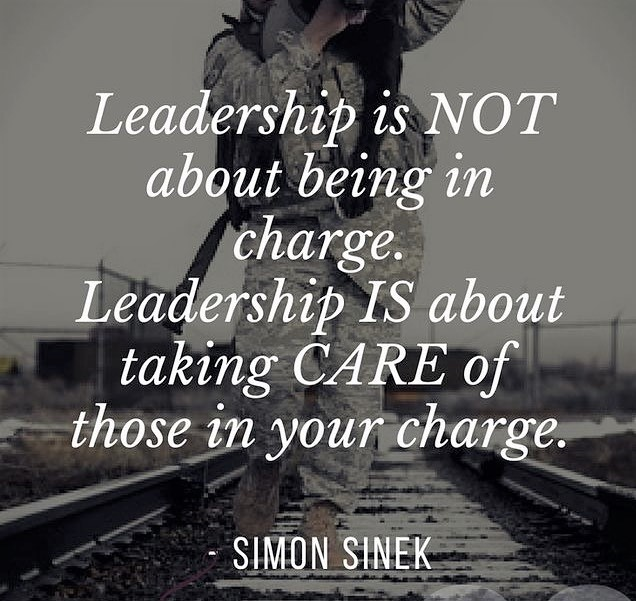
     So, what are the key characteristics of good leadership?  Humility, learning to be a follower, the heart of a servant, integrity, character, love, determination, a desire to see others excel, pushing beyond our fears, and many more. They are all virtues that anyone can apply to their lives.  And when we do, we may in some cases find people following our lead -- even when that wasn't our objective.

Living in His Grace, Pastor Jeff

3.27.2018

The Mind, the Spirit, and Power

Greetings All,

     This "thought" comes to you from the humble, devout, and godly British minister, statesman and scholar, John R. W. StottPhD.  I had the privilege of hearing him speak in person three times before he passed away in 2011. He was so well-respected at home and abroad that in 2005 Time Magazine listed him (at 86 years old) as "one of the 100 most influential people on the planet."  I have many of his books sitting on my shelves and can say without reservation that anything written by him is worth the read (I count his commentary on the New Testament book of Acts as among the best available).
     This excerpt is taken from the book, "Faith and Culture - The Guide to a Culture Shaped by Faith." by Kelly Monroe Kullberg and Lael Arrington.  Enjoy.


The Mind, the Spirit, and Power

     "I believe that anti-intellectualism and fullness of the Holy Spirit are mutually incompatible. And I dare say it because the Holy Spirit is the Spirit of Truth.  Jesus our Lord himself referred to the Holy Spirit as the Spirit of Truth, and therefore, it is only logical to say that wherever the Holy Spirit has given his freedom, truth is bound to matter.  So I have argued, and argue still, that a proper and conscientious use of our minds is an inevitable part and parcel our Christian life.
     FIRST, a proper use of our minds glorifies our Creator. We believe that God is a rational Being who has made us in his own image and likeness, as rational men and women. And has given us a rational revelation of himself. 
     SECOND, a proper use of our mind enriches our Christian discipleship. There is no aspect of our discipleship which can be developed without the use of our mind. Whatever part of discipleship your are reflecting on -- worship, faith, guidance -- the mind has an indispensable part to play.
     THIRD, a proper use of the mind strengthens our witness in the world. I am convinced that one of the major reasons people reject the gospel in the West today is not because they perceive it to be false, but because they perceive it to be trivial.  They think it is inadequate for the complexities and challenges of the world today.  We know, of course, that in evangelism, in conversion, and in regeneration (or the new birth), the Holy Spirit has an indispensable part to play. Only the Spirit can lead a sinner to Christ. But when he leads us to Christ, he does not do it in spite of the evidence, but because of the evidence, when he opens our minds to attend to it.
     To sum up, anti-intellectualism insults God, impoverishes us, and weakens our testimony in the world. A proper use of the mind glorifies God, enriches us, and strengthens our witness in the world."

     It is interesting to me (though I do not have the full manuscript of what he shared in this address presented to The London Institute of Contemporary Christianity in 2001) that Stott does not even allude to the primary biblical imperatives that call us to use all the powers of our God-given intellect in our worship and service to Him and others -- the Two Greatest Commandments.  As commands which most all Christian people have memorized at one time or another, it would seem that anti-intellectualism would be forever banished from the Church of God.  For in those commands we are told (as part of our love and adoration of Him) to use every part of every human faculty given to us in loving Him and our neighbor.  All our will and emotions and all the powers of our intellect, strength, energy or actions are to be used in sacred service to the one who gave them to us for the sake of His glory.
     It is beyond dispute that we are to, "love the Lord our God with all our heart, and with all our soul, with all our MIND (emphasis mine), and with all our strength," (Mark 12:30).  Or as Jesus affirms and summarizes it two verses later, "You are right in saying.that... To love Him with all your heart, with all your UNDERSTANDING (emphasis again is mine) and with all your strength, and to love your neighbor as yourself is more important than all burnt offerings and sacrifices."
     Therefore, it is an unbiblical and unsustainable assertion to suggest that one should avoid using their mind, reason or intellect in the defense and furtherance of the faith (as long as the mind is used in the service of God and not to oppose the purposes of God). Gordon Fee, my professor of N.T. at Gordon-Conwell was raised in a Pentecostal environment where it was not unusual to hear people exalt the place of the heart and soul, but put down the place of the mind. He said that growing up he would hear people in that environment say, "I'd rather be a heart on fire than a mind on ice."  But as he studied the Scriptures, and the place it gives to the mind, he realized that such an assertion resulted from an anti-intellectual, false and unbiblical dichotomy.  He came to see that what the Bible actually encourages is, "not only a heart on fire for the Lord, but a mind that is also on fire for the Lord."  The one does not negate the other. They actually compliment each other.
     Simple faith in the Lord Jesus is a gift.  But so also is a mind that uses all it's intellectual powers to love and serve God, as we see in such people as Blaise Pascal, Jonathan Edwards, C. S. Lewis, Ravi Zacharias, Deithrich Bonhoeffer, John Piper, Nancy Pearcy, Lee Stobel, Dallas Willard, Tim Keller, Os Guiness, and slews of other brilliant, God-loving and devout defenders of the faith. Such people have been blessings beyond description in being used of God to lead unbelievers to Christ, and encouraging believers to go deeper and deeper in the faith.

     He died. He rose. He is coming again.  Pastor Jeff


11.17.2010

Creation - Revelation - Salvation


Greetings All,

This week's 'thought' comes to you from John R. W. Stott in the opening paragraphs of his book, "Basic Christianity." I have been leading a Thursday night discipleship group using the IVP Study based on this book, and called "Christ - Basic Christianity." The words he writes are a needed reminder in a world that often thinks that we determine our own destiny; are the "captain of our souls," and thus the initiators when it comes to the search for God and salvation. Enjoy.

"'In the beginning God.' The first four words of the Bible are more than an introduction to the creation story or to the book of Genesis. They supply the key which opens our understanding to the Bible as a whole. They tell us that the religion of the Bible is a religion of the initiative of God.

You can never take God by surprise. You can never anticipate him. He always makes the first move. He is always there 'in the beginning.' Before man existed, God acted. Before man stirs himself to seek God, God has sought man. In the Bible we do not see man groping after God; we see God reaching after man. Many people visualize a God who sits comfortably on a distant throne, remote, aloof, uninterested, and indifferent to the needs of mortals, until, it may be, they can badger him into taking action on their behalf. Such a view is wholly false. The Bible reveals a God who, long before it even occurs to man to turn to him, while man is still lost in darkness and sunk in sin, takes the initiative, rises from his throne, lays aside his glory, and stoops to seek until he finds him.

This sovereign, anticipating activity of God is seen in many ways. He has taken the initiative in creation, bringing the universe and its contents into existence... He has taken the initiative in revelation, making known to mankind both his nature and his will... (and) He has taken the initiative in salvation, coming in Jesus Christ to set men and women free from their sins... God has created. God has spoken. God has acted. These three statements of God's initiative in three different spheres form the summary of the religion of the Bible...

Christianity is not just pious talk. It is neither a collection of religious ideas nor a catalogue of rules. It is a 'gospel' (i.e. good news) -- in Pauls words 'the gospel of God... concerning his Son... Jesus Christ our Lord.' It is not primarily an invitation to man to do anything; it is supremely a declaration of what God has done in Christ for human beings like ourselves."

Years beforehand A. W. Tozer had said nearly the same thing in his book, The Pursuit of God:

"Before a man can seek God, God must have sought the man... We pursue God because, and only because, He has first put an urge within us that spurs us to that pursuit. 'No one can come to me,' said our Lord, 'except the Father which has sent me draw him,' and it is this very prevenient drawing that takes from us every vestige of credit for the act of coming. The impulse to pursue God originates with God, but the outworking of that impulse is our following hard after Him, all the time we are pursuing him we are already in His hand: 'Thy right hand upholdeth me' (Ps. 63:8). In this divine 'upholding' and human 'following' there is no contradiction. All is of God, for as von Hugel teaches, God is always previous. In practice, however, (that is, where God's previous working meets man's present response) man must pursue God."


He truly is, as Francis Thompson once wrote, The Hound of Heaven. To His name be the glory for all that He has done and continues to do.


May your trust be in Him, Pastor Jeff