Visitors

free counters
Showing posts with label Gratitude. Show all posts

9.24.2019

What do you think?

Greetings All,

     Today I offer you some isolated quotes from four different authors and present them to you with this question: "What do you think?"
     When you read each one what is your initial response?  Do you agree or disagree?  And if so, why?  Are they clear or hard to understand?  I know most everyone is pretty busy, but if you did have a spare moment I would enjoy hearing your thoughts!  And if you do happen to respond, please note which comment you are responding to -- comment #1 by Richard Lovelace, comment #2 by William Carey, comment #3 by John Owen,  or comment #4 B.B. Warfield.  Enjoy.

     “Only a fraction of the present body of professing Christians are solidly appropriating the justifying work of Christ in their lives.  Many have so light an apprehension of God’s holiness and of the extent and guilt of their sin, that consciously they see little need for justification (little need for forgiveness and pardon through the substitutionary work of Jesus), although below the surface of their lives they are deeply guilt-ridden and insecure…  Many have a theoretical commitment to this doctrine [of justification by faith] but in their day-to-day existence they rely on their sanctification for justification, in the Augustinian manner, drawing their assurance of acceptance with God from their sincerity, their past experience of conversion, their recent religious performance, or the relative infrequency of their conscious, willful disobedience.  Few know enough to start each day with a thoroughgoing stand upon Luther’s platform: you are accepted, looking outward in faith and claiming the wholly alien righteousness of Christ as the only ground for acceptance, and relaxing in that quality of trust which will produce increasing sanctification as faith is active in love and gratitude.”                 
Richard Lovelace, “Dynamics of Spiritual Life.”


     On his 70th birthday, pioneer missionary William Carey, who translated the whole Bible (or large parts of it) into 23 Indian dialects and Persian; who wrote a Mahratta-English dictionary, a Bengali-English dictionary, a Bhotanta-English dictionary, and a Sanscrit-English dictionary; and who worked tirelessly as a missionary in India for 41 years (between 1792 and 1833) wrote to one of his sons these words:  I am this day 70 years old, a monument of divine mercy and goodness, though on a review of my life I find very much for which I ought to be humbled in the dust. My direct and positive sins are innumerable. My negligence in the Lord's work has been great. I have not promoted His cause nor sought His glory and honor as I ought.  Notwithstanding all of this, I am spared till now and am still retained in His work, and I trust I am received into the divine favor through Him (Christ).” 
William Carey
“Believers obey Christ as the one by whom all their obedience is accepted by God. Believers know all their duties are weak, imperfect and unable to abide in God’s presence. Therefore, they look to Christ as the one who bears the iniquity of their holy things, who adds incense to their prayers, gathers out all the weeds from their duties and makes them acceptable to God... The actual aid and internal operation of the Spirit of God is necessary to produce every holy act of our minds, wills and emotions in every duty whatsoever.  Notwithstanding the power or ability that believers have received by the principle of new life implanted in salvation, they still stand in need of the divine enablement of the Holy Spirit in every single act or duty toward God.”
John Owen
     "It is the conviction that there is nothing in us, or done by us, at any stage of our earthly development which is the cause of our acceptance with God. We must always be accepted for Christ’s sake or we cannot ever be accepted at all. This is not true of us only when we initially believe, it is just as true after we have believed and it will continue to be true as long as we live. Our need of Christ does not cease with our believing, nor does the nature of our relation to Him or to God through Him ever alter regardless of our attainments in Christian graces or our achievements in Christian behavior. It is always on His "blood and righteousness” alone that we can rest. There is never anything that we are or have or do that can take His place or that takes a place along with Him. We are always unworthy, and all that we have or do of good is always of pure grace…  There is emphasized in this attitude the believer's continued sinfulness in fact and in act and his continued sense of his sinfulness. And this carries with it recognition of the necessity of unbroken penitence throughout life. The Christian is conceived fundamentally, in other words, as a penitent sinner.
     We are sinners, and we know ourselves to be sinners, lost and helpless in ourselves. But we are saved sinners, and it is our salvation which gives the tone to our life—a tone of joy which swells in exact proportion to the sense we have of how much we deserve just the opposite.  For it is he to whom much is forgiven who loves much and, who loving, rejoices much.  “It is a great paradox but glorious truth of Christianity,” says Thomas Adams, “that a good conscience may coexist with a consciousness of evil. Though we can have no satisfaction in ourselves, we may have perfect satisfaction in Christ.”
B. B. Warfield
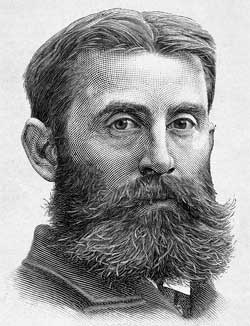


     As I am sure you already know, I am in agreement with all the statements above and believe they accurately reflect the biblical teaching. But if you do not, or feel you would change them in any way, or feel they are out of sync with the message of the Bible I'd love to hear how you disagree or would alter them!

In His Grace, Pastor Jeff 

11.27.2018

Attitude Adjustment

Greetings All!

     This week's "thought," which comes to you from F. Congreve, has to do with a commonly needed "attitude adjustment" in the believers heart and mind.  For as believers in Jesus we can sometimes we fall into the trap of thinking (because of the sinful things we did in our past) that we should not be joyful. That joy would be wrong.  That being joyful would somehow imply we didn't take our past sins seriously enough. But often just the opposite it true.  The sense that we must remain sullen comes not from the fact that we haven't taken our past sin seriously enough, but that we haven't taken divine forgiveness seriously enough!  For if we are forgiven - truly forgiven by God - how can we not experience joy, even despite the sinful things we may have done.
     Hopefully today's thought will reinforce that truth.  If God has forgiven your sins there are only two reasonable responses: 1.) Tears of joy and gratitude (Luke 7:38) and 2.) smiles of joy and gratitude.  But never should the knowledge of our gracious forgiveness lead to a conscious attempt on our part to repress the sense of joy that should follow!  For as Paul says, "Blessed is the person whose sins are forgiven; whose transgressions are covered. Blessed is the man whose sin the Lord will never count against him" (Rom. 4:7-8).  Enjoy.
     "The feast which Levi gave to our Lord Jesus on the occasion of his conversion (Luke 5:27-35) is such a cheerful metaphor of the Christian life.  It is a festival of joy and gratitude for a conversion.  We are sinners forgiven - abundant reason for perpetual praise.  A feast represents a forgiven sinner's whole course; he is embraced, welcomed home, and has brought more joy to heaven than there was before.  His sorrow for sin is not a mortified, humiliated, angry disgust with himself.  It is a humble, hopeful sorrow always 'turning into joy'.  So, if his very sorrows become the material for his joy, his life may be represented by the feast Levi gave to the Lord, who had forgiven and called him. 
     "But I am unworthy of joy," says the forgiven sinner.  "I am willing to work and suffer if need be. I don't deserve joy."  That is the sentiment true of a pagan, but it contradicts the whole Creed of the Church - "I believe in...the forgiveness of sins."  So, our life ought to be full of the joy of grateful love; the remembrance of sin means the remembrance of the love that called us out of our sins and forgave us our whole sin-debt.
     And notice that Levi did not just make Jesus a feast, he made Jesus a great feast.  It is not that we are to be cheerful for our own gratification.  Our life is to be full of praise and thanksgiving, singing and making melody in our hearts to the Lord - for the honor of Jesus.  Levi made the great feast for Him.  Our habitual joy is due God, and honors God, and our joy means not simply a reflection of the joy of God, but is the joy of God... If we are sinners forgiven, we ought to behave as forgiven, welcomed-home sinners. People crowned with wonderful love in Christ. We should cheer and encourage everyone around us, who often go about so heavily because we have reflected our gloom upon them instead of our grateful love, hope and confidence."
     It's a thought worthy of prayerful consideration!

Living in the Grace of Jesus, Pastor Jeff

10.30.2018

What Does "Revival" Look Like?

Greetings All!

     Last week I sent out some thoughts on revival.  This morning I gathered with some other gentlemen from my church discussed those thoughts.  In our conversation we talked about what a revival is like and if we had ever witnessed or been part of a reviving move of God.  I will not share things from that discussion, but as a follow-up to it (and last week's thoughts on revival) I did want to share part of a message I once preached on the topic based on the text of Isaiah 57:15: "This is what the high and lofty One says -- He who lives forever, whose name is holy: "I live in a high and holy place, but also with him who is contrite and lowly in spirit, to revive the spirit of the lowly and to revive the heart of the contrite."   It contains more thoughts on revival from others (not just mine) and a factual account of the things that actually happened during the First Great Awakening in New England in the 1730's - 40's.  If nothing else, I hope it makes you think.  Better yet, I hope it makes you pray that we might soon see another expression of such divine, holy and reviving grace.  Where water has once flowed, it can flow again.  Enjoy.

What Does "Revival" Look Like?

     “John Babcock, writing of a service in his church during the revival that swept through Virginia in the 19th century could say:  “The death-like awe of silence and solemnity sometimes seemed as if it were the hem of the robe of His glory waxing all but visible in our midst.”  It’s an unfortunate misrepresentation to suggest that all revivals result in outbursts of excited fervor.  They do not.  When the presence of God comes upon a congregation, what often pervades it is a sense of His holiness and majesty.  One feels the eerie sense of a spiritual presence that is so awe-full, so holy, so Other, that a quiet hush comes over that place and people are glued motionless to their seats.  They can hear themselves breathe. They listen to the beating of their hearts.  Even their thoughts seem loud.  Soft weeping throughout the congregation is often the only sound heard.
     When the Spirit comes in power people often begin to weep as the God they have often maligned, taken for granted, and dishonored by their sin, apathy, and unbelief, enters the sanctuary in a tangibly sensed way.  The people feel it.  Many are overcome by a fear of the Lord and a deep conviction of sin as God fills that place with a conscious sense of His holy presence, power, purity, righteousness an soul-exposing light. That’s one of the ways you can tell when “God shows up” and His manifest presence fills a room to convict, convert, comfort, or bring people to earnest life-changing repentance.  It gets really quiet.  Things becomes very still.  Everyone is motionless.  People stop coughing, clearing their throats, and shifting in their seats. Why?  Because they sense the presence of God in a way they don’t (or haven’t) at any other time.
     And don’t get me wrong.  God is always present – at all times, and in all places, whether we sense it or not.  But sometimes, for reasons known only to Him, He chooses on certain occasions, or for certain seasons, to make His presence so tangibly known to us that we actually sense His presence in our midst in an undeniable way.  That’s what revival is.  A powerful visitation of the High and Lofty One Who inhabits eternity and whose name is Holy (Isaiah 57:15).  God, so to speak, rends the heavens and comes down to visit His people (Isaiah 64:1).
     George Whitefield on one such occasion wrote:  “I was so overpowered with a sense of God’s love, that it almost took away my life.”  The experience of God’s presence - His Holy Love was so powerful it almost killed him.  D. L. Moody testifies of a similar experience.  Jonathan Edwards called them, “special seasons of mercy” or “extraordinary effusions” or “outpourings of the Holy Spirit.”   That is the essence of revival  God comes in a new and fresh visitation of His presence, sometimes in unspeakable holiness resulting in a hushed death-like stillness; other times in love so consuming and overpowering that a person nearly loses consciousness; and still other times in joy so euphoric and captivating that we feel it will carry us up into paradise that very moment (and we wish it would)!  A joy so freeing, peaceful and pleasurable that the soul is enraptured - feeling spiritually ravished by God.
     “When people,” writes Iain Murray, “burdened with a sense of guilt, come to complete deliverance through faith in the atoning work of Christ, and when the love of God fills the hearts of believers, then joy is irresistible.  The greater his knowledge of the benefits purchased by Christ, the greater the degree of joy, liberation, and gratitude to God he receives.”  And what causes it?  The Holy Spirit comes upon a person and convinces them that the Gospel message is really true!  Not that it would simply be nice if it were true, but that it is true!  Christ purchased it all.  He lived the perfect sinless life we could never live, and died in our place as the substitute who took our punishment upon Himself, and on the basis of trusting in that Gospel and that Saving One, we are freely forgiven and put in right standing with God (Isaiah 53 & 55)
     Jonathan Edwards recorded this account of the revival that swept through Northampton, MA, at the start of the first great awakening in America in 1734.  He writes: “The Spirit of God began to set in in an extraordinary way... The news of it seemed to be almost like a flash of lightning upon the hearts of young people all over town... In time, a great and earnest concern about the great things of religion and the eternal world became universal among persons of all ages and degrees.  The noise among the dry bones waxed louder and louder.  All other talk but about spiritual things and eternal things was soon thrown by.  All the conversation, in all companies, and upon all occasions, was upon these things only, except for what was necessary to carry on ordinary secular business.  People’s only concern was to get into the Kingdom of God, and everyone appeared to be pressing into it. The work of conversion was carried on in a most astonishing manner, and... souls did, as it were, come by flocks to Jesus Christ...  In 1735 the town seemed full of the presence of God - never was it so full of love, nor of joy, and yet so full of distress (in the unbelievers) as it was then.   There were remarkable tokens of God’s presence in almost every house...  The Lord’s day was a delight.  Worship services were beautiful.   The congregation was alive... and every hearer was eager to drink in the words of the minister.  From time to time people were in tears as God’s Word was preached; some weeping with sorrow and distress, others with joy and love; and others out of concern for the souls of their neighbors.”
     It was a move of God’s Spirit so powerful it spread from Massachusetts to Connecticut and then clear down the east coast - all the way to Georgia.  Everyone sensed the presence of God as the High and Lofty and Holy One who inhabits eternity broke in upon the consciousness of people in a way so real and tangible that even unbelievers felt His presence in their midst.”

     I would love to share more historical accounts of revival. Like the Moravian revival of 1727, the Wesleyan revival in England around the same time, the revival among the Indians through David Brainerd, the 2nd Great Awakening in America, and many others, including the Azusa Street Revival and two others in more recent years at Asbury and Wheaton colleges. But time and space do not permit it.  That will be up to you to research n your own!

With continued prayers for you all, Pastor Jeff

10.24.2017

Bible's Call to Worship God

Greetings All!

This week's "thought" comes to you from the book "Simply Christian - Why Christianity Makes  Sense" by N. T. Wright.  He is presently Bishop of Durham, England (Church of England) and taught at McGill, Cambridge, and Oxford universities. His book attempts to show the reasonableness of the Christian faith and does an admirable job. For those who are honest skeptics (who are earnestly seeking to understand) and not just bandwagon skeptics (who somehow think being skeptical makes them seem more intellectual), it's worth a read.  This selection seeks to answer the "why?" of the Bible's call to worship God.  I found it helpful, I pray you might as well.  Enjoy.


     "When we begin to glimpse the reality of God, the natural reaction is to worship him. Not to have that reaction is a fairly sure sign that we haven't yet really understood who he is or what he has done. So what is worship? The best way to discover is to... start in the fourth and fifth chapters of the last book of the Bible, the Revelation of St. John... [There we find] representatives of the animal kingdom and the world of humanity (the whole creation) worshipping God for all he's worth...

     Holy, holy, holy is the Lord God Almighty, who was and is and is to come... 


     You are worthy, our Lord and God, to receive glory and honor and power; for you created all things and by your will, they existed and were created...


     You are worthy to take the scroll and open it's seal, for you were slaughtered, and by your blood, you ransomed for God saints from every tribe and people and nation.
     You have made them to be a kingdom and priests to serve our God, and they will reign on earth...


     Worthy is the Lamb that was slaughtered to receive power and wealth and wisdom and might and honor and glory and blessing!  
     To the one seated on the throne and to the Lamb be blessing and honor and glory and might, forever and ever. Amen!
(Revelation 4:8, 11, 5:9-10, 12 and 13)
     This is what worship is all about.  It is the glad shout of praise that arises to God the Creator and God the Rescuer from the creation that recognizes its Maker, the creation that acknowledges the triumph of Jesus the Lamb. That is the worship that is going on in heaven, in God's dimension, all the time. The question we ought to be asking is how best we might join in. Because that is what we are supposed to do.
     And let's get one thing clear before we go any further. There is always a suspicion that creeps into discussions of this kind, a niggling worry that the call to worship God is rather like the order that goes out from a dictator whose subjects may not like him but have learned to fear him. He wants a hundred thousand people to line the route for his birthday parade? Very well, he shall have them. And they will all be cheering and waving as if their lives depended on it -- because, in fact, they do. Turn away in boredom, or don't turn up at all, and it will be the worse for you.  If it has crossed your mind that worshipping the true God is like that, let me offer you a very different model.
     I have been to many concerts of music ranging from major symphonic works to big-band jazz. I have heard world-class orchestras under world-famous conductors. I have been in the audience for some great performances that have moved me and fed me and satisfied me richly.  But only two or three times in my life have I been in an audience which, the moment the conductor's baton came down for the last time, leaped to its feet in electrified excitement, unable to contain its enthusiastic delight and wonder at what it had just experienced. (American readers might like to know that English audiences are very sparing with standing ovations.)
     That sort of response is pretty close to genuine worship. Something like that, but more so, is the mood of Revelation 4 and 5. That is what, when we come to worship the living God, we are being invited to join in. What happens when you're at a concert like that is that everyone feels that they have grown in stature. Something has happened to them. They are aware of things in a new way. The whole world looks different. It's a bit like falling in love.  In fact, it IS a kind of falling in love. And when you fall in love, when you're ready to throw yourself at the feet of your beloved, what you desire, above all, is union.
     This brings us to the first of two golden rules oat the heart of spirituality.  #1.) You become like what you worship. When you gaze in awe, admiration, and wonder at something or someone, you begin to take on something of the character of the object of your worship. Those who worship money eventually become human calculating machines. Those who worship sex become obsessed with their own attractiveness of prowess. Those who worship power become more and more ruthless. 
     So what happens when you worship the creator God whose plan to rescue the world and put it right has been accomplished by the Lamb that was slain?  The answer comes in the second golden rule: #2) Because you were made in God's image, worship makes you more truly human.  When you gaze in love and gratitude at the God in whose image you were made, you do indeed grow. You discover more of what it means to be fully alive. Conversely, when you give that same total worship to anything or anyone else, you shrink as a human being. It doesn't, of course, feel like that at the time. When you worship part of the creation as though it were the Creator himself (in other words, when you worship an idol) you may feel a brief "high." But like a hallucinatory drug, that worship achieves its effect at a cost.  When the effect is over, you are less of a human being than you were to begin with. That is the price of idolatry.
     The opportunity, the invitation, the summons is there before us: Come and worship the true God, the Creator, the Redeemer, and to become more truly human in doing so. Worship is at the very center of all Christian living. One of the main reasons that theology (that is, trying to think straight about who God is) matters is that we are called to love God with all our heart, mind, soul and strength. It matters that we learn more about who God is so that we can praise him more appropriately. Perhaps one of the reasons why so much worship, in some churches at least, appears unattractive to so many people, is that we have forgotten, or covered up, the truth about the one we are worshipping. 
     Yet whenever we glimpse the truth, we are drawn back. Like groupies sneaking off from work to see a rock star who's in town for just an hour or so, like fans waiting all night for a glimpse of a football team returning in triumph (only much more so!) those who come to recognize the God we see in Jesus, the Lion, and the Lamb, will long to come and worship him." 
     Wonder is at the heart of all true worship. And wonder is what arises in the heart when God's Spirit begins to reveal to us that He really does exist and what He is really like. It happens when we come to see and experience (in greater and more undeniable ways) God's holiness, power, love, grace, and life-altering presence.  We come to taste and see that He is good. We become gradually more and more aware of the reality of an invisible Being pursuing, revealing and breaking in upon our lives in tangible and sometimes overwhelming ways. A Being whom we can't help but sense is seeking to enter, possess, indwell, disarm, make Himself known to us, and make us His own.  A God who we discover (much to our surprise) has a plan for our lives, and is working out that plan -- at times with our approval, and at other times without our approval.  At times clearing obstacles out of our way, and at times placing them immovably in our path to redirect the trajectory of our lives.
     Those who have experienced this (myself being just one) testify it was at times overwhelming, and made them feel as if God had taken control of the wheel and was steering them to a destination that fit into a plan ordained for them prior to their existence, but worked out in their present when the time was just right.
     Of course, as those who are (for the most part) comfortable with and captive to the temporal, running into the reality of Him who is eternal can be a hair-raising and even fear-spawning experience. We see this in the lives of the prophets and apostles, Isaiah 6 and Revelation 1 being just two of many examples.  Discovering God is actually real, and not just a nice idea, can be both a frightening and life-altering experience.  Yet, when the initial fear subsides, and we discover He is not out to harm us, but save us; that He is for us, and not against us -- then what seemed so frightening becomes mesmerizingly beautiful, and it's His beauty that drives us to want to worship Him.
     That is my prayer. That like the beings in Revelation 4-5 we would find ourselves so overcome by the beauty and majesty and worth of God, and the wonder that is Jesus, that we would ceaselessly yearn to praise, adore and worship Him -- and in doing so, as Wright points out, become more like Him, and at the same time more truly and fully human. 

In the Bonds of Christian Affection, Pastor Jeff

1.31.2017

Lord, Fill Me With Your Spirit

Greetings Friends!


     Today's thought comes to you from a gentlemen named Jon Bloom, co-founder and staff-writer for desiringGod.org, a ministry most closely associated with John Piper (whose thoughts I have passed on to you before). This article was found on the desiringGod.org website.  I pass it on to you for your serious and prayerful consideration. To simply read it is one thing, but to read it and then pray in the manner he advises is another thing altogether -- and surely the author's hoped for response on any readers part.  Read. Pray.  Enjoy.


Lord, Fill Me With Your Spirit

     “The kingdom of God does not consist in talk but in power” (I Corinthians 4:20).  If we are not disillusioned with how much we have allowed our talk to pass for our walk, discontented with the sparse amount of spiritual fruit we are truly bearing, and disappointed by the impotence of our own efforts, we will never be distressed enough to really plead with God to fill us with the Holy Spirit.  If we’re not disturbed by how little we can do in our own power, we’ll never be desperate enough to ask God for his.
What Is the Filling of the Holy Spirit?
       But when we pray for this, what are we asking God for? In the words of Wayne Grudem, we are asking God for “an event subsequent to conversion in which a believer experiences a fresh infilling with the Holy Spirit that may result in a variety of consequences, including greater love for God, greater victory over sin, greater power for ministry, and sometimes the receiving of new spiritual gifts.” (Grudem 1242)  Now, of course every Christian receives the Holy Spirit upon conversion. Being born again is the greatest miracle any human being can possibly experience, and it only happens by the omnipotent power of Holy Spirit (John 3:3-8, I Corinthians 12:13).
       But the reason we talk about the filling of the Holy Spirit as “an event subsequent to conversion” is because that’s how the New Testament usually talks about it. Paul was exhorting born-again Christians when he wrote, “be filled with the Spirit” (Ephesians 5:18). And almost all of Luke’s description of Spirit-fillings occurred to people who were already born again (see Acts 2:4, 4:8, 4:31, 9:17, 13:9, 13:52). And we’re actually talking about events (plural) because, just like the same people received repeated fillings of the Spirit in the book of Acts, we also need to be filled repeatedly. According to the New Testament, we need to be repeatedly filled with the Holy Spirit for two primary purposes: empowered worship and witness.

Intoxicated with God
     When Paul told the Ephesians Christians to “be filled with the Spirit,” he was talking about Spirit-empowered worship: "And do not get drunk with wine, for that is debauchery, but be filled with the Spirit, addressing one another in psalms and hymns and spiritual songs, singing and making melody to the Lord with your heart, giving thanks always and for everything to God the Father in the name of our Lord Jesus Christ" (Ephesians 5:18-20).  Be careful as you read these verses. Don’t let your familiarity with it or your experience-based preconceptions about worship styles or other things cause you to dodge the punch the Holy Spirit intends to land here.  Paul is saying, don’t be intoxicated with alcohol, but be intoxicated with God
      His words confront each of us with the penetrating question, “Are you intoxicated with God?” Does our heart so overflow with love for God that our heart, whether light or heavy, can’t help but sing, both to God and to one another? No matter what our circumstances, are we overflowing with thanks to God?  If not, we need to be filled with the Holy Spirit because we are not worshipfully enjoying God according to the grace available to us. That means we are not glorifying God as we ought, and are we not experiencing satisfaction in God like we might.

Empowered by God
     When Luke described this experience of Spirit-filling among Christians, its purpose was for Spirit-empowered witness: "And now, Lord, look upon their threats and grant to your servants to continue to speak your word with all boldness, while you stretch out your hand to heal, and signs and wonders are performed through the name of your holy servant Jesus.” And when they had prayed, the place in which they were gathered together was shaken, and they were all filled with the Holy Spirit and continued to speak the word of God with boldness" (Acts 4:29-31).  Those early Christians were feeling fear from the threats of the religious authorities, the same ones who had crucified Jesus. But their response was to ask God for boldness to preach the gospel and supernatural power to minister to people. And God answered their prayer.
     Don’t let yourself be immediately distracted by popular controversies, like whether all the miraculous gifts in the New Testament continue, or some have ceased. Those questions are important in their place. But there are more fundamental questions for us here. “Are you responding to your fears of real physical threats, disapproval, or scorn with desperate prayer for God to empower you to overcome?” Are we laying hold of God until he answers? If not, we need to be filled with the Holy Spirit because we are allowing fear and unbelief to gag or mute our witness to the reality and gospel of Jesus Christ. And because we are silent, people who need the gospel aren’t hearing it.

Whatever It Takes, Lord
     Here’s wonderful news: our heavenly Father loves to give his Holy Spirit to those who ask (Luke 11:13)! “For everyone who asks receives, and the one who seeks finds, and to the one who knocks it will be opened” (Luke 11:10).  Do you feel dry? Are you weary? Are you tired of talking so much about glorious theology, but not experiencing the reality of it? Does your worship feel distracted and hollow? Are you lacking in gratitude to God? Do you long for more fruit, both the internal fruit of the Holy Spirit (Galatians 5:28-29) and the external fruit of empowered ministry?  Then you are a good candidate for the filling of the Holy Spirit. Your dryness and discouragement may, in fact, be invitations from God to press in to him. The desperation that comes from living with low-ebbing affections and spiritual impotence can itself be a gift from the Holy Spirit, because it's when we become disillusioned enough with our mere talk, our anemic worship, and our weak selves that we really become prepared to pray:  Whatever it takes, Lord, fill me with the Holy Spirit and any gifting you would be pleased to give me."
     As one who has been preaching and sharing the Gospel for 37 years in various capacities now, I must confess his opening words rung true.  It is because I have frequently been, "disillusioned with how much [I] have allowed [my] talk to pass for [my] walk," and have indeed been,"discontented with the sparse amount of spiritual fruit [I am] truly bearing," and have been deeply, "disappointed by the impotence of [my] own efforts," that I habitually, "plead with God to fill [me] with the Holy Spirit."  I find it impossible to think there is even one person involved in Christian ministry of any sort who does not do this. For ministering in merely human strength, and nothing else (and I know when I am), cannot help but bring bring about fruit that will not last. That's what we must eventually ask ourselves: Do we yearn for fruit that bears the stamp of a power that is not from us?  For only if we do will we confess our inability to produce it in our own strength and plead for the power of the Spirit to do through us what only he can do.  Lord show us our weakness that we may plead for your strength.
In His Service, Pastor Jeff

11.22.2016

Thanksgiving

Greetings All,

     I could not send out this week's 'thought' without offering you a few insights on the need, beauty, duty, pleasure, healthiness, and attitude-altering effects of thanksgiving. 
     It's an attitude encouraged repeatedly throughout the Bible, and is so necessary in every aspect of the believers life -- including worship. For as the writer of Hebrews tells us (12:28): "Let us be thankful, and so worship God acceptably..."
     Therefore I offer you these words of wisdom from various sources and authors -- the Bible, secular philosophers, inspirational speakers, Christian and non-Christian authors, therapists, and every day people. Nearly everyone who has any degree of wisdom at all knows how imperative a truly grateful heart is to a more healthy outlook and the nurturing of inner joy -- especially when that gratitude is offered to the One who gives us all good things to enjoy.
     "If you need help, ask God. If you don't, thank Him."
Anonymous

     "The more we understand God's sovereignty, the more our prayers will be filled with thanksgiving."
R. C. Sproul

     "There is a calmness to a life lived in gratitude, a quiet joy."
Ralph H. Blum 

     "If anyone would tell you the shortest, surest way to happiness and all perfection, he must tell you to make it a rule to yourself to thank and praise God for everything that happens to you." 
William Law 

     "None is more impoverished than the one who has no gratitude. Gratitude is a currency that we can mint for ourselves, and spend without fear of bankruptcy."
Fred De Witt Van Amburgh
     "If there is one thing that will make all the difference to how you feel when you go to sleep and how you feel when you get up, is how grateful you are for everything that you have." 
Josh Brendan

     "Practicing gratitude is a very powerful tool to shift your attention on the things you don't have to the things you do have and this alone will make you feel better."
Noelia Aanulds

     "We can always find something to be thankful for, and there may be reasons why we ought to be thankful for even those dispensations which appear dark and frowning."
Albert Barnes

     "Thanksgiving, after all, is a word of action."
W. J. Cameron 

     "Give thanks not just on Thanksgiving Day, but every day of your life. Appreciate and never take for granted all that you have."
Catherine Pulsifer
     "When someone gives you a gift that he's already sacrificed and paid for, you don't try to pay him back; you just receive the gift with thanksgiving and spontaneously lavish love on the giver."
Ron Larson, Seeing Jesus: Restoring His Brilliance

     "Often I'll speak my thanksgiving aloud. Hearing the long list of good gifts God has given me is usually just what I need to restore my joy."
Lori Hatcher, Hungry for God ... Starving for Time

     "It is literally true, as the thankless say, that they have nothing to be thankful for. He who sits by the fire, thankless for the fire, is just as if he had no fire. Nothing is possessed save in appreciation, of which thankfulness is the indispensable ingredient. But a thankful heart hath a continual feast."
W.J. Cameron 

     "If there is one thing that will make all the difference to how you feel when you go to sleep and how you feel when you get up, is how grateful you are for everything that you have."
Josh Brendan
     "What would happen in my own life if thanksgiving became the main thing for me?"
John Juneman

     "A thankful heart is not only the greatest virtue, but the parent of all other virtues." 
Cicero

     "For flowers that bloom about our feet; 
       For tender grass, so fresh, so sweet; 
       For song of bird, and hum of bee; 
       For all things fair we hear or see, 
       Father in heaven, we thank Thee!" 
Ralph Waldo Emerson
     With prayers that you will truly pause, take time away from the food and football, count your many blessings, and offer to God the gratitude He above all others is worthy of and deserves.
     In His Service, Pastor Jeff