Visitors

free counters
Showing posts with label Temptation. Show all posts

10.29.2019

The Power of Prayer in a Believer's Life

Greetings All,

I didn't get a chance to post a "thought" last week, so I wanted to rectify that this week!   This one is by Charles H. Spurgeon and has to do with prayer.  Actually, it has to do with the Bible's command for us to pray.  Many see prayer as an optional practice one can engage in if, or when, they choose.  But the Bible sees it differently.  Thus, I offer you Spurgeon's insights on the matter, which come from the book, "The Power of Prayer in a Believer's Life," compiled and edited by Robert Hall.   Enjoy!
Prayer is Commanded 

     "We are not merely counselled or advised to pray, we are commanded to pray. This is a great condescension to our needs, weaknesses, and struggles. When a hospital is built, it is considered sufficient that the doors are open for the sick when they need help.  But no order is given that the sick must enter the hospital's care.  It is thought to be enough to offer its services without issuing a mandate that people must take advantage of them.  It seems somewhat strange, therefore, that where prayer is concerned, people need to be commanded to be merciful to their own souls.
     So marvelous is the condescension of our gracious God that He issues a command of love without which the sons of Adam would rather starve (or remain sick) than come and partake of the Gospel feast or services to help cure their soul.  God's own people need -- or else they would not have been given it -- a command to pray. Why?  Because we are very subject to periods of worldliness.  We do not forget to eat, or go to work, or go to our beds to sleep, but we do often forget to wrestle with God in prayer and spend long periods in consecrated fellowship with our Father and our God.  With many believers, the worldly ledger is so large and bulky that you cannot move it, and the Bible -- representing their devotion -- is so small that you could fit it in the pocket of their coat. Hours for the world, minutes for Christ! The world gets the best, while prayer gets the leftovers of our time.  We give our strength and freshness to the ways of making money and our tiredness to the ways of God.


     Hence it is that we need to be commanded to attend that that very act that should be our greatest joy and happiness and highest privilege to perform -- to meet with our God.  "Call upon me," He says, for He knows we are prone to forget.  "How can you sleep? Get up and call on your God!"(Jonah 1:6) is an exhortation we need to hear as much as Jonah did in the storm...
     It may be helpful for some of you to find out how often in Scripture you are told to pray. "Call on me in the day of trouble and I will deliver you" (Psalm 50:15). "Trust in Him at all times, you people, pour out your hearts to Him" (Psalm 62:8).  "Seek the Lord while He may be found; call upon Him while He is near" (Isaiah 55:6).  "Ask and it will be given to you; seek and you shall find; knock and the door will be opened to you" (Matt. 7:7).  "Watch and pray, that you do not fall into temptation" (Matt. 26:41).  "Pray without ceasing" (I Thess 5:7). "Let us therefore come boldly before the throne of grace" (Heb. 4:16).  "Draw near to God and He will draw near to you" (James 4:8).  "Devote yourselves to prayer, being watchful and thankful" (Col. 4:2). I need not multiply texts on the need for prayer when I could not exhaust them.  I have picked only a few from this great bag of pearls...
     There are also times when God commands His people to pray not only in the Bible, but directly in their hearts by the motions of His Holy Spirit. You who know the inner life understand my meaning. You suddenly feel the pressing sense that you must pray.  It may be that you do not at first take particular notice of the inclination, but it comes again, and again, and again -- "Pray!"  I find that in the matter of prayer I am like a water wheel that runs well when there is plenty of water pouring over it, but turns with very little force when the brook grows shallow. Whenever our Lord gives us the special inclination to pray, we should double our diligence. Scripture says we should pray always and never give up" (Luke 18:1), yet when God gives us the special longing and compulsion to pray, you have another command that should compel you to cheerful obedience...  See to it that you use the golden hour and reap a harvest while the sun shines. When we enjoy visitations from on high, we should be particularly constant in prayer.  If some other pressing duty comes our way, let it pass.  When God in a special way bids us to pray by the motions of His Holy Spirit, we should obey and pray." 
     It may come as a surprise to hear that God commanding us to pray is part of His condescension (in a good sense) to our struggles and weaknesses. He knows we struggle to pray. He knows we are distracted. He knows other things nudge it out. He knows we have sinful inclinations that encourage us not to pray. Therefore, out of a grace that pushes us to do those things that are good for us, He commands us to pray.  And He does so not only through the written and recorded Word in Scripture, but even more personally in our hearts by His Spirit. Spurgeon is right. Those who know the Lord know that He frequently moves us internally to pray, or want to pray, or feel we must pray, and that if we don't we will be defying Him!

Just some thoughts to ponder, Pastor Jeff 

7.23.2019

The Pursuit of Holiness

Greetings All,

     This week's "thought" speaks of a topic which I don't hear much about any more -- holiness.  Therefore I thought it would be a good reminder for us all.  It is taken from Jerry Bridges book, "The Pursuit of Holiness."   I once had the privilege of hearing Mr. Bridges speak at a conference alongside John Piper, John MacArthur, and others. They were all good, but the one thing that struck me about Mr. Bridges (as opposed to the others, whose content was unquestionably superb) was his humility.  I can't remember all that he said, yet that was partly because I was so struck (distracted?) by the sense that here was a truly holy and humble man That's what stood out the most to me as I listened to him speak.  And it was confirmed a few years later when I took a class on "Grace and Discipline" with him while pursuing my doctorate. Thus I offer this selection on holiness from a humble man who took to heart the earnest pursuit of it.  Enjoy. 
     "God expects every Christian to live a holy life.  Holiness is not only expected; it is the promised birthright of every Christian.  Paul's statement in Rom. 6:14 is true: "For sin shall not be your master, because you are not under law, but under grace."  The concept of holiness may seem a bit archaic to our current generation. To some minds the very word holiness brings images of bunned hair, long skirts, and black stockings. To others the idea is associated with a repugnant "holier than thou" attitude.  Yet holiness is very much a Scriptural idea. The word "holy" in it's various forms occurs more than 600 times in the Bible.  One entire book, Leviticus, is devoted to the subject, and the idea of holiness is woven elsewhere throughout the fabric of Scripture.  More importantly, God specifically commands us to be holy (see Leviticus 11:44 / I Peter 1:16).
     The idea of exactly how to be holy has suffered from many false concepts.  In some circles, holiness is equated with a series of specific prohibitions -- no smoking, drinking, dancing, etc. The list of prohibitions varies depending on the group.  When we follow this approach to holiness, we are in danger of becoming like the Pharisees with their endless lists of trivial do's and don'ts, and their self-righteous attitude. For others, holiness means a particular style of dress and mannerisms. And for still others, it means unattainable perfection, an idea that fosters either delusion or discouragement about one's sin. All these ideas, while accurate to some degree, miss the true concept. To be holy is to be morally blameless. It is to be separated from sin and, therefore consecrated to God. The word signifies, "separation to God [to be set apart for God], and the conduct befitting those so separated."
     Perhaps the best way of understanding the concept of holiness is to note how writers of the New Testament used the word.  In I Thessalonians 4:3-7, Paul used the term in contrast to a life of immorality and impurity.  Peter used it in contrast to living according to the evil desires we had when we lived outside of Christ (I Peter 1:14-16).  John contrasted one who is holy with those who do wrong and are vile (Revelation 22:11).  To live a holy life, then, is to live a life in conformity to the moral precepts of the Bible and in contrast to the sinful ways of the world. It is to live a life characterized by the "[putting] off of your old self, which is being corrupted by its deceitful desires.... and [putting] on the new self, created to be like God in true righteousness and  holiness" (Ephesians 4:22-24)...
     At the risk of oversimplification, the lack of personal holiness can be grouped into three basic problem areas:

     1st) Our first problem is that our attitude toward sin is more self-centered than God-centered. We are more concerned about our own "victory" over sin than we are about the fact that our sins grieve the heart of God. We cannot tolerate failure in our struggle with sin chiefly because we are success-oriented, not because we know it is offensive to God.  W S. Plumer said, "We never see sin aright until we see it as against God...  All sin is against God in this sense: that it is His law that is broken, and His authority that is despised.... As the returning prodigal said, "I have sinned against heaven and before you," and David said to God (after his adulterous affair with Bathsheba), 'Against You, and You only, have I sinned."  God wants us to walk in obedience, not victory. Obedience is oriented toward God, victory is oriented toward self...
     2nd) Our second problem is that we have misunderstood "living by faith" (Galatians 2:20) to mean that no effort at holiness is required on our part. In fact, sometimes we have even suggested that any effort on our part is, "of the flesh." The words of J. C. Ryle are instructive to us at this point: "Is it wise to proclaim in so bold, naked and unqualified a way as many do, that the holiness of converted people is by faith only, without any personal exertion?  Is it according to the proportion of God's Word?  I doubt it. That faith in Christ is the root of all holiness, no well-instructed Christian will ever think of denying.  But surely the Scriptures teach us that in following holiness the true Christian needs personal exertion and work as well as faith."  We must face the fact that we have a personal responsibility for our walk of holiness...
     3rd) Our third problem is that we do not take some sin seriously.  We have mentally categorized sins into that which is unacceptable and that which may be tolerated a bit... But the Scripture tells us it is, "the little foxes that ruin the vineyards" (Song of Songs 2:15).  It is compromise on the little issues that leads to greater downfalls...   As Andrew Bonar said, "Is the Lord to be obeyed in all things whatsoever He commands? Is He a holy lawgiver? Are all His creatures bound to give implicit assent to His will?"  Are we willing to call sin "sin" not because it is big or little, but because God's law forbids it?  We cannot categorize sin (suggesting some sins are ok and others to be avoided) if we are to live a life of holiness... Will you begin to take personal responsibility for your sin, realizing that as you do, you must depend on God's grace?  And will you decide to obey God in all areas of life, however insignificant the issue may seem to you?"
     When it comes to "holiness" most all people view it in slightly different ways.  Some as stern and joyless, others as restrictive and still others as refreshing.  And some, having been exposed to a counterfeit version of it (which was super-strict, joyless and judgmental) -- want nothing to do with it.  Yet, we are (as Bridges points out) called to pursue it, and to do something in our pursuit of it, for our struggle with sin does require resisting temptation, repenting of sin, clothing ourselves with Christ, putting to death the sinful nature, and so on. 
     We are often so afraid of hearing someone accuse us of being "legalistic" that we shy away from the pursuit of holiness, forgetting that what makes something "legalistic" is not personal effort, but the thought that by that effort we are earning salvific credits, or securing our justification with God. It is thinking our obedience earns us our salvation.
     Yet the pursuit of holiness is not like that. It is simply seeking to avoid that which grieves the heart of the God who has so loved us that He saved us.  It is working from grace, not for grace. It is working from the place of God's acceptance, not for a place in His acceptance.  And it must be said that just because we have God's acceptance through Christ, and the Gospel, doesn't mean we stop seeking to do what pleases Him. It simply means we are secure in His acceptance as we seek to please Him.  "Legalism" seeks to gain an acceptance it feels it doesn't have through it's efforts; a sanctified pursuit of holiness simply pursues godliness as it rests in the acceptance it knows by faith that it already has and can't lose -- that's why it can't be called legalism.

     Living in the Grace of Jesus as we pursue the holiness that is our Christian birthright, Pastor Jeff

6.19.2019

Temptation

Greetings!

     Today's "thought" has to do with temptation -- something every one of us is very familiar with!   In fact, it's something Jesus was very familiar with as well, according to Hebrews 4:15.  Yet, in this thought, taken from a devotional book by Michael DiMarco called "Devotions for the God Guy," (don't let the title mislead you, this one is for guys and girls alike!) he looks at temptation in a slightly different way. The more subtle ways that it works. The often overlooked ways.  The ways where temptation sometimes comes disguised as what we think is virtue.  Enjoy.


"The Spirit led Jesus into the desert to be tempted of the devil." 
Matthew 4:1

     "The most obvious temptation is the temptation to do wrong things.  But what about the temptation to do good things for God? Have you ever been tempted to be great in the eyes of God? Have you ever thought about how amazing it would be to save the world with your gifts, or to become the best in some area of ministry?  This kind of temptation is tricky because it looks all noble and good. But at the heart of it is a bit of pride, and that pride puts the focus on you instead of God.
     We've got Christian "stars."  Those people in the faith who've made it big.  They even have fan clubs.  But that should never be your goal.  When it is, Satan uses your dream of fame to distract you and make it all about you. After Jesus was baptized, immediately he went went out into the desert to be tempted. Do you remember how he was tempted?  He wasn't just tempted to do wrong, but to do God-like things. Things that proved he was who he said he was, like commanding the angels [to keep his foot from striking a stone], or turning the rocks into bread (Matt. 4:1-11).  
     Maybe once you were saved you became tempted to do great things too, so that you could prove yourself, get the glory, be successful, or have a greater purpose. So don't look at temptation as just a chance to do bad things, but look at your heart and make sure it doesn't want to be worshiped just a little bit.  Make sure it doesn't want glory or fame.  Don't let it lead you to try and take the attention away from Jesus.  Everything you do as a God Guy should be to bring glory to God and not yourself (Isaiah 42:8)."
     These are temptations to sin that we often overlook because they're masked under the cloak of what could be seen as virtue in our society.  We have celebrities everywhere, why not in Christian circles?  How could that be so wrong -- especially if it gets us followers who heed what we say about Jesus?  Sometimes we forget that with God it is not necessarily the things we do that makes them sin, but the motive we do them for. After all, what's wrong with wanting people to admire us, look up to us, and be our "fans"?
     It goes back to the admirable attitude exemplified by John the Baptist (which I preached on this past Sunday): "He (Jesus) must increase, I must decrease."  Wrong motivations do motivate us, for self-interest is a very powerful motivator.  But it is also the road that leads us to sin in a faith where Jesus is to have the preeminence or supremacy (Colossians 1:15-20).  A faith where we are to see ourselves (regardless of the effort or endeavor) as "unworthy servants" who have simply "done our duty" (Luke 17:10).  As Paul says of himself and Apollos in I Corinthians 3:7 in regard to sharing the gospel and seeing people come to faith: "So neither he who plants (Paul) nor he who waters (Apollos) is anything, but only God who makes things grow."  In a culture which loves making idols out of people, we need to be careful we do not see as good something that is actually a temptation to sin. 
     May we ponder the words of Jesus more extensively when he says, "Lead us not into temptation, but deliver us from evil"-- especially when the evil doesn't seem all that evil.

Only By His Grace, Pastor Jeff


6.04.2019

Sexual Temptation

Greetings All!

     I will get right to our topic for today: SEX.  Today's post is about sexual temptation.  That usually gets the attention of most since it's a struggle we've all faced, or do face, being people God created with sexual desires (unless we were "born eunuchs," as Jesus put it in Matthew 19:12, or born without a desire/ability for sexual fulfillment).
This post is lengthy, but worth reading if you are a Christian who cares about the things God cares about, and desires to gain victory in this area.  It is one of the best pieces of advice I've read on the issue, and comes to you from Jay Kesler. It is found in his book, "Being Holy, Being Human."   Jay (presently 83 years old, but written when he was much younger) was a former pastor in Illinois and Indiana, a former president of Youth for Christ, and formerly president of Taylor University.  His book is honest, practical, and helpful - a must read for the serious Christian or pastor.  It deals with Transparency, Expectations, Identity, Doubt, Money, the Pressure to perform, and other topics as well. With that said, he speaks here of just one on those many issues affecting holiness. Enjoy.

     “We all struggle in this area [of sexual temptation], and some have fallen,” says Kesler in a book written primarily to pastors.  “It's a serious problem, one of the most serious we face in the tension between being holy and being human.... Given the usual process by which sexual sin comes about, it naturally follows that the most important part of resisting sexual temptation is to maintain a good marriage relationship… I know that with all the demands we face, including obligations to our children, finding the time to maintain this kind of relationship with a spouse isn't easy — but there's simply no more important human relationship in the world for us to maintain. It's worth the effort and time and money it takes...
     Another big help to me in actually avoiding lust has been what I call contextualization. I pastored a church for fifteen years, and after about the twelfth year it dawned on me one day that I'd never had a sexual thought about any woman in the church. That amazed me, frankly, because I'm a sexual being like anyone else. I have sexual thoughts. I notice when I see a beautiful woman on the street; I didn't go blind when I became a Christian. In fact, earlier in my Christian life, when my buddies and I talked honestly, we all admitted that maintaining sexual purity was one of the major struggles of the younger man. Why hadn't I had sexual thoughts about women in the church? As I thought about it, I finally realized it was because I saw each of them in context. I knew all the people there so well that I knew everyone's husband, wife, son, and daughter, and many of the parents and grandparents, too. No one could be an object of lust to me without my being reminded of that person's other relationships. I knew that everyone there was a dear person to other people I knew and cared for. This included the women, and I couldn't look at them apart from their contexts of family and friends.  The only way you can prey on people and turn them into some kind of objects, especially for lust, is to mentally get them out of context. Conversely, if you think of them in context, you're not nearly so tempted to lust.
     Thus, I find it a good practice in ministry to continually think of people in context. For example, suppose I'm driving down the street and see some beautiful teenager who's dressed in an attention-getting way. My automatic response now is to contextualize her, to say to myself, “Hey, she's about the age of my daughter. I wonder who her parents are and how she gets along with them?” And suddenly the sexual part of it disappears. The girl hasn't changed, but my perception has. Instead of being an object of sexual thoughts, she's become someone's daughter, someone's little girl.  The same thing is true now that I find myself a college president on a campus that has its share of beautiful coeds. I can't say I haven't noticed them—I'm not blind—but I can honestly say that I don't think of them as a sexual turn-on. To me, they're all someone's daughters, someone's sisters, someone's granddaughters.  After I realized how my mind's eye was seeing people in context, I also realized that this is a biblical principle. It's what Paul told Timothy to do in — relate to older women as mothers, to younger women as sisters.
     I've also seen enough lives and ministries ruined by sexual sin that that's a deterrent for me. I've had frightening temptations in my own life that help deter me, too; just thinking about what might have happened if they'd gone another step in the wrong direction scares a lot of sense into me when I need it. We might call that putting yourself in context when you're tempted.  One time when I was much younger, I was flying to Denver on business, and a young woman in her twenties was sitting next to me. As we were flying, I noticed she was crying. I wondered if I should say anything or just respect her privacy. But after several minutes, I finally said, "Is there any way I can help you?” "I don't know," she said, then looked away. "Well, I'm involved in youth work, in Youth for Christ," I said. "And I'd be happy to just talk to you if that would help."  She began to open up then She said she had been engaged to a young man, and she'd just learned that he had run off to marry another woman. "The worst part of it is I'm still a virgin," she said.  She went on to say that she had always believed that if you kept yourself pure, everything would turn out right. Now she had decided that since a "wild girl" had stolen her man, her remaining pure had been to no avail, and she was going to go to some ski lodge and make up for lost time.  "Do you think it's worth giving up what you've always believed because of one painful experience?" I asked.  "I don't know," she said, then sank into silence.
     Finally she continued, "Well, where are you staying tonight?" I told her, and she said she was staying there, too. Then she suggested that maybe after we arrived we could "have a couple of drinks together and see how the evening turns out."  In effect, she was inviting me to help her initiate her new lifestyle.  "I don't want you to be confused," I said. "Let me show you my pictures." I took out my wallet and showed her my family photos. Though I didn't realize it at the time, I was putting myself in context. Looking at your wife and children really cools a potentially hot situation. After I showed her the photos, I went on, "I sympathize with the pain you feel. If you need someone to tell you you're pretty, let me tell you that you're very pretty. If you need someone to tell you you're sexually attractive, let me tell you that you're very attractive and desirable. But if you want me to say I'm willing to act on that desire, no, I'm not going to do it. You're vulnerable right now; you're in a difficult situation. Further, I'm married. I'm also a Christian. And I'm not going to do it because it would mean taking advantage of you and violating my commitments and my faith." Then I explained a bit of how my faith commitment guides my life.
     She was silent for a few minutes, but then she said, "Well, if I thought that by waiting the rest of my life I could find another man who would turn down the offer I made to you tonight, I'd stay a virgin till I found him.”  I replied, "There are more guys like me out there than you may think. I hope you don't go through with your plan."  When we got to Denver, I put the young woman in touch with some female Youth For Christ staff, and she stayed the night with them. They spent a few days with her and then sent her back home. So far, thank God, I've never been given that kind of offer when I was vulnerable. But I have been tempted, and it's always helped me to put both the woman and myself in context...  Sexual temptation is all around us these days, and if we're honest with ourselves, we know we're often vulnerable.  In spite of all we do to avoid tempting situations, there will be times, such as my experience on the plane, when temptation will stare us right in the face. Our job is to prepare ourselves and keep our marriages strong before we find ourselves in those situations so that when the temptations come, we'll be able to maintain our integrity—and our ministries.”
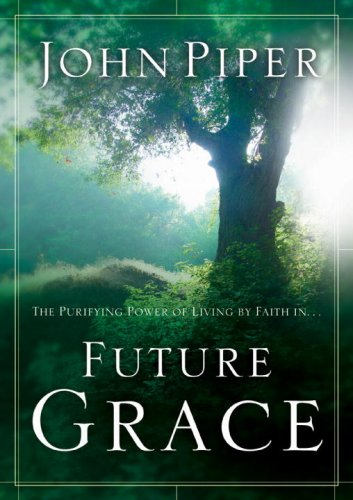
     A regular reading of the news is enough to assure us this is a common stumbling block for everyone -- Christian and non-Christian alike -- be it pastors or the people in the pews. But I would ask you to mull over his advice and put it into practice. For when practiced I can say from experience that it does work in helping one gain victory. Obviously, there are other pieces that are important, and John Piper shares an excellent portion that would be worth your time checking out in his book, "Future Grace," Chapter 17, "Applying the Power of Future Grace to Lust."  These two resources read and applied could go a long way toward helping break the addiction to pornography, or the lure of temptation which so many fall prey to in this area. A few dollars well spent, and these two books on your reading list, could save a lot of heartache.

 Fellow Sinner in the Struggle for Integrity and Godliness, Pastor Jeff
1.28.2019

The Intrusive Word, Preaching to the Unbaptized

Greetings All,

I like stories. I do.  Not fiction, but stories that are true.  And I hope you like them as well, since this week's"thought"  is a story.  A true story.  One that is a little humorous, a little sad, and a little challenging as well. It comes to you from William Willimon and is taken from the preface of his book, "The Intrusive Word, Preaching to the Unbaptized."  Enjoy.


     "In my last congregation, we decided that we needed to grow. We voted to launch a program of evangelism... You know what that means. It's the, "We had better go out and get new members of we'll die" syndrome..  Our church had begun a two-decade decline in membership, so we figured that a little church-growth strategy was in order.  We studied a program from our denomination telling us how to get new members. Among other things, the church-growth program advocated a system of door-to-door visitation. So we organized ourselves into groups of two and, on an appointed Sunday afternoon, we set out to visit, and invite people to our church.
     The teams went out, armed with packets of pamphlets describing our congregation, our denomination, and fliers portraying me, the smiling, accessible pastor, inviting people to our church. Each team was given a map with their assigned street. Helen and Gladys were given a map. They were clearly told to go down Summit Drive and to TURN RIGHT. That's what they were told. I heard the team leader tell them, "You go down Summit Drive and turn right. Do you hear me, Helen? That's down Summit Drive and turn right."  But Helen and Gladys, both approaching eighty, after lifetimes of teaching elementary school, were better at giving directions than receiving them. Thy turned left, venturing down into the housing projects to the west of Summit Drive...  [They] proceeded to evangelize the wrong neighborhood, and thereby ran the risk of evangelizing the wrong people.
     Late that afternoon, each team returned to the church to make their reports. Helen and Gladys had only one interested person to report -- a woman named Verleen. Nobody on their spurious route was interested in visiting our church, nobody but Verleen. She lived with her two children in a three-room-apartment in the projects, we were told. Although she had never been to a church in her life, Verleen wanted to visit ours. This is what you get, I said to myself, when you don't follow directions. This is what you get when you won't do what the pastor tells you to do. You get a woman from the projects named Verleen.
The next Sunday, Helen and Gladys proudly presented Verleen at the 11:00 service, along with her two feral-looking children.  Verleen liked the service so much she said that she wanted to attend the Women's Thursday Morning Bible Study.  On Thursday, Verleen appeared, proudly clutching her new Bible, a gift from Helen, the first Bible Verleen had ever seen, much less owned. I was leading the study on the prescribed reading for the coming Sunday, Luke 4, the story of Jesus' temptation in the wilderness. "Have any of you ever been faced with temptation and, with Jesus' help, resisted?" I asked the group after presenting my material. "Have any of you refused some temptation because of your Christian commitment?"  One of the women told about how, just the week before, there  was some confusion in the supermarket checkout line, and before she knew it, she was standing in the parking lot with a loaf of bread she hadn't paid for.  "At first I thought, 'why should I pay for it? They have enough money here as it is.' But then I thought, 'No, you are a Christian.' So I went back in the store and paid them for that loaf of bread."  I made some approving comment.
     It was then that Verleen spoke up. "A couple years ago, I was into cocaine really big. You know what that's like!  You know how that stuff makes you crazy.  Well, anyway, my boyfriend, not the one I got now, the one who was the daddy of my first child, that one, well, we knocked over a gas station one night.  Got two hundred dollars out of it.  It was as simple as taking candy from a baby.  Well, my boyfriend, he says to me, "Let's knock off that Seven-eleven store down on the corner.'  And something in me, it says, 'No, I held up that gas station with you, but I ain't going to hold up no convenience store.'  He beat the hell out of me, but I still said, 'No.'  It felt great to say 'No,' cause that's the only time in my life I ever said 'No' to anything. Made me feel like I was somebody."  Through the stunned silence I managed to mutter, "Well, er, uh, that's resisting temptation. That's sort of what this text is about. And now it's time for our closing prayer."  After I stumbled out of the church parlor and was standing out in the parking lot helping Helen into her Plymouth, she said to me, "You know, I can't wait to get home and get on the phone and invite people to come next Thursday!  Your Bible studies used to be dull. I think I can get a good crowd for this!"...
     Verleen taught me that evangelism is not about getting new members for the church...  Evangelism is not about helping more nice, buttoned-down, middle-class folk like me to find deeper meaning in our lives. Evangelism is a gracious, unmanageable, messy by-product of the intrusions of God into the lives of people.  Verleen was not the only one who intruded into our nice, bourgeois club called Northside United Methodist Church.  She had been brought there, I believe, by Another. Time and again in our life together as a church, just when we get everything all figured out, the pews bolted down, and everyone blissfully adjusted to the status quo, God has intruded, inserting some topsy-turvy-turned life like Verleen, just to remind the baptized that God is large, unimaginable, and full of surprises...  I contend that, through evangelism - through repeated confrontations with the intrusive grace of God - the church can be born again. By letting God use us in God's never-ending pursuit of the unbaptized, the baptized can rediscover what it means for us to be the church. That unlikely gathering of those who are called to sign, signal, and witness to the graciousness of God in a world dying for lack of salvation."

     Willimon dedicated his book to Verleen.  His experience struck me because I have also experienced the blessing of God bringing along very real, transparent, 'don't-yet-know-church-words-or-culture' people like Verleen.  A non-churched addict who had contracted aids through sharing needles, and was initially dating a prostitute. A man I had the privilege of baptizing him before he passed.
     Another was a young lady, who after much prodding by a friend, finally came to our church in Honduras in an expensive car she had borrowed from a friend.  She parked on the steep hill in front of the church, and during the service the emergency brake let loose. One of the greeters interrupted the service to ask if anyone owned a grey Mercedes, because it had just rolled down the hill into a brick wall. At that, the lady jumped up from her seat, and in front of everyone (in a very loud voice) blurted out: "Oh ___!"  And, despite the initially stunned faces, the church elders were so happy she had joined with us, they paid for the repairs.
     Another time, a gentleman who struggled with alcohol (and had previously gotten into a fight with his wife in our front yard!) called us to come down to his house because he'd "found Jesus."  When we arrived at his house, he was watching a VHS (some of you remember what those are) of a Bill Gaither Concert.  And at one point in the concert, he was so moved by joy (I can't remember the song), that he leaped up where he was standing, and jumped so high, that his head hit the glass globe of a hanging light and shattered it all over him and the floor!  And that doesn't even include the young new-to-church ex-nightclub dancer, who offered a prayer request during the service with such descriptive language that some of the older folk almost turned pale from shock!
     You see, sometimes Christians can forget that Jesus' band of disciples were not all moral, straight-laced, upstanding, well-educated, middle-class, "grew-up-in-church-every-week" type people.  Some came from the other side of the tracks.  Some shocked those who were the self-appointed guardians of the religious status-quo.  It's supposed to be that way. In fact, if the Verleen's of the world are not attracted to our churches, or feeling welcomed there, we are doing something wrong. For as we see in the gospels, sinners (the really bad ones like Zealots, prostitutes and tax collectors) were attracted to Jesus, felt loved by Jesus, did not feel judged by Jesus, and wanted to be around Jesus. It's something that should be true of us as well if we are Christians (or as the word means, "little Christ's"). Dare we pray for more gracious intrusions from people like Verleen?

Living in the Grace of Jesus, Pastor Jeff

10.02.2018

C. S. Lewis - A Collection of Thoughts

Greetings All!

     Today you get another post of many different "thoughts" rather than one longer continuous thought.  Yet, unlike my last mailing sent out two weeks ago, these all come from one author - C. S. Lewis.  I've been going through three of his books lately and found them all very rewarding. This is just a sampling of short thoughts from him.  I trust you might find a few of these to be helpful as you mull them over, and that one or two might be used of God to encourage, challenge, or comfort you.
     At our men's group this morning we discussed our favorites from my previous mailing two weeks ago, and why each person found particular ones the most helpful. If you get a chance today, and would want to share with me what your particular favorites are from the list below, I'd be interested in receiving your feedback!  Enjoy.

"If everything comes simply by signing checks, you may forget that you are at every moment dependent upon God." 
"The Christian does not think God will love us because we are good, but God will make us good because He loves us."

"It is safe to tell the pure in heart that they will see God, for only the pure in heart want to."

"I didn't go to religion to make me happy. I knew that a bottle of Port would do that. If you want a religion to make you feel really comfortable, I certainly don't recommend Christianity." 

"We are not necessarily doubting God will do the best for us, we are wondering how painful the best will turn out to be." 
"Don't shine so that others can see you. Shine, so that through you, others can see Him."

"Do not waste time bothering whether you "love" your neighbor; act as if you did."

"If God had granted all the silly prayers I've asked in my life, where would I be now?" 

"If you're thinking of becoming a Christian, I warn you, you are embarking on something that will take the whole of you."
"Everyone thinks forgiveness is a wonderful idea until he has something to forgive."  

"A silly idea is current that good people do not know what temptation means. This is an obvious lie. Only those who try to resist temptation know how strong it is... No one knows how bad he is until he has tried very hard to be good. A man who gives into temptation after five minutes simply does not know what it would have been like an hour later.  That is why bad people know very little about badness. They have lived a sheltered life by always giving in." 

"If I find in myself desires which nothing in this world can satisfy, the only logical explanation is that I was made for another world."

"God cannot give us happiness apart from Himself, because there is no such thing."
"It is not your business to succeed, but to do right. When you have done so the rest lies with God." 

"Life with God is not immunity from difficulties, but peace in difficulties."

"We must lay before God what is in us, not what ought to be in us."

With prayers for your continued growth in godliness, and your service in Jesus name, Pastor Jeff