Visitors

free counters
Showing posts with label Mercy. Show all posts

6.11.2019

How to Walk With God.

Greetings All,

Today's thought comes from the first chapter of a book I read as I was starting out in the ministry.  It was 1987 and the book was written by a man who was having a ministry of great impact at that time in New England -- Everett L. Fullam.  The book is entitled, "How to Walk With God."    Yet, before Fullam tells us how to walk with God (by faith, of course), he points out one necessary detail many overlook in terms of the Being we hope to walk with by faith.  Enjoy.


     "The most distinguishing characteristic of the God of Abraham, Issac, and Jacob -- the God and Father of our Lord Jesus Christ -- is His holiness. It's not His great power. It's not His infinite wisdom or knowledge. It's His holy character, with no dark spots, no shadows, but rather light through and through. His holiness means a consistency of purpose that is never deflected and a constancy of devotion in continual and eternal covenant.  If we are going to be among those who seek the Lord, we must concern ourselves with His holiness -- and concentrate on responding with a personal holiness that conforms to the will and purpose of God (Hebrews 12:14 / I Peter 1:16). 
     Holiness is not a popular idea today. There is a form of Christianity that is devoid of holiness, an eloquent testimony that its god is not the God of Abraham, Issac and Jacob, nor is it the Father of our Lord and Savior Jesus Christ. People fashion gods after their own images and relate to those gods (those idols) on their own terms, because their gods are products of their own self-creation. In the early chapters of his prophecy, Isaiah recorded a marvelous vision of God seated high and lifted up on a throne. Isaiah wrote that God's train filled the temple, and that the pillars of the temple trembled at the presence of God.  He saw the place was filled with smoke and seraphs and angels flew about, singing, "Holy, Holy, Holy is the Lord of Hosts" (Isaiah 6:3).  In perceiving this God, the first words that came from his mouth were, "Woe is me, for I am undone. Because I am a man of unclean lips, and dwell in the midst of a people of unclean lips."  He had been dealing with the real God, and said: "For my eyes have seen the King, the Lord of hosts" (Isaiah 6:5).
     The only time we can deal with God and not be impressed by the depths of our need is when we fashion a god after our own liking and worship that god. We can deal with that god and remain the same, but if we come into the presence of the living God, we are struck with our own need. If we are unwilling to deal with the things in our lives that are contrary to the purpose of God, then we are not dealing with the holy God. We are dealing with an idol of our own imagining...  Whatever concerns us ultimately, whatever is the controlling dynamic of our life, is our god. For some people it is family, for others its careers, or getting ahead, or reaching the top. Whatever is dominant in our life is our god; and if it is anything other than the Lord God Himself, that's idolatry.  Before we can walk with Him we need to deal with those things. He wants His people to allow Him to be supreme, and so He told Abram to leave his country, his people, and his father's house. He told him to throw away the gods of his forefathers so he could start afresh, so he could learn to serve Him in singular faithfulness...
     God is a God of mercy -- He is a God of the second chance, and the third chance, and the fourth chance, and fifth and sixth and so on. When we come to Him -- even though we've been walking in the wrong direction,  even though we've stopped for a time and have not been moving at all -- if we recognize that we've been disobedient, and confess and deal with our sin by repentance, we can start over again right away.  God's forgiveness cleanses, and the grace of God again begins to flow toward us, and in us, as the joy of our salvation is restored."
     In our day it must be asked if we seek to walk with God as He really is.  That is, if we seek to walk with the God who is revealed in the Bible as being Holy above all else -- Holy, Holy Holy.  Unspeakably Holy and unalterably opposed to sin.  A God who as Fullam points out, calls us to be holy as He is holy (I Peter 1:16).  In many ways this calls us to divest ourselves of some of the common misrepresentations we have about Him in our minds. It means we must be willing to rid ourselves of the images of Him that we've created (or adopted over time) that make us feel more comfortable in dealing with Him.
     In 1987 when Fullam wrote the book, he could say, "Holiness is not a popular idea today."  I would say that is even more the case today.  Yet if we are to walk with God we must not ignore His primary attribute.  For we are told He is, "the Holy One of Israel."   We are told to "glory in His Holy name" (I Chron. 16:10).  Scripture tells us, "our God is Holy," and "His ways are Holy" (Ps. 77:13 / Ps. 99:9).  No other attribute of God is ever repeated three times in rapid succession. God is never said to be, "Love, Love Love," or"Mercy, Mercy, Mercy."  But He is said on three occasions to be, "Holy, Holy, Holy."  And therefore, if we desire to walk with Him, we must seek to grasp -- maybe above all else -- exactly what that means. For if we do not envision a God who is holy, we are not envisioning the God who is.

May we learn to walk with Him in holiness and reverence, Pastor Jeff 


1.08.2019

Shut in by God

Greetings All, 


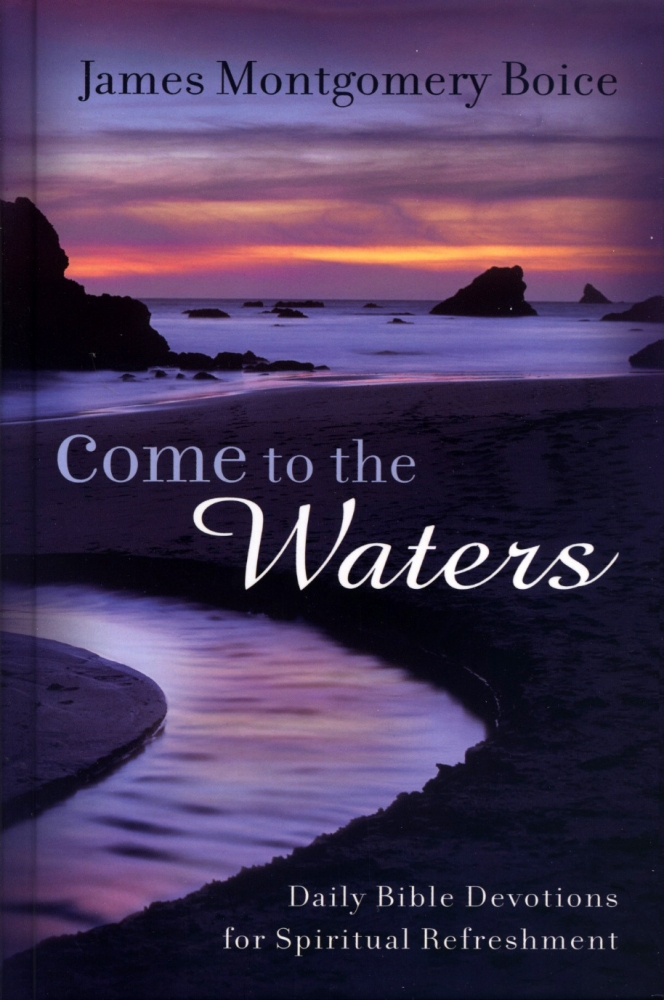
     This week's "thought" is called "Shut in by God"  It comes from a book of daily devotions complied from the writings of James Montgomery Boice, who served at 10th Presbyterian Church in Philadelphia for over 30 years before his relatively early death in 2000 at the age of 61.  Boice was a  gifted and well-known Bible teacher who held degrees from Harvard, Princeton, and the University of Basel in Switzerland, and whose "Bible Study Hour" radio program can still be heard on air and online. This is the devotional entry for - January 8th (today!) -- and offers three lessons we can learn from the biblical narrative regarding Noah and his family. Enjoy.


Shut in by God
"And the Lord shut him in..." 
Genesis 7:16


     "Consider these three lessons.
     FIRST, when the Lord shut Noah and his family up in the ark, they were totally secure and thereby become an illustration for us of the believer's perfect security in Jesus Christ. The rains    would come. The floods would rage. But nothing would touch these who had been sealed in the ark by Jehovah.  The Lord does not place the safety of his people in the hands of others. He himself throws the bolt-lock. It is said of him, "What he opens no one can shut, and what he shuts no one can open" (Rev. 3:7 NIV) The shutting in of Noah was the equivalent of our being sealed with the Holy Spirit (Eph. 4:30).  Like him we are not only saved; we are secure as well.
     SECOND, there is a lesson of God's great grace. The last thing we are told in this story before the waters actually begin to come is that, 'the Lord shut him in" (v. 16).  Presumably this was done at the last possible moment.  Noah had been preaching God's righteousness, man's sin, and warning of the great flood for years and years, but no one had believed him. They were still refusing to believe. Yet the door to the ark remained open, and any who wanted to could have gone inside. What great grace!  What magnificent forbearance on the part of God!  Since Noah had believed and had gone in, no one still outside could say that the possibility of belief was closed to him. "Whoever willed" could come. So it is today. All who will may come. Many do not, but none of these can say that the possibility of repentance from sin and turning to Christ are beyond them. 
     FINALLY, there is a lesson in that there is an end to grace. Grace is great, but it is not unending. If it is spurned, the day of reckoning eventually comes. For one final week the door stood open. But the week ended, the door was closed, and the flood came. The same God who opens doors is himself the door (John 10:7 & 9).  He also closes doors and refuses to open them when the time of grace is gone.  For you it is not yet past, whoever you may be.  This is still the day of grace, and though it will end, it has not ended yet.  Won't you come while there is still time?  God said to Noah, "Come... into the ark" (Gen. 7:1). At the end of the Bible we read, "The Spirit and the Bride say, 'Come!' And let him who hears say, 'Come!' And let him who is thirsty come; let the one who desires take the water of life without price" (Rev. 22:17)." 
     Grace is the most wonderful thing! Nothing in all the earth compares with it!  And though it is God's nature to be gracious, and the riches and glory of His grace will be (and should already be) the source of endless praise among the recipients of it, the Bible makes clear (as Boice rightly notes), that God's offer of grace will one day end.
     Isaiah 61:2, in speaking of the ministry of Jesus, states that He was to: "proclaim the year (or time) of the LORD's favor (grace), and the day of the vengeance of our God."  And Jesus did just that. He fulfilled this prophecy about Himself by proclaiming the "year" (the time, season, or epoch) of God's grace in light of the coming day of judgment. He did not preach that grace did away with God's justice and judgment forever, but that God in His great mercy was offering grace to all now in light of the impending Day of Judgment which is to come.
     The Gospel declaration (like Noah's message to the people of his day) was, "Come for safety and salvation now!  Hurry! For the day is coming when the door of God's grace and mercy will close, and the time of judgment will begin for all who have not entered in."   Peter proclaimed that  message in Acts 2:38-41 on the Day of Pentecost.  And Paul proclaims it as well in II Cor. 5:20 - 6:2.
     It assures us that the call of the Gospel must always have a sense of urgency to it.  For it's message is not, "Grace to everyone now and forevermore," it is, "Now is the time of God's favor! Today is the day of salvation! Come to Christ for mercy now, for the day of wrath and divine judgment is coming" (II Cor. 6:2, I Thess. 1:9-10, II Thess. 1:3-10).  Yes, Scripture assures us that there will come a day when the door of God's grace -- like the door on the ark -- will one day be shut and all left outside (all who spurned His offer of grace in Jesus) will experience God's great wrath.
     So come now, says Scripture!  Whosoever will, come!  Be sure you come to Christ before the door of God's free offer of grace is closed to you forever.
     If any of you have not yet come, I pray that by God's grace you would, and without delay.

In the Service of the Gospel, Pastor Jeff

11.06.2018

Jesus

Greetings All!

     These past few weeks I was reading (and re-reading) testimonies written by people who are joining the church where I pastor.  I always find such personal accounts of God's work in people's lives to be fascinating and encouraging. Simply tracing the threads of God's providential and redemptive work in the lives of others encourages me in my own life!  In fact, they made me decide I would send out something different today -- my own testimony which I condensed into the form of a short poem and read at my ordination service in 1987.  And please keep in mind I do not claim any gifting as a poet, it was simply a shorter way of sharing what would have been much longer if I shared it in a different format.
     You will quickly discern I grew up in a rural place (actually, next to my grandfather's farm and sizable expanses of open land).  And although I do use metaphors in the poem, I want you to know the references to the dream of a cross "on a distant hill" and an encounter with an "angel" actually happened. 


     I have always loved Francis Thompson's extraordinary poem about God's pursuit of him, called, "The Hound of Heaven" (in my opinion, a must read).  In so many ways his experience mimicked my own as I hit my teens and early 20's: God's abundant kindnesses were excused away by my sin-hardened heart.  God's repeated mercies were met by my firmly entrenched resistance.  And God's unrelenting pursuit of me was countered by me running in the opposite direction.  Until one day, that is, when -- tired and burdened by the guilt of all my sin -- His grace conquered my resistance, and the sweet persistence of His loving overtures led to the divine conquest of my soul.  You also may have seen (or do see) that same process taking place in your own soul, hopefully with the same eventuality of conquest and surrender finishing off the story.  The following stanzas take you from my first memories of childhood to the time I entered the pastorate 31 years ago.  The poem is simply entitled, "Jesus."

JESUS

You sought me when my days were young; 
Your love reached out through everyone.
Such gifts you gave, so rare and sweet; 
Ten thousand clues laid at my feet,
Yet still our paths did never meet.
You called to me from peaceful woods, 
From morning dews which glistening stood;
In fields where flow'rs Your radiance shown, 
And wildlife's whispers in clear tones, 
Called out to make your glory known.

You called to me so many ways - 
In dreams at night of ancient days, 
Where on a distant hill there stood,
A silhouetted cross of wood.
And in the hush mine eyes did see, 
A figure hanging there... for me
I ran not knowing what to do, 
But still your angels did pursue.
I shunned your love, I knew Your creed - 
It was for sinners You did bleed!
My plans were set, I had no need,
My eyes were set on lust and greed.

I turned my back on all You'd shown, 
Excused away the love I'd known.
To me You'd been so kind and real, 
But yet my heart refused to yield.
So many kindnesses You'd shown, 
And yet my heart had turned to stone.
I sought life's thrills to fill the void, 
There was no pleasure not employed.  
For self I lived and breathed and slept, 
Until in broken shame I wept, 
To see the vigil You had kept.

"Such love," I said, "it cannot be,
That condescends to one like me!
If anything I'd earned Your rage;
Eternal wrath the sinner's wage."
But You in loving mercy shown,
With greater love than ere' I'd known.
You touched and turned me Lord to You,
With love unfathomable but true.
You caused my hardened heart to see, 
No greater joy could ere' there be,
Than loving You who first loved me.

Living in the Grace of Jesus, Pastor Jeff 


10.16.2018

Holiness By Grace - Delighting In The Joy That Is Our Strength

Greetings All!

     This week's "thought" comes from a book well worth the time it takes to read: "Holiness By Grace - Delighting In The Joy That Is Our Strength" by Bryan Chapell.  It has to do with God's grace and favor toward us, and the common misconceptions we often have about what it is that causes that grace to come our way.  There are very few who do not desire God's grace.  Few who do not yearn for His favor.  Yet, as Chapell points out, in our attempts to attain it, we often drive it further from us.  We often go astray in the ways we seek to become recipients of it.  I found his instruction in this regard helpful.  I pray that you might also.  Enjoy.
     "Despite the teaching of Scripture, I am at times no less troubled than Christ's disciples were with God's determination to resist human efforts to purchase his love.  I want to believe that God must be good to the organizations I serve, to the family I love, and the career in which I seek to advance, because I have tried to be good. Such reasoning abandons me, however, when I honestly compare my righteousness to Christ's standards... When I face the reality of the inadequacy of my works to merit God's favor, then I recognize that I must depend on his goodness and not my own. At times this dependence (on his goodness) is scary because it lifts control from me, but there is no other choice when I recognize the true character of my good works. For according to Scripture, even my best works are only "filthy rags" (Isaiah 64:5). There is too much human imperfection and mixed motives in my best deeds to have them obligate God to do as I wish...
     That does not mean, however, that God never desires or blesses our goodness.  Walking in God's ways is itself a blessing (Ps. 1, Matt. 5:3-10). For example, being faithful to one's spouse brings integrity to a marriage that is a blessing.  Speaking honestly can enhance one's reputation and help secure faltering relationships... Still, no degree of human goodness will lock God into a pah of blessing according to our choosing, as though we have become his master through our merit.  God promises to bless obedience by using it for his purposes, but the blessings that result should be seen less as credit for our goodness, and more as evidence of his faithfulness to his purposes... Divine blessing flows from God's mercy rather than from our merit. Thus, we cannot guarantee that his care will flow according to our plans simply because we conform in some degree to biblical standards. Our works do not obligate God to care for us in the way WE think is best... God blesses according to the wisdom of his eternal mercy rather than in proportion to our works of earned merit...
     [In Luke 17:11-19 ten lepers cry out to Jesus in desperation, "Jesus, master, have mercy on us!"]... What does Jesus do when these desperate people plead with him for mercy? He shows them mercy.  Jesus shows pity to those who have nothing to claim but desperation.  He is moved by their desperate cry for help.  What is the message to us?  Our God is not moved by the deeds we trophy, but by the desperation we acknowledge as our own....
     God's heart is moved, not when we protest our innocence by pointing to our inadequate good deeds, nor when we promise that we will do better in the future. Though there is no reason for God to love us, yet he does.  This is the nature of grace that we must treasure to know the joy that God wants for our lives. Until we recognize that there is no reason God will be moved to love us other than the spiritual need we acknowledge, we have no good news to tell others or ourselves. How could it be good news that God waits to love us until we reach an unattainable standard of righteousness, or that he counts our "filthy rags" as meritorious?  Biblical faith is most evident not when we demand that God honor our flawed deeds, but when we trust that he will mercifully respond when we humbly and helplessly cry out, "Jesus, Master, have pity on us!"
     Those who cry out in desperation have more hope of moving God's heart than any who would trophy their own righteousness before him.  Those who face the hopelessness of their spiritual condition apart from God's mercy are nearer to experiencing his grace than those who pride themselves on their goodness. Not beyond God's mercy is the homosexual dying of AIDS, who says in a broken spirit, "People may condemn me for a life they do not approve, but to tell you the truth, I would have loved anyone that loved me back."  In fact, such a man may be nearer to expressing what melts the heart of heaven, than I am on the days that my preaching, my position (as a seminary president), and my righteousness, swell my pride to make me think I am deserving of God's blessing.
     To experience God's blessing I must readily and repeatedly confess my own hopeless condition. What makes me willing to do this is the knowledge that it is my desperation that inclines God's heart toward my own.  The awareness that he does not turn away from my desperation will actually draw me to confession and deep repentance. The assumption that God only loves the righteous will tempt me to hide from him (and myself) the flaws under the public veneer of my character and my fears of deeper failures... 
     Our Lord's response to the leper's cry for mercy should compel us to confess our sin to him no matter its degree or persistence. We need not have corrected the wrong in our lives to ask him to forgive us We should not attempt to try and compensate for our sin before we ask him to love us. Remember that Jesus cleansed all the lepers when they cried out for his mercy, even though in his divine nature he could have known that only one would return to thank him.  Neither past failing nor future weakness will dissuade our Savior from showing us mercy when we honestly acknowledge our desperate need for his grace."
     One only needs to glance at the any of the four Gospels to see the truth of what Chapell says.  God inclines his ear and opens his heart to the desperate, but resists the proud. He embraces the sinful man who won't even look up to heaven but in shame cries out, "Lord be merciful to me a sinner," yet refuses to listen to the Pharisee who looks down on that heart-broken man and brags inwardly that he is so much better and thanks God he is not like him.  Pride and self-righteousness (that is, thinking we can make ourselves acceptable to God by our personal deeds and efforts) pushes the divine hand of grace away, it does not (as many curiously think) bring God's favor and blessings near.  We must always remember: "God resists the proud but gives grace to the humble."   It is the acknowledgment and confession of our sin, deep need, and personal inadequacy that draws close the grace and mercy of God, and the vain illusion that we have all our moral and spiritual ducks in a row that drives it away.
     If you would like to pray for grace, here is a simple prayer I often use: "Lord Jesus Christ, Son of the Eternal God, be merciful to me a sinner." 
For His name's sake,  Pastor Jeff 


8.15.2018

The Unity of the Bible

Greetings All!

     This week's "thought" will take some thought!  It's not your typical, casual, quickly processed quote.  It will require you to think. Hopefully you are up for the challenge!  It is the response I often give to those who say ask: "What proof we have for the existence of God?   Where did God come from?  And, "Did God create because He needed someone to love, or because He was lonely?
     The following quote seeks to address these three questions and explains why it is that God did not create out of a sense of need within himself.  Part of the answer to question 3 is taken from Daniel Fuller's book, "The Unity of the Bible" -- a must read, in my opinion, for any earnest believer.  Enjoy!


The God Who Has No Needs
     1.) "What Proof Do We Have for the Existence of God?" The best proof for the existence of God goes something like this:  Being cannot come from non-being.  That is, something cannot come from nothing.  Yet, most all scientists agree that at some point in the long-distant past the space now occupied by the physical universe was empty and void and consisted of "nothing."  But its precisely because something cannot come from nothing that helps us see that the creation itself is the greatest proof of the existence of God.  Since being cannot come from non-being, our existence as beings proves His existence.
     2.) "Where Did God Come From?" To answer this, we can take the previous argument a step further.  Because being cannot come from non-being, our existence as beings proves His existence, and His existence proves He always existed.  If God is, He must always have been.  Most all theologians have tended to agree on this, and Malachi 3:6 confirms it where it says, "I am the Lord, I do not change."  Change is part of that which is limited, lacking, or finite. A God who changes would be finite and limited and could not by definition be God. To be infinite is by nature to be changeless, immutable and everlasting -- none of which would be true of God if He had a beginning.  If being is, it must always have been, since being cannot come from non-being.  Even the fact that God is all-knowing demands that He must have existed forever, for if He was not an eternal Being, or came into being at some point in time (which is an impossibility since being cannot come from non-being), then He could not be omniscient, for He would not know what transpired before He came into existence.
     3.) "Did God Create Because He Needed Something to Love, or Because He Was Lonely?  The Christian answer, based on the fact that God is a Trinity, is best given by Daniel Fuller in his book "The Unity of the Bible," in the section entitled, 'Why Did God Wait So Long to Create the World?'  In this section of his book he points out: "The declaration in Psalm 90:2 that, 'Before the mountains were born or you (God) brought forth the earth and the world, from everlasting to everlasting you are God,' indicates that vast eons of time elapsed before God acted to establish the earth so it would reflect His glory.  But Irenaeus, Augustine, and Calvin -- some of the church's greatest leaders -- have sternly warned people not to ask what God was doing before he created, or to wonder why he waited so long to create...  I believe, however, that it is both lawful and expedient to ask why the Triune God waited a long time to create the world.  For from the very fact that God waited, we know that he did not create out of the necessity involved in need-love. [That is, he did not create because he was lonely, or needed someone to love, as many often suggest].
     Since God the Father found infinite happiness in Jesus, the Son, then it becomes clear that from all eternity God has enjoyed his Son's love and companionship, showing the creation of the world was NOT a necessary act that God undertook to overcome loneliness, but an act that flowed from the freedom involved in benevolent love. It would be threatening to our future happiness to know that God created us to meet some need in himself... Yet the moment we understand that all of God's need-love was met in being a Trinity, then we see that he was free to act toward us, his creation, solely in terms of the freedom of a benevolent love.  A striking way to represent the difference is to say that if God were to have created us out of need-love, it would be like inviting us to a banquet, only to inform us that we were one of the courses for the meal!  But when God invites us to a banquet out of benevolent love, he wants us to join with him as guests at his table, to enjoy the feast along with him – as the psalmist put it, to drink from the river of his delights (36:8).  So, God's having delayed creation for a long while makes it unmistakably clear that he created us not out of need, but in the freedom of his benevolent love – out of mercy and grace.”
     What a different view of God we have when we consider his eternality in light of his Triune nature.  If God created out of a "need" that was unmet for all those many millions and trillions of eons before He spoke things into existence out of nothing (as the Bible does state), then the only picture one can draw is of a God who was sad, frustrated, or unhappy until He created, due to the long-standing unmet need in himself.  But when we consider God as Trinity, and the love and delight that existed between the Father and the Son from all eternity, we see that the fellowship and love between the Father and the Son resulted in a God who was eternally contented and happy!  A God who created, not out of need, but out of the overflow of delight, love and happiness that existed within Himself.  To put it in human terms, the best of all scenarios is not when a husband and wife seek to have a child to meet a need in either one of them, or out of an attempt to "save the marriage," but when they so love each other that they choose to bring a child into the overflow of love and delight that already exists between them. Not when they create out of need, but out of a desire to share their overflowing love with another.  And not only does it give us a different view of God, but a whole different ground for relationship!  For when we know we were not created to meet a need in God, we are freed to walk and share in the overflow of God's infinite Self-adequacy and Self-completeness!
     At any rate, just something to think about!

Living in the Grace of Jesus, Pastor Jeff

7.04.2018

Serving Productive Time

Greetings Friends!

     Today I picked up a book someone who was involved in prison ministry had given me.  It's filled with stories, testimonies, and lessons learned and shared by inmates. Some are profoundly uplifting and others a bit  sad -- like the story of one man who killed his father, and has chosen not seek forgiveness for doing so, and even cling to the heavy burden of guilt as a "self-imposed penance" and personal attempt to "ensure that the seriousness of this act is never lessened."   I pray his heart may eventually change, though as a pastor I know that emotional self-punishment is not an uncommon response when someone has done something they deeply regret. Yet, it's a sad choice in light of all that Jesus came and did for us.


     The selection I've chosen to include, however, is more uplifting.  It comes from an inmate named Ken Fox and is titled, "Little Did I Know."  This story (like the other) are both found in a book entitled, "Serving Productive Time," by Tom and Laura Lagana.  Enjoy.

Little Did I Know.

     "For no apparent reason I hated people.  I used to be the most angry, bitter and judgmental person on the planet. I even mistreated the few people who still loved me despite my atrocious behavior, including the woman who I now realize is a gift from God. She has to be an angel. How else could she have loved me and stood by me through fifteen years of this stuff?
     About two and a half years ago I transferred to a facility nearly four hours away from home. Being cut off from friends and family not only fueled my anger, it also gave me a reason to distrust the supposedly merciful and loving God my fiancee loved so dearly. Once I arrived at the new prison I lashed out at this wonderful woman: "What do you think of your God now? I bellowed.  A cheap shot I know, but I didn't care.
     Not long after that I received a letter from my cousin. I hadn't heard from her in five years. It was at her request, and the encouragement of my fiancee, that I looked into a program named "Keryx" (The name of a ministry taken from the Greek word meaning "Herald.")  I asked two Christian guys in my housing unit if they knew anything about the program. They were happy to talk with me and without my knowledge approached the chaplain about getting me into the upcoming Keryx weekend.
     Still carrying a large chip on my shoulder and anger in my heart, I reluctantly agreed to attend. But not before delivering a firm warning. My fists waving in the air, I shrieked, "If anyone tries to hug me, I swear I'll swing first and ask questions later!"  I convinced myself the weekend would have no effect on me, and for the first day I did manage to keep my distance. I was certain that I'd won and that God had nothing to offer me and I aimed to prove it.  But on the third day something happened. All the walls I'd built up around myself -- my false securities and all that I'd come to count on to keep myself safe and distant -- began to collapse.
     Earlier that day one of the volunteers told me that the Holy Spirit had something in store for me.  I smiled and shrugged it off for as long as I could. After that, we were asked to close our eyes and bow our heads. I complied and waited for further instructions. Then, as I sat there, the room suddenly filled with unfamiliar voices. Songs of praise ushered in an overwhelming presence of God. My heart began to swell with emotion. I'd never felt such intense love. 
     At that moment the destructive and negative feelings that I'd built up inside poured forth in non-stop tears. I had no control over my thoughts, my feelings, or my body. The Holy Spirit had arrived, and without a doubt, He had kicked my butt!  For the remainder of the weekend I didn't allow anyone to pass without giving them a hug! My heart of stone had crumbled. My walls had tumbled down. The light of the Lord illuminated my heart where darkness once ruled. Yes, God came for me that day, and since getting a hold of me, He refuses to let go.
     I still have my rough days. The trials and temptations are still there, but the love of God sees me through and I know brighter days are ahead. Now, to answer the question I asked my fiancee two and a half years ago, "What do I think of her God now?" I think OUR God is an awesome God, and I thank Him for saving a wretch like me."
     I picked this story because I saw many similarities between his life story and my own.  The keeping people at a distance. The anger and hardness. And the crumbling that occurred with regard to all those things when the presence of the Holy Spirit started moving upon me and ultimately conquered my heart.
     Ken Fox says that God, "kicked my butt."  I've always told people (I prefer wrestling terms) "He pinned me to the mat and made me cry uncle."   Because fight as we may (and we often fight hard) -- if God has determined to have us as His own, He will have us. And He will conquer us with a love so overwhelmingly powerful and pleasant that we no longer desire to resist it.  I pray the other man mentioned above will one day come to experience that same love and be freed from his own "self-imposed penance" to experience the joy of the Lord, and the peace that passes all understanding.

Living (now) in the Grace of Jesus, Pastor Jeff


8.29.2017

A Short Summary of the Life of John Newton, Author of the Well-known Hymn Amazing Grace

Greetings All!

     I hope you are not tired of seeing entries from L. B. Cowman's devotional book, "Streams in the Desert." Because I have one more for you today -- the last in a while -- before moving on in the next few weeks to other authors!  I wanted to pass it on to you because I found it encouraging. Many measure the influence or effect they've had on the world by the things they do directly.  Things they've said, events they've planned, things they've written, or deeds they've done.  And because they do, they can often minimize the effect their influence or ministry to others has had. I say that because there is often fruit we will know nothing about until eternity reveals it to us.
     That was the case with the mother of John Newton, and John Newton himself, author of the well-known hymn "Amazing Grace."  Few will ever know her name, but she has had a profound impact even to this day -- as this entry seeks to show. The devotion by Cowman is at the end, and rather short, but I wanted to share a little about Elizabeth Newton and her son John's life, to help you understand it. I know it's a wee bit long, but please take the time to go through it.  It will be worth your time.  Enjoy.

A Short Summary of the Life of John Newton, Author of the Well-known Hymn Amazing Grace.

     John Newton was born on July 24, 1725, to Elisabeth and John Newton Sr.  His father was a moral man, but not a believer, while his mother Elizabeth was a gentle, caring, and faithful mother whose life was tragically short-lived – dying when John was but 7 years old.  Though Elizabeth was unable to function as she might have wished, due to contracting tuberculosis, she did not waste her days. Knowing that time with her son might be short, she determined to make the most of what remained and took on the role of a teacher, spending hours with John each day.  She was a good teacher and he was an eager and intelligent student.  In fact he progressed so quickly he would later write: When I was four years old, I could read, (hard names excepted) as well as I can now: and could likewise repeat the answers to the questions in the Assembly’s Shorter Catechism, with the proofs; and all Dr. Watt’s smaller Catechisms, and his Children’s Hymns.”
     From this list of material, we know that Elizabeth consistently trained her son in the theology of the Protestant Reformers. Elizabeth prayed and hoped God would call him to ministry. “My mother observed my early progress with peculiar pleasure, and intended from the first to bring me up with a view to the ministry if the Lord should so incline my heart.”  John later wrote, “As I was her only child, she made it the chief business and pleasure of her life to instruct me, and bring me up in the nurture and admonition of the Lord.”  Even though she was gravely ill for all of her son’s early life, she did not allow her condition to keep her from fulfilling her God-given duty. She used what strength she had to teach him to know of God’s existence, holiness, and demands on his life and songs that would remain in his mind and heart until his dying day. She taught him to honor the Bible and to turn to it for spiritual knowledge and strength. And she taught him the Good News - that salvation was not by works, but by grace through faith in Christ Jesus.
     In 1733 John Sr. returned from his voyage and learning of his wife’s death, wasted no time in remarrying. John’s step-mother was at first attentive, but she soon bore children of her own and lost interest in John, excluding him from family life. He became distant and rebellious. So, when John Jr. was merely eleven years old, his father took him to sea and he made six voyages with him before his father retired.
     In 1743, at the age of 18, while going to visit friends, Newton was captured (essentially kidnapped) and pressed into the naval service by the Royal Navy, where he became a midshipman. But at one point tried to desert, was captured, and punished in front of the crew of 350 by being stripped to the waist, tied to the grating, and flogged with eight dozen lashes. Following that disgrace and humiliation, Newton initially contemplated murdering the captain and committing suicide by throwing himself overboard, but He recovered, both physically and mentally and eventually convinced his superiors to discharge him to a slave ship.  Espousing freethinking principles, he remained arrogant and insubordinate, and he lived with immoral abandon: "I sinned with a high hand," he later wrote, "and I made it my study to tempt and seduce others [to join with me]."   He gave up all religious convictions, rejected his mother's teachings, and even lead other sailors into a life of unbelief. Sailors were not noted for the refinement of their manners, but Newton had an especially notable reputation for profanity, coarseness, and debauchery, which even shocked many sailors. He became known as, "The Great Blasphemer."  When he writes in his famous hymn that God's amazing grace, "saved a wretch like me," he was not using hyperbole. He had indeed lived a wretched life.
     Finally, at his own request, he was exchanged into service on a slave ship which took him to the coast of Sierra Leone, Africa. Newton did not get along with the crew of that ship and in 1745 they left him in West Africa with Amos Clowe, a slave dealer.  Clowe took Newton to the coast and gave him to his wife, Princess Peye of the Sherbro people, who brutally abused and mistreated him as much as she did her other slaves.  Newton's clothes turned to rags and he was forced to beg for food. He would later say of this period of his life that he was, "once an infidel and libertine, a servant of slaves in West Africa." 
     Early in 1748, he was rescued by a sea captain who had been asked by Newton's father to search for him, returning to England on the merchant ship Greyhound.  The ship encountered a severe storm off the coast of Ireland and almost sank. Newton awoke in the middle of the night and, as the ship filled with water, called out to God. He recorded in his journal that when all seemed lost and the ship would surely sink, he exclaimed, “Lord, have mercy upon us.”  The cargo shifted and plugged up the hole, and the ship drifted to safety.  Newton marked this experience as the beginning of his conversion to Christ. He would later refer to this as his “great deliverance.”  The date was 10 March 1748, an anniversary he marked for the rest of his life as the point of his initial turning to Christ. From that point on, he avoided profanity, gambling, and drinking.
     Although he continued to work in the slave trade, he had gained sympathy for the slaves during his time as a slave in Africa. He later said that his true conversion did not happen until sometime later: "I cannot consider myself to have been a believer in the full sense of the word, until a considerable time afterward."  He would also write in his diary years later: “My dear mother, besides the rains she took with me, often commended me with many prayers and tears to God; and I doubt not but I reap the fruits of these prayers to this hour.”

---------------------------------------------------------------------------------------

     This brings us to the entry by L. B. Cowman:

     "John Newton the drunken sailor became John Newton the sailor-preacher. Among the thousands of men and women he brought to Christ was Thomas Scott, cultured, selfish and self-satisfied. Because of the prayers of Newton's mother, another miracle was worked, and Thomas Scott used both his pen and voice to lead thousands of unbelieving hearts to Christ -- among them a dyspeptic, melancholic young man named William Cowper. He too was washed by the cleansing blood and in a moment of inspiration wrote:
     "There is a fountain filled with blood, 
     Drawn from Immanuel's veins, 
     And sinners plunged beneath that flood, 
     Lose all their guilty stains."
     And this song has brought countless thousands to the man who died on Calvary. Among the thousands was William Wilberforce, who became a great Christian statesman and unfastened the shackles from the feet of thousands of British slaves. Among those whom he led to the Lord was Leigh Richmond, a clergyman of the Established Church in one of the Channel Islands. He wrote a book, "The Dairyman's Daughter," which was translated into forty languages and with the intensity of leaping flame burned the love of Christ into the hearts of thousands."

     All this resulted, notes Cowman, because of a mother's earnest prayers for her son. Her instruction and prayers for a son she never lived to see grow up, bore fruit beyond anything she ever imagined and continues to do so to this day.
In His Service, Pastor Jeff